OEM / ODM Wenzhou, Zhejiang, China [email protected]
English Avg. response ≤ 1h Quick Contact
ISO 9001:2015 & CE Compliant Industrial Facility

CE Certified Constant Current Power Supply Factory & Supplier

OEM/ODM Precision Power Solutions: Active PFC, Digital Switched-Mode Regulators, and Industrial CC/CV Platforms for Automation, Laser Systems, Battery Formation, and LED Infrastructure.

Standard Industrial Portfolio

Precision Constant Current & Regulated Switched-Mode Units

Engineered for high thermal endurance, low ripple factor, and strict electromagnetic containment under EN 55032 Class B. Select from enclosed chassis and high-density industrial SMPS units.

18+
Years SMPS R&D Mastery
10,000m²
Advanced Production Base
500k
Monthly Units Dispatched
1,000+
OEM / Standard Topologies
Engineering Whitepaper: Circuit Dynamics

Topological Architecture of Constant Current (CC) vs. Constant Voltage (CV) Power Delivery

In modern industrial electrical engineering, precision output regulation determines the life expectancy and operational stability of dynamic electronic loads. A Constant Current (CC) Power Supply dynamically modulates its forward output potential (Vout) across a variable compliance voltage window to enforce an invariant current flux (Iout). This mode is indispensable when delivering electrical energy into loads exhibiting non-linear dynamic impedance, negative temperature coefficients, or chemical reaction boundaries.

Feedback Loop Control & Current Sensing Topologies

Standard industrial power supplies utilize primary-side or secondary-side voltage dividers combined with shunt resistors or precision Hall-effect magnetic flux sensors. In a dedicated CC design, the current feedback loop takes absolute precedence over voltage regulation:

  • Differential Shunt Feedback: High-precision manganese-copper or Kelvin-connected foil shunts generate low-loss differential voltage signals that feed into a low-offset transconductance operational amplifier.
  • Fast Inner-Current Loop: An inner current loop operating within 10 to 50 microseconds compensates for rapid impedance fluctuations, while an outer, slower voltage feedback loop protects the circuit by establishing an adjustable compliance ceiling.
  • Automatic CC/CV Crossover Mechanism: When load current is below the dialed setpoint, the power supply behaves strictly as a Constant Voltage source. The instant load demand matches or exceeds the current limit point, the inner loop asserts control, collapsing voltage smoothly to maintain exact current injection without ringing or output overshoot.

This closed-loop topology prevents catastrophic thermal runaway in industrial LED modules, stabilizes current densities in electroplating and metal extraction tanks, and precisely controls cathode intercalation during the constant-current phase of lithium-iron-phosphate (LiFePO4) battery formation.

Compliance Whitepaper: European Directives

CE Harmonized Standards: Validating LVD, EMC, and Environmental Mandates

Procuring switching power supplies for export to the European Single Market requires exhaustive verification against the European Union's New Legislative Framework (NLF). Our manufacturing facility in Wenzhou operates under documented quality procedures ensuring full compliance with essential safety and electromagnetic compatibility mandates:

Low Voltage Directive (2014/35/EU)

Validated under EN IEC 62368-1 (Audio/Video, Information and Communication Technology Equipment). Enforces minimum creepage and clearance distances across primary-to-secondary boundaries, dielectric withstand testing up to 3,000VAC isolation, and single-fault thermal containment.

EMC Directive (2014/30/EU)

Certified against EN 55032 Class B for conducted and radiated emissions. Immunity verified according to EN 61000-4-2 (ESD up to 8kV air), EN 61000-4-4 (EFT electrical fast transient 2kV), and EN 61000-4-5 (Surge immunity up to 4kV line-to-earth).

Harmonics & Material Directives

Incorporates Active Power Factor Correction (PFC) yielding >0.98 power factor to satisfy EN 61000-3-2 Class C/D limits. Full material traceability complying with RoHS Directive 2011/65/EU (including 2015/863/EU phthalate restrictions) and REACH Regulation (EC 1907/2006).

Engineering Decision Matrix

Industrial Topology Matrix: Enclosed, DIN Rail & High-Power CC/CV Platforms

Optimize your mechanical configuration and electrical balance of plant by evaluating our standardized topology platforms across core performance indices:

Series Family Rated Power Output Topology Active PFC Operating Temp Range Isolation Rating Target Applications
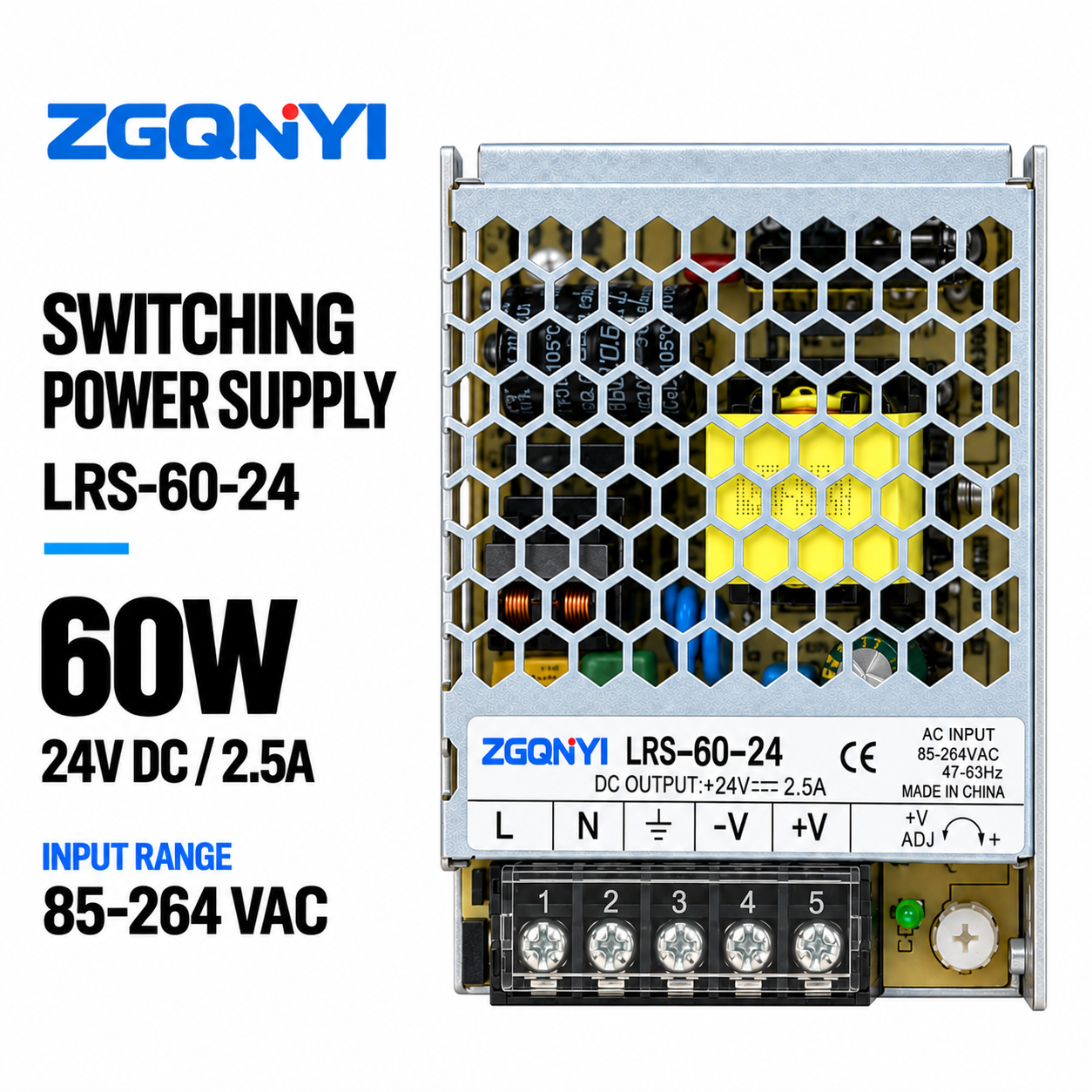
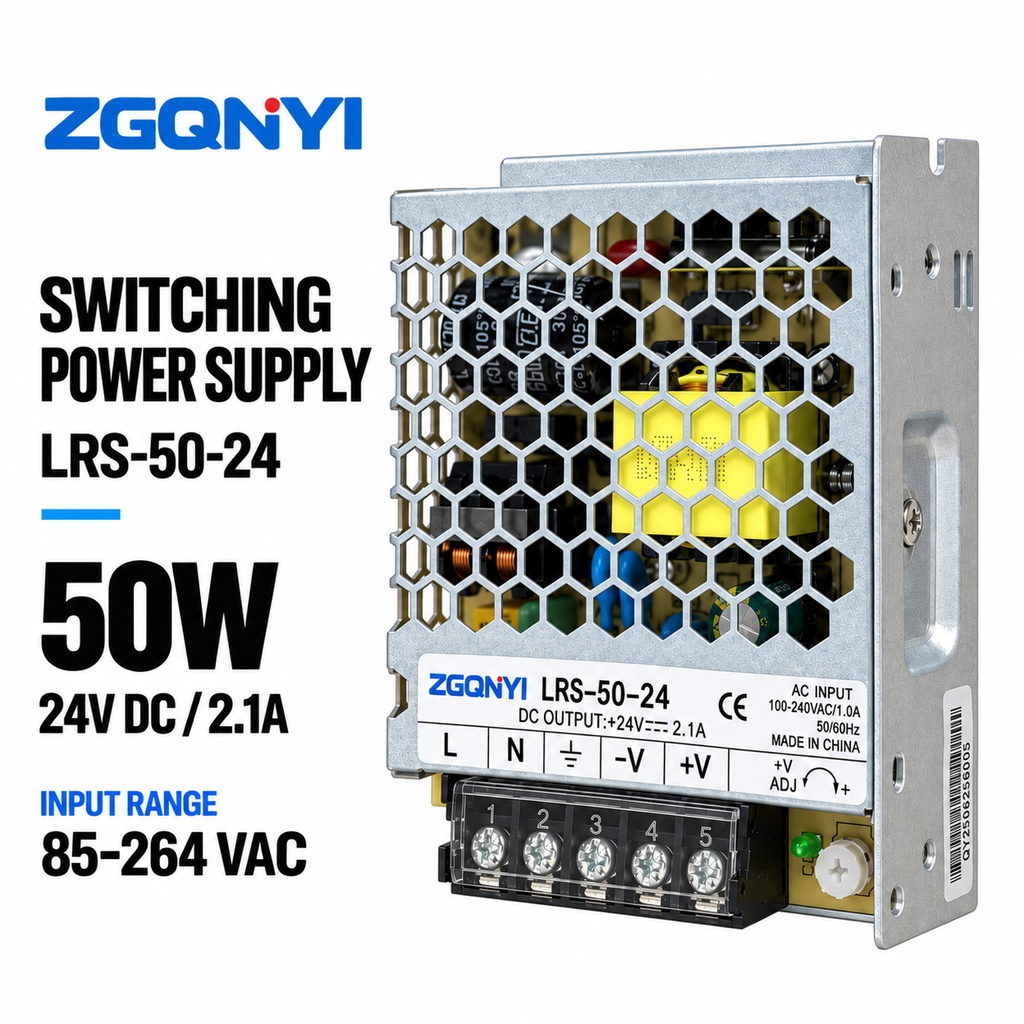
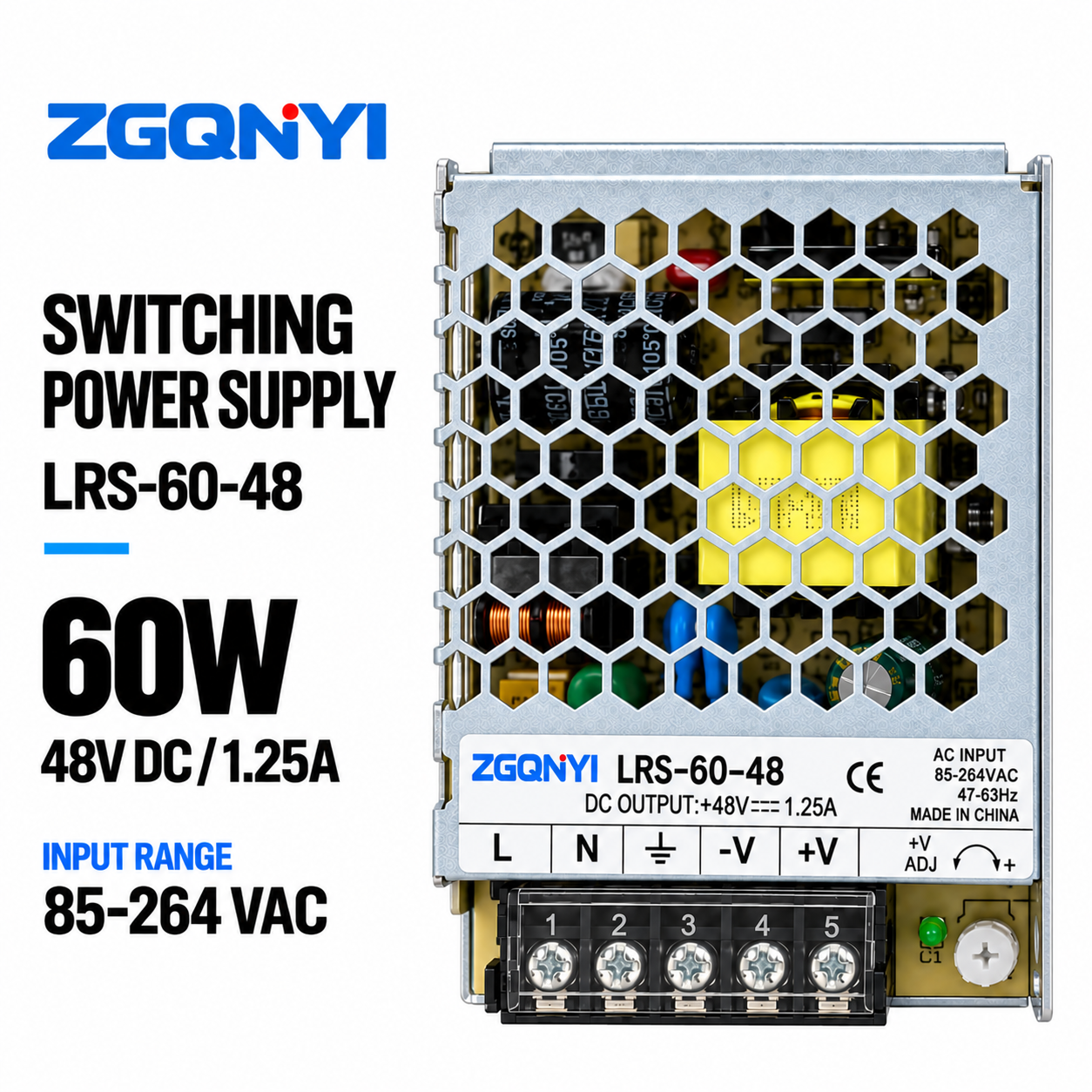
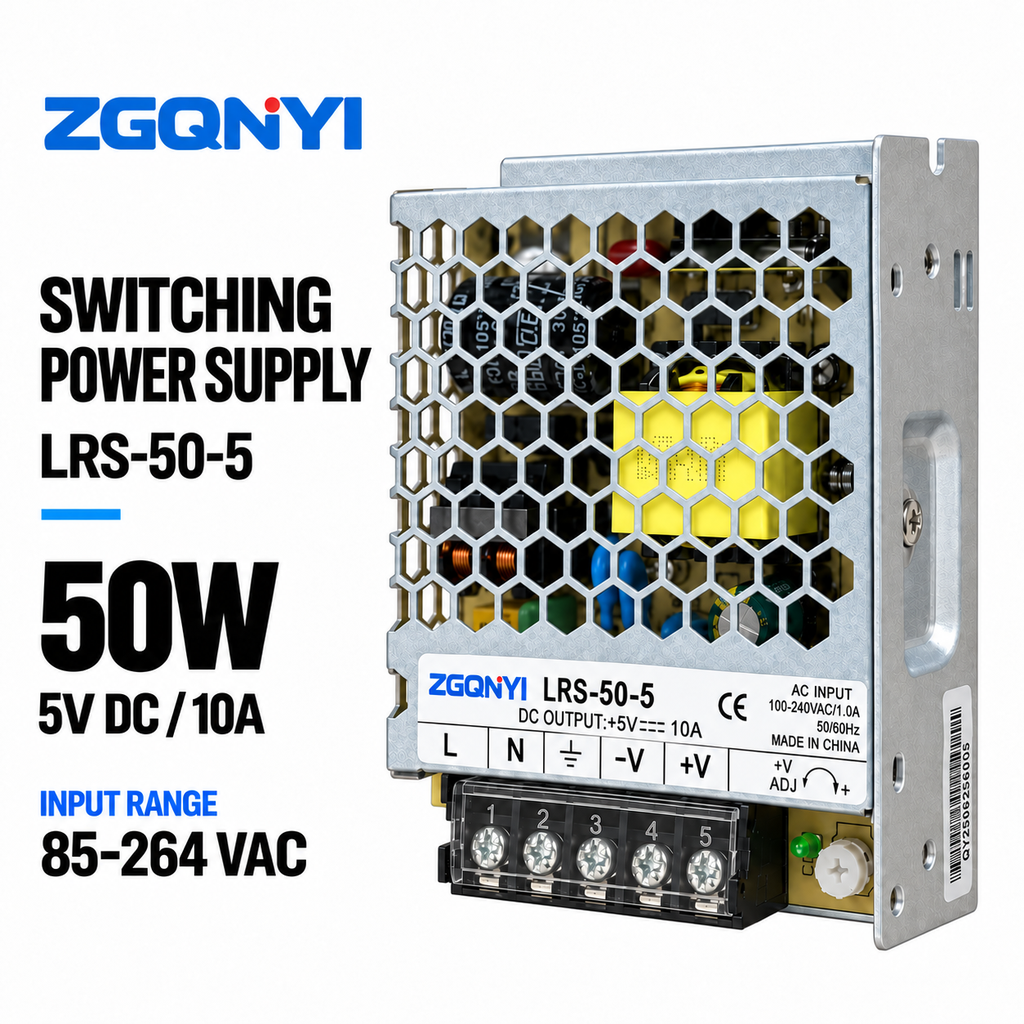
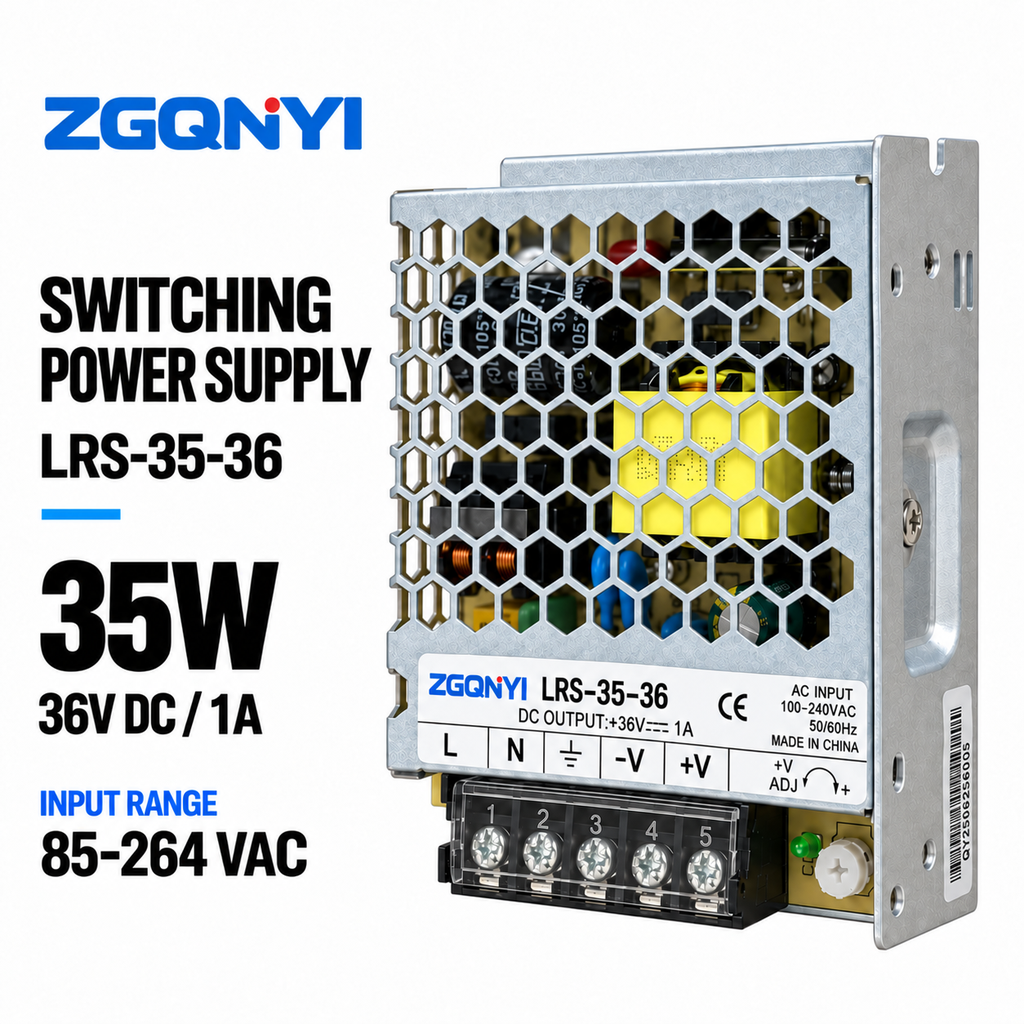
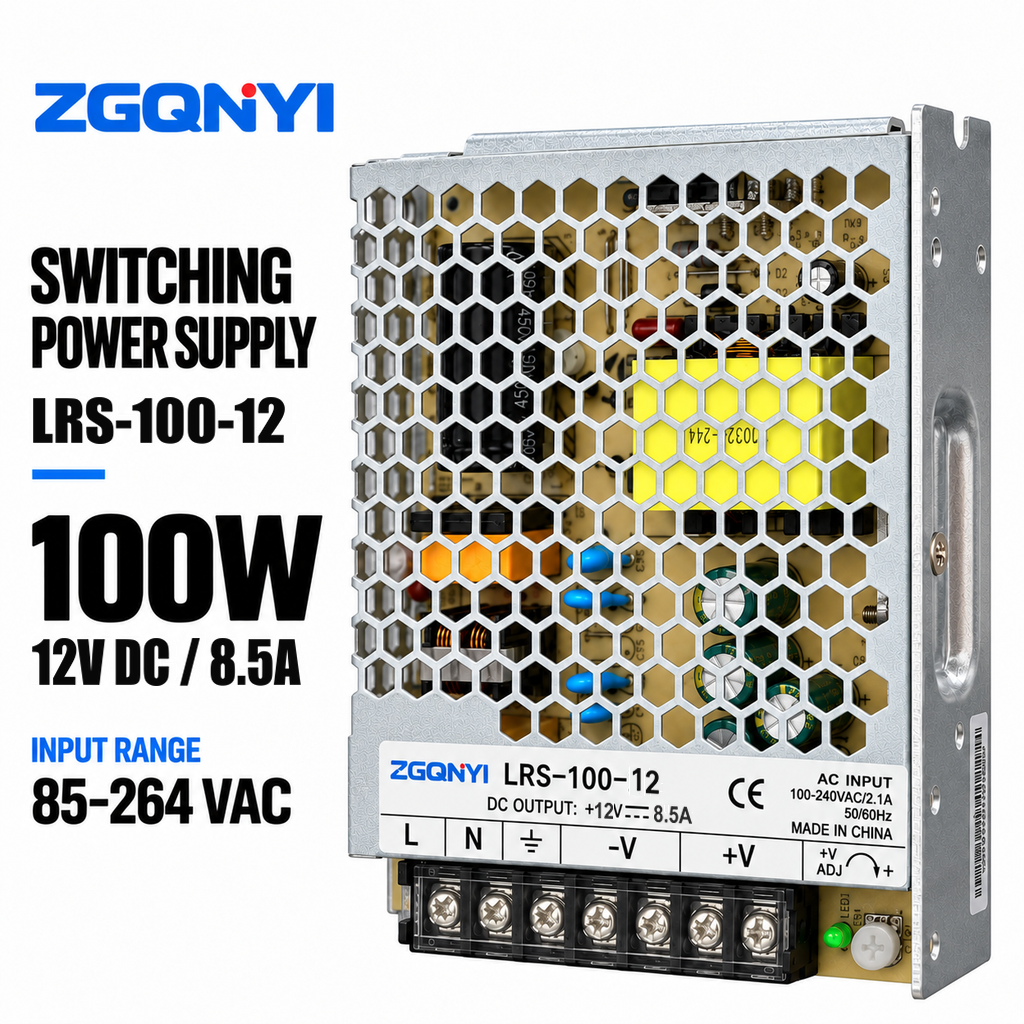
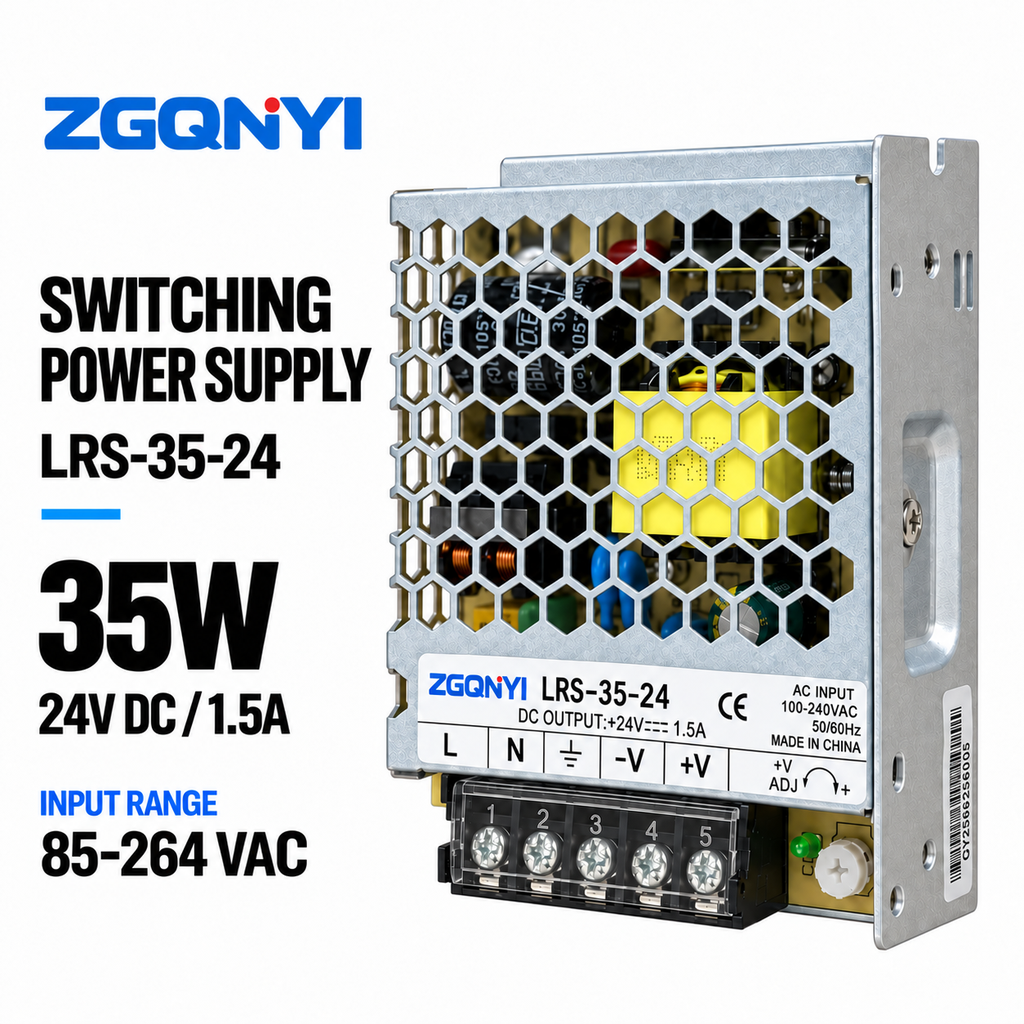
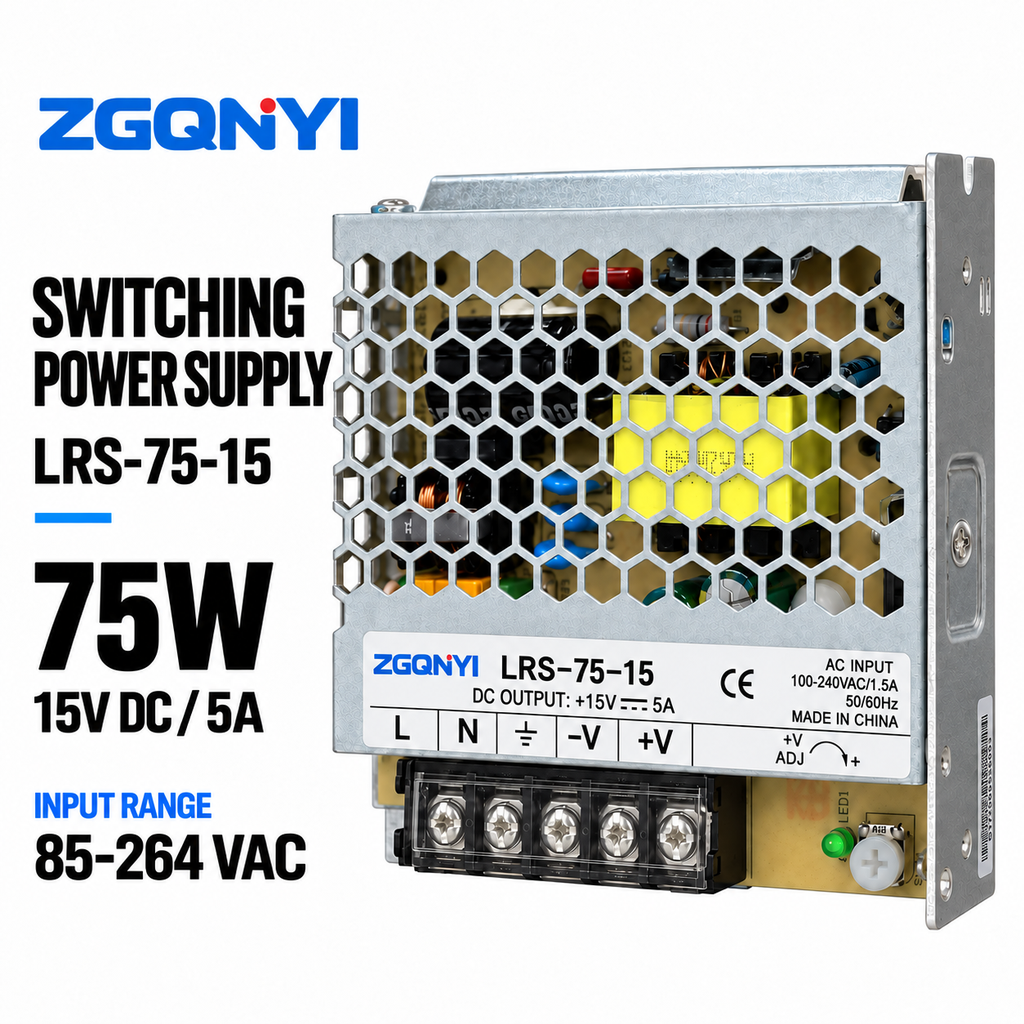
LRS Series (Ultra-Thin) 35W – 350W Single Out, Quasi-Resonant Flyback Passive / Filtered -30°C to +70°C 3,000VAC Input/Output 3D Printers, Signage, Compact Machinery
NDR Series (DIN Rail) 75W – 480W Dual-Stage Forward / LLC Half-Bridge >0.95 Built-in -20°C to +70°C 3,000VAC Input/Output PLC Panels, Relay Racks, Factory Automation
High-Power CC/CV 1,000W – 18,000W Phase-Shifted Full-Bridge (PSFB) >0.98 Active PFC -20°C to +60°C 2,500VAC Ground / Isolated Electroplating, Water Electrolysis, Burn-in Racks
IP67 Waterproof 60W – 500W Epoxy-Potted Resonant LLC >0.96 Active PFC -40°C to +80°C 3,750VAC Reinforced Outdoor Illumination, Marine, Mining Equipment
Strategic Procurement Whitepaper

Future Trends in Industrial Power Supply Design & Supply Chain Resilience

As enterprise original equipment manufacturers (OEMs) adjust to decarbonization initiatives and advanced smart-factory architectures, the expectations placed upon switching power supplies extend far beyond simple AC-to-DC rectification. Procurement directors and chief engineers are adapting to four decisive industry shifts:

1. Wide Bandgap (WBG) Semiconductors: Gallium Nitride (GaN) and Silicon Carbide (SiC)

Traditional silicon MOSFETs are approaching theoretical thermodynamic limits in switching speed and channel conduction resistance (RDS(on)). By integrating GaN FETs on the primary side and SiC Schottky diodes on the secondary synchronous rectification stage, next-generation constant current supplies achieve switching frequencies exceeding 200kHz to 500kHz. This radical increase reduces the physical footprint of magnetic cores (transformers and filter chokes) by up to 45%, elevates thermal conversion efficiency beyond 94.5%, and drastically curtails energy dissipation within tightly packed control enclosures.

2. Real-Time Telemetry and Digital Power Bus Interfaces

Analog trim pots are rapidly yielding to digital loop controllers equipped with Modbus RTU over RS-485, PMBus, or CANopen communication protocols. Smart factory operators demand instantaneous visibility into terminal operating parameters: live voltage output, instantaneous current draw, internal heatsink thermal rise, and cumulative run-time hours. Digital power supplies allow dynamic recalibration of constant-current setpoints on-the-fly via programmable logic controllers (PLCs), enabling automated testing rigs and intelligent multi-stage battery charging routines without human intervention.

3. Total Cost of Ownership (TCO) vs. Initial Unit Purchase Price

Savvy global buyers have transitioned from selecting suppliers strictly on low Bill-of-Materials (BOM) pricing to analyzing comprehensive 5-to-10-year Total Cost of Ownership models. In industrial manufacturing environments running continuous 24/7 cycles, a 4% efficiency discrepancy between an inferior 86% power supply and a premium 90% unit translates into thousands of kilowatt-hours consumed in wasted heat energy per cabinet per year. When coupled with premature service calls stemming from deteriorated low-grade electrolytic capacitors, high-tier CE-certified supplies with MTBF ratings exceeding 250,000 hours consistently yield significant net capital savings.

Manufacturing Authority & Infrastructure

Why Tier-1 Global OEMs Standardize on Our Wenzhou Production Ecosystem

Headquartered in the Beibaixiang electrical industrial cluster of Wenzhou, Zhejiang, Wenzhou Nuvros Electric Co., Ltd. combines 18 years of technical research and production depth. Our integrated facilities deploy automated surface-mount technology (SMT) lines, computerized wave soldering, and comprehensive digital quality gates across all power classes (from 15W chassis units to 18kW water-cooled CC systems):

  • Rigorous 100% Full-Load Dynamic Burn-in: Every standard and custom switching power supply undergoes 4 hours of elevated-temperature (45°C) full-load burn-in with automated high-voltage on/off thermal shock cycling, effectively filtering out early component infant mortality.
  • Proprietary Magnetics Design: In-house transformer winding, vacuum varnish impregnation, and customized ferrite core design provide precise leakage inductance control, maximizing LLC resonant efficiency and minimizing electromagnetic interference.
  • Rapid OEM/ODM Prototyping Pipeline: Dedicated engineering teams analyze client specifications—including unique input voltage ranges, custom mechanical brackets, specific IP ratings, or custom CC compliance voltage profiles—delivering engineering verification samples within 7 to 12 working days.
  • Guaranteed Capacity & Scalability: With an installed capacity exceeding 500,000 units monthly and tight localized component supply supply chains, we ensure consistent delivery lead times, hedging our partners against sudden global supply shortages.
Procurement Knowledge Base

Frequently Asked Questions by Industrial Sourcing Teams

Technical, regulatory, and commercial clarifications addressed directly by our chief application engineers.

What is the core difference between Constant Current (CC) and Constant Voltage (CV) power supplies?
A Constant Voltage (CV) power supply maintains an invariant output voltage (such as 12VDC, 24VDC, or 48VDC) while allowing the load to dictate the current draw up to the unit's maximum rated capacity. In contrast, a Constant Current (CC) supply maintains an exact pre-set current flux by automatically varying its output voltage across a specified compliance range. CC supplies are mandatory when powering components with variable or negative internal resistance (e.g., high-power LEDs, electroplating chemistry, and laser diode modules) to prevent destructive thermal runaway.
How does your factory ensure compliance with the CE Low Voltage Directive (LVD)?
Compliance with Directive 2014/35/EU is achieved by adhering to EN IEC 62368-1 standards. Our quality assurance protocol mandates automated hi-pot (dielectric withstand) testing on 100% of finished goods: 3,000VAC primary-to-secondary isolation for 60 seconds. Furthermore, our PCB layouts observe strict creepage and clearance distances exceeding 6.4mm for reinforced insulation, utilizing Class B/F flame-retardant insulating barriers and UL94V-0 certified FR-4 substrates.
Can your power supplies operate reliably in high-temperature control cabinets without tripping?
Yes. All standard enclosed units (such as our LRS series) and DIN rail models incorporate standard thermal derating curves. They deliver 100% full-rated load up to 50°C ambient temperatures under natural air convection. Between 50°C and 70°C, linear derating (typically 2.5% per °C) applies. To ensure durability, our designs employ premium Japanese and Taiwanese 105°C-rated long-life electrolytic capacitors rated for 5,000 to 10,000 operating hours at maximum thermal stress.
What fault protection modes are integrated into your industrial CC/CV units?
Our systems incorporate four-stage intelligent protection: (1) Over-Current / Short-Circuit Protection via either constant current limiting or automated hiccup recovery mode; (2) Over-Voltage Protection (OVP) utilizing Zener clamp feedback triggering latch-off; (3) Over-Temperature Protection (OTP) monitored by thermistors embedded directly on primary semiconductor heatsinks; and (4) Input Under-Voltage / Over-Voltage lockout to prevent brownout damage.
What is the standard Minimum Order Quantity (MOQ) and production turnaround for custom designs?
Standard catalog models have zero MOQ barriers for evaluation units (sample batch sizes starting from 1 piece). For specialized OEM/ODM modifications (custom voltage trims, specific connector harnessing, private labeling, or conformal coating for marine/harsh environments), standard batch minimums range from 100 to 500 units depending on chassis complexity. Custom prototyping takes 7–12 business days, while volume production runs dispatch within 15–25 business days.
How do you handle shipping logistics and international commercial trade terms?
We provide comprehensive export handling under Incoterms 2020: FOB Ningbo/Shanghai, CIF destination port, EXW factory gate, and complete Delivered Duty Paid (DDP) logistics for European and North American buyers. Our shipments are packaged with palletized wooden cases and moisture-proof vacuum barriers, accompanied by original CE Declarations of Conformity, full test reports, and RoHS compliance certificates.
Direct Factory Collaboration

Request Complete Engineering Catalogs & OEM Quotations

Connect with our technical application specialists to receive full 2D/3D CAD step files, detailed electrical schematics, certified test certificates, and volume pricing matrices tailored to your project.

1-Hour Rapid Engineering Reply
Comprehensive CE & RoHS Dossiers
Free Evaluation Samples for OEMs
Direct Manufacturer Pricing

Wenzhou Nuvros Electric Co., Ltd.

Yanjiang Industrial Park, Beibaixiang, Wenzhou, Zhejiang, China. Global technical sales & contract manufacturing.

Get Catalog