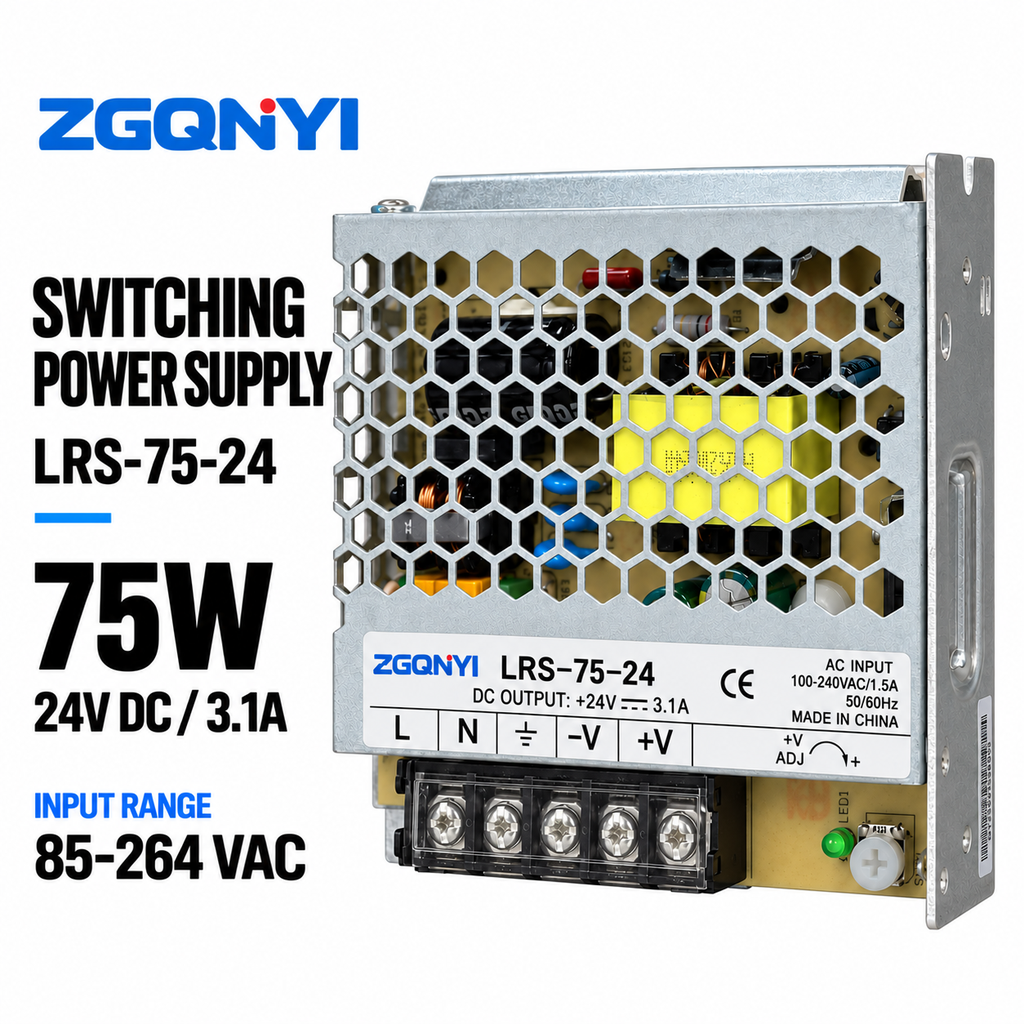
LRS-75-24
24V DC
75W Output
CE Certified
Convection Cooling
Engineered for industrial automation, dynamic robotics, LED drive systems, and heavy-duty continuous process loads. Compliant with CE and RoHS standards with guaranteed load stability.
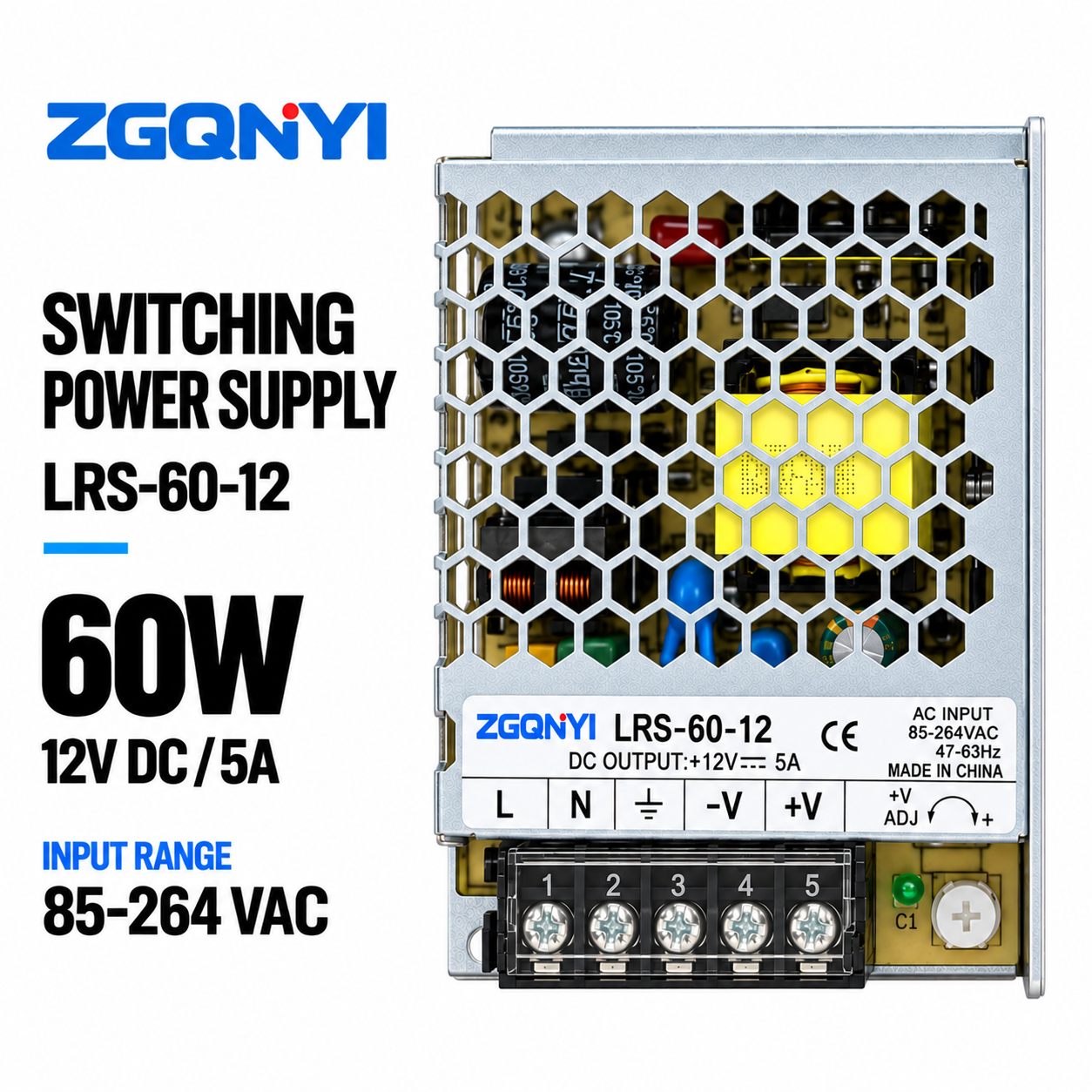
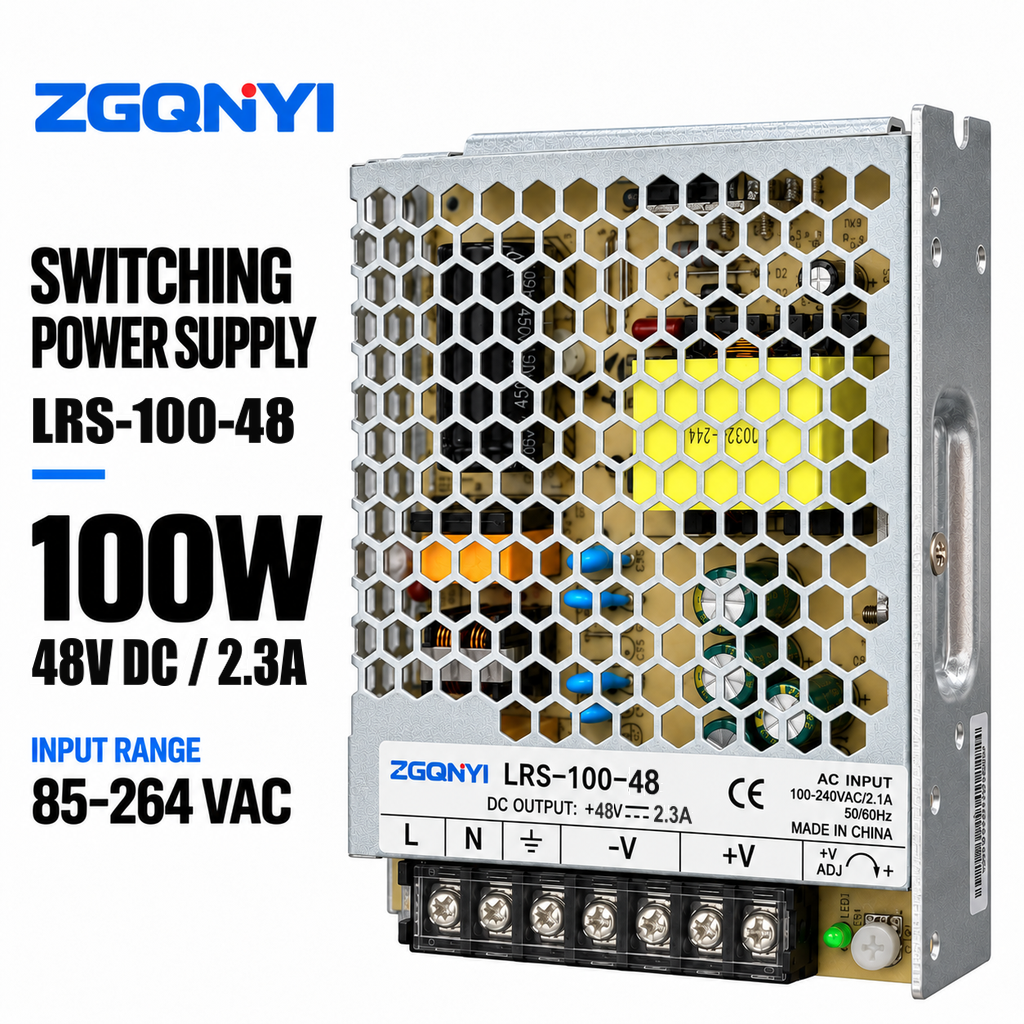
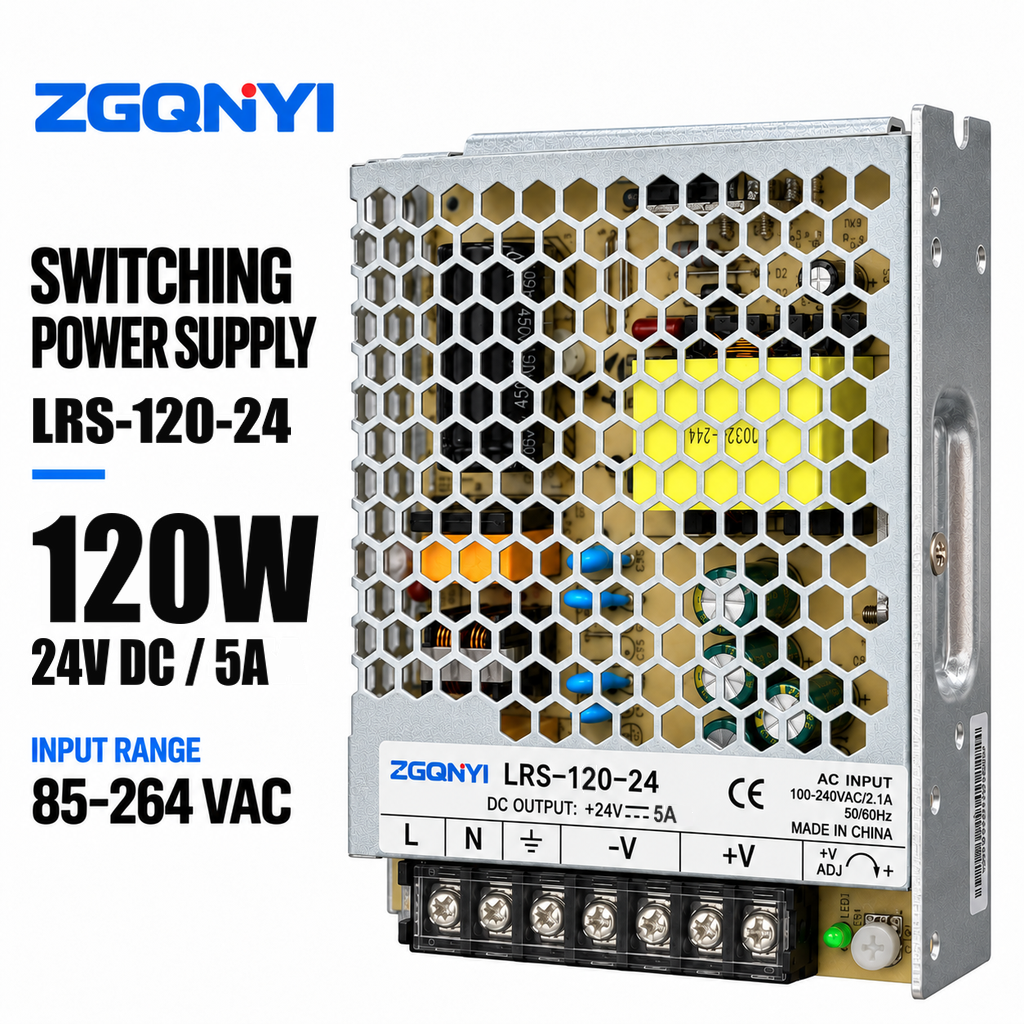
A systematic analysis of why current-regulated power sources determine system MTBF, eliminate thermal runaway, and ensure regulatory conformity across international distribution pipelines.
Traditional Constant Voltage (CV) supplies exhibit severe vulnerabilities when driving dynamic loads such as electroplating baths, battery matrices, and high-density semiconductor arrays. A dedicated Current Regulated Power Supply utilizes an inner current-feedback loop with shunt resistors and Hall-effect transducers. This architecture prevents overcurrent saturation and guarantees an instantaneous sub-millisecond response against load impedance variance.
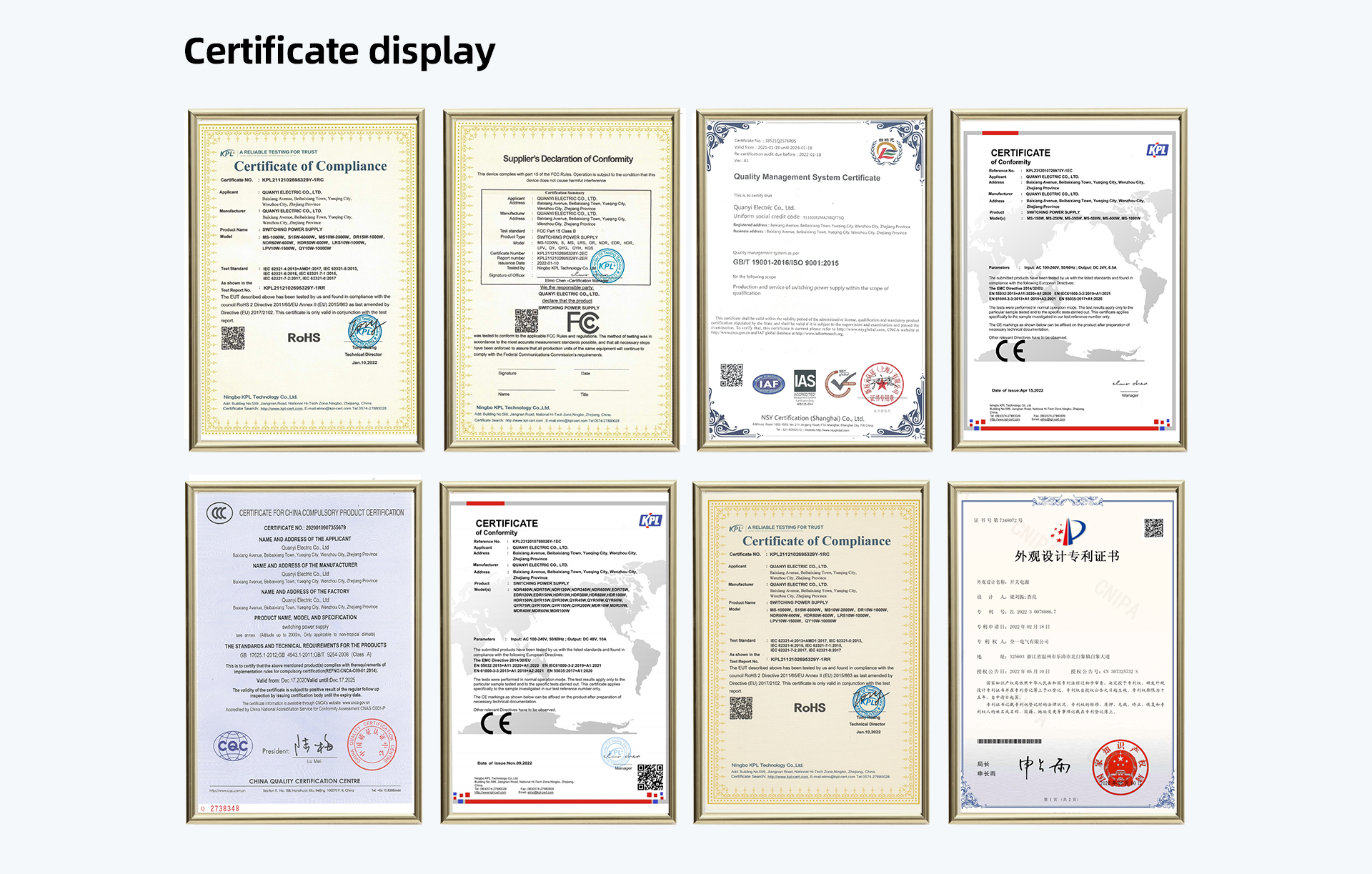
Manufacturing under CE certification requires strict conformity with EN 62368-1 / EN 61558-1 safety standards. Our factory incorporates triple-insulated transformer topologies, creepage and clearance distances strictly maintained above 6.4mm, and reinforced galvanic isolation capable of withstanding 3.0kV AC primary-to-secondary dielectric withstand tests, ensuring zero danger to maintenance technicians.
Deploying switching electronics in heavy manufacturing areas demands adherence to EN 55032 Class B (Conducted & Radiated Emissions) and EN 61000-3-2 (Harmonics). Integrated two-stage common-mode chokes, X/Y suppression safety capacitors, and active Power Factor Correction (PFC > 0.98) safeguard adjacent PLCs, telemetry modules, and microcontrollers against electrical grid interference.
Evaluate critical engineering parameters across industrial low-profile, DIN-rail, and programmable multi-kilowatt constant-current power modules.
| Architecture Class | Nominal Ratings | Current Regulation Precision | Efficiency & PFC | Cooling & Housing | Primary Industrial Use Cases |
|---|---|---|---|---|---|
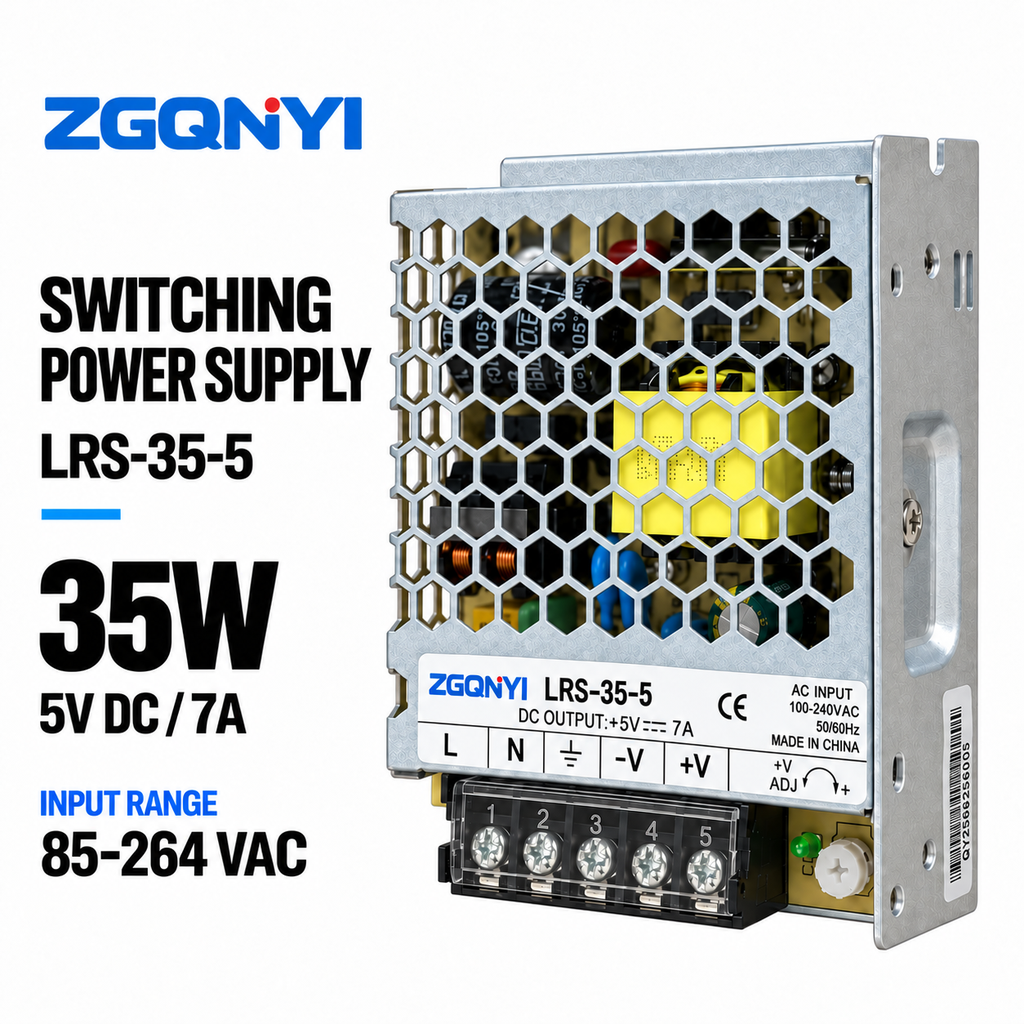
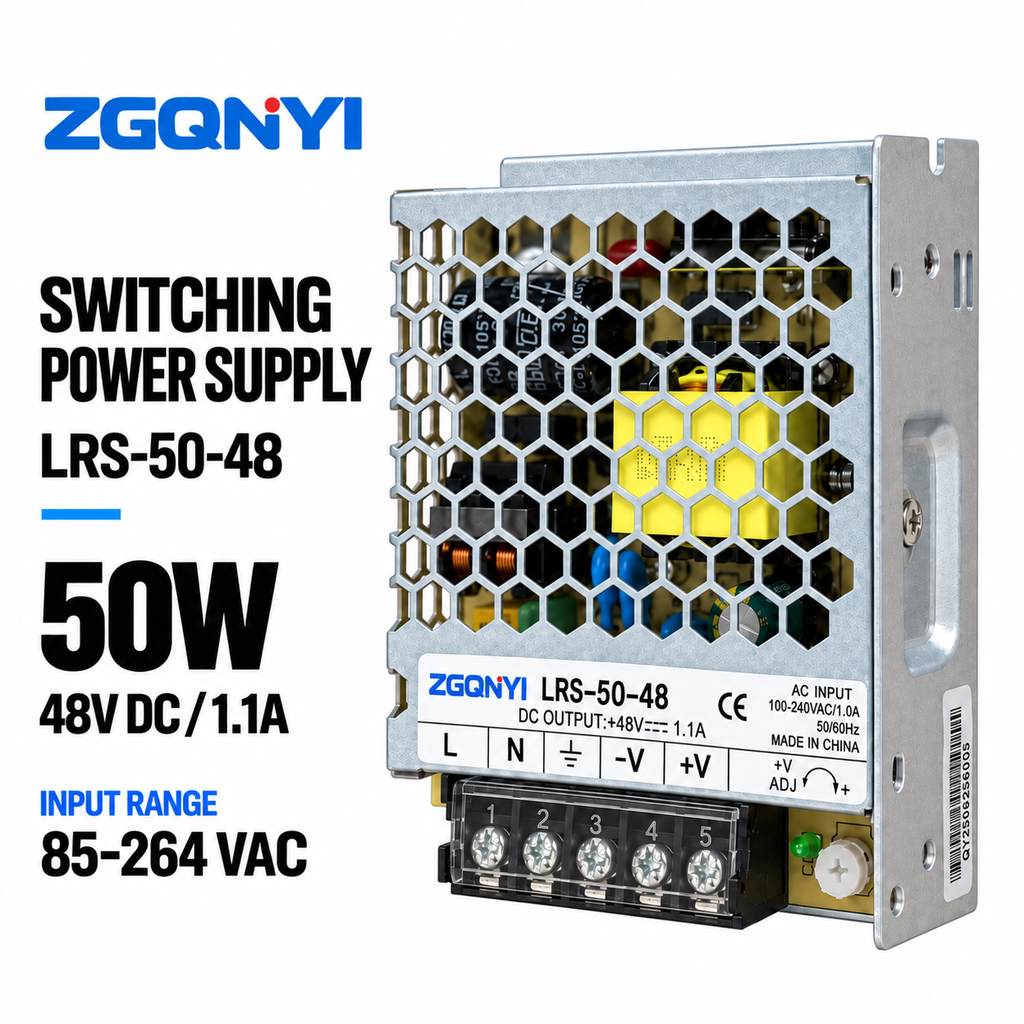
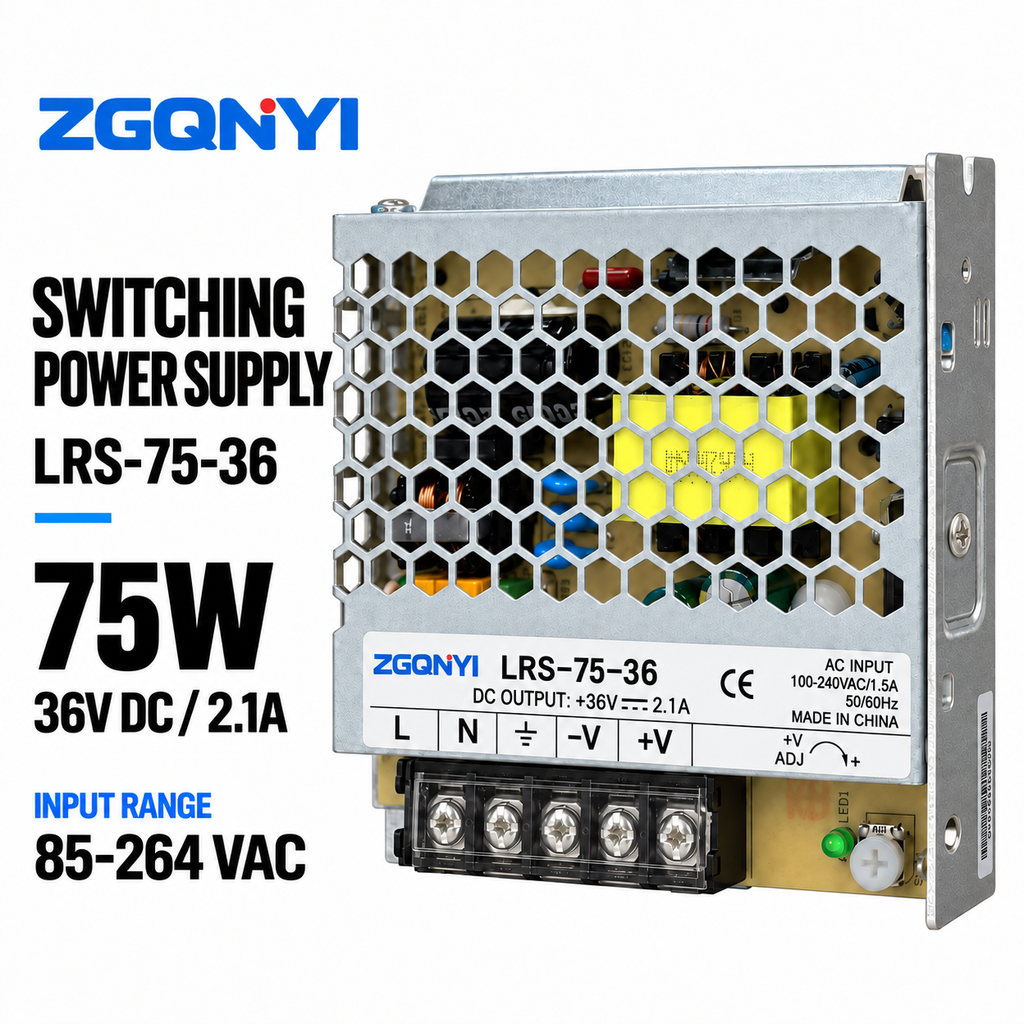
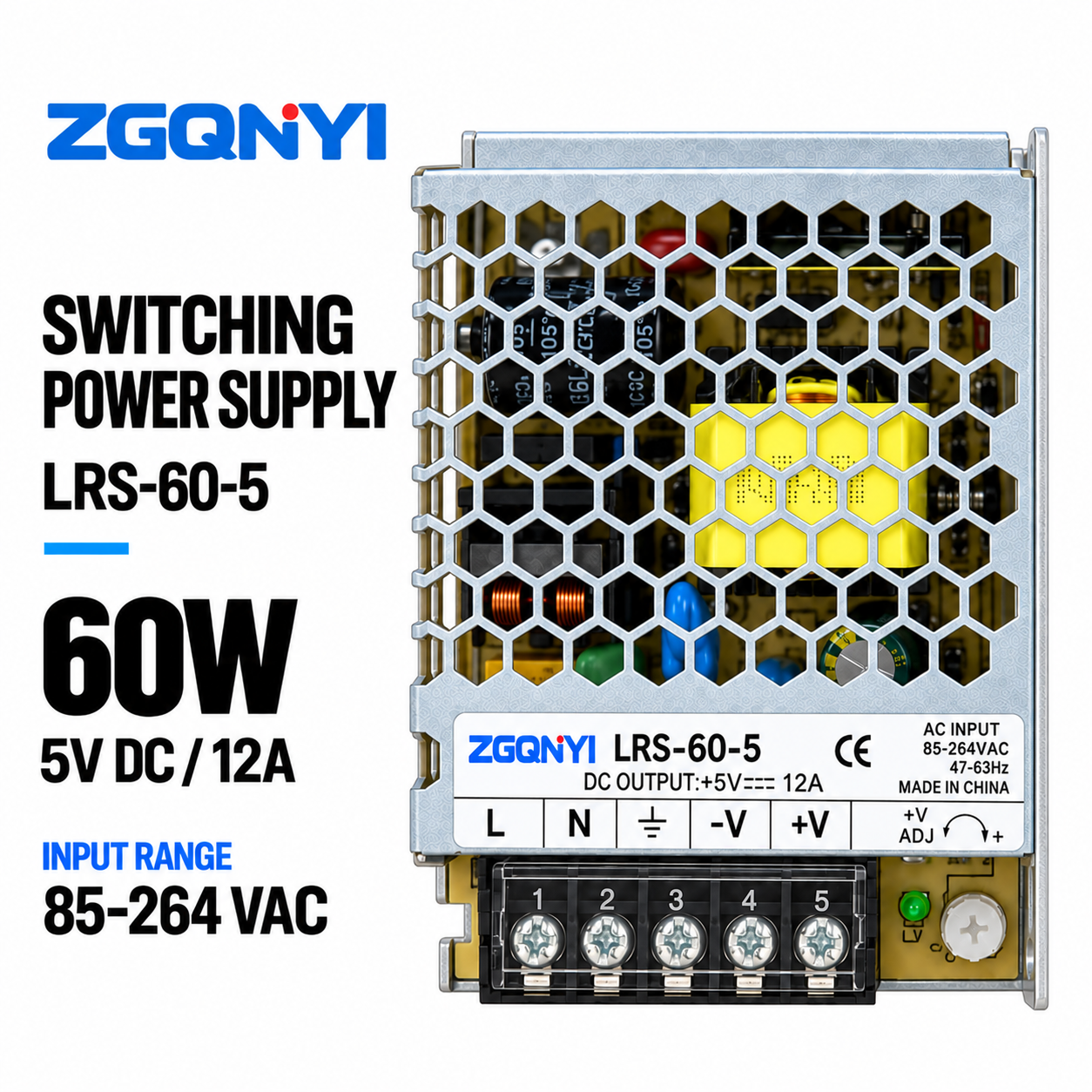
| LRS Ultra-Thin Single SMPS | 35W – 500W (5V, 12V, 24V, 48V) | ±1.0% Steady State | 88% - 91.5% (Passive PFC) | Low-profile extruded mesh, natural convection | Packaging machinery, 3D printers, digital signage, instrumentation |
| NDR / MDR DIN Rail Modules | 15W – 480W (12V, 24V, 48V) | ±0.8% Load Variance | 89% - 94.0% (Active PFC) | TS-35 Rail mountable, IP20 zinc-plated steel | PLC control racks, SCADA sensors, robotics, distributed factory I/O |
| Digital Display High-Power CC/CV | 1kW – 18kW (0-16V up to 220V DC) | ±0.5% Full Scale | 93% - 96.5% (PFC > 0.99) | Forced internal cooling, RS485 / Modbus | Continuous electroplating, industrial electrolysis, EV fleet battery stations |
| IP67 Waterproof Drivers | 60W – 500W (12V, 24V, 36V) | ±1.5% Constant Output | 90% - 93.0% (PFC > 0.95) | Thermal silicone potted, IP67 sealed alloy | Highway tunnel lighting, exterior architectural facades, washdown zones |
Actionable market intelligence for OEM engineering leads, contract manufacturers, and procurement directors navigating shifting supply chains and power electronics mandates.
Global procurement teams are replacing raw purchase price metrics with comprehensive Total Cost of Ownership calculations. High-efficiency SMPS (over 93%) mitigates cooling loads within enclosed control panels, reducing thermal stress on electrolytic capacitors and extending continuous service life past 50,000 operational hours.
With supply volatility continuing across semiconductor segments, industrial buyers now demand Bill of Materials (BOM) transparency. Factory-direct partnerships with verified manufacturers eliminate counterfeit IC risks by utilizing certified tier-1 capacitors, MOSFETs, and magnetic cores from traceable sourcing pipelines.
Static switching units are being displaced by intelligent power supplies equipped with RS485 Modbus or CANbus telemetry. Field engineers expect real-time current consumption, remote voltage trimming, thermal warning logs, and predictive maintenance alerts delivered directly to enterprise SCADA frameworks.
Standard off-the-shelf power supplies often fail to meet non-standard industrial footprints or specific current-limit thresholds. Sourcing managers increasingly consolidate with manufacturing facilities capable of delivering customized DC voltages, custom wire harness terminations, and private-label metal housings within 10-14 business days.
How wide bandgap semiconductors, high-frequency planar transformers, and automated digital loop controls are reshaping the physical limits of power conversion.
Gallium Nitride (GaN) and Silicon Carbide (SiC) switches allow power supplies to operate at switching frequencies exceeding 500 kHz, compared to legacy 65 kHz-100 kHz silicon MOSFETs. This exponential increase reduces passive magnetic footprint by over 40%, yielding power density figures beyond 25W/in³ while drastically minimizing switching losses.
Traditional copper-wire wound transformers suffer from skin-effect dissipation and high leakage inductance. Modern high-power regulated supplies are shifting toward multilayer PCB planar magnetics. Planar windings ensure unmatched consistency, exceptional thermal dissipation, tight magnetic coupling, and low electromagnetic radiation profile.
Analog PWM controllers are being augmented by dedicated 32-bit Digital Signal Processors (DSP). DSP algorithms dynamically adjust proportional-integral-derivative (PID) loop parameters in real time based on temperature, input surge, and impedance phase shifts, resulting in ripple attenuation below 30mVp-p under load steps.
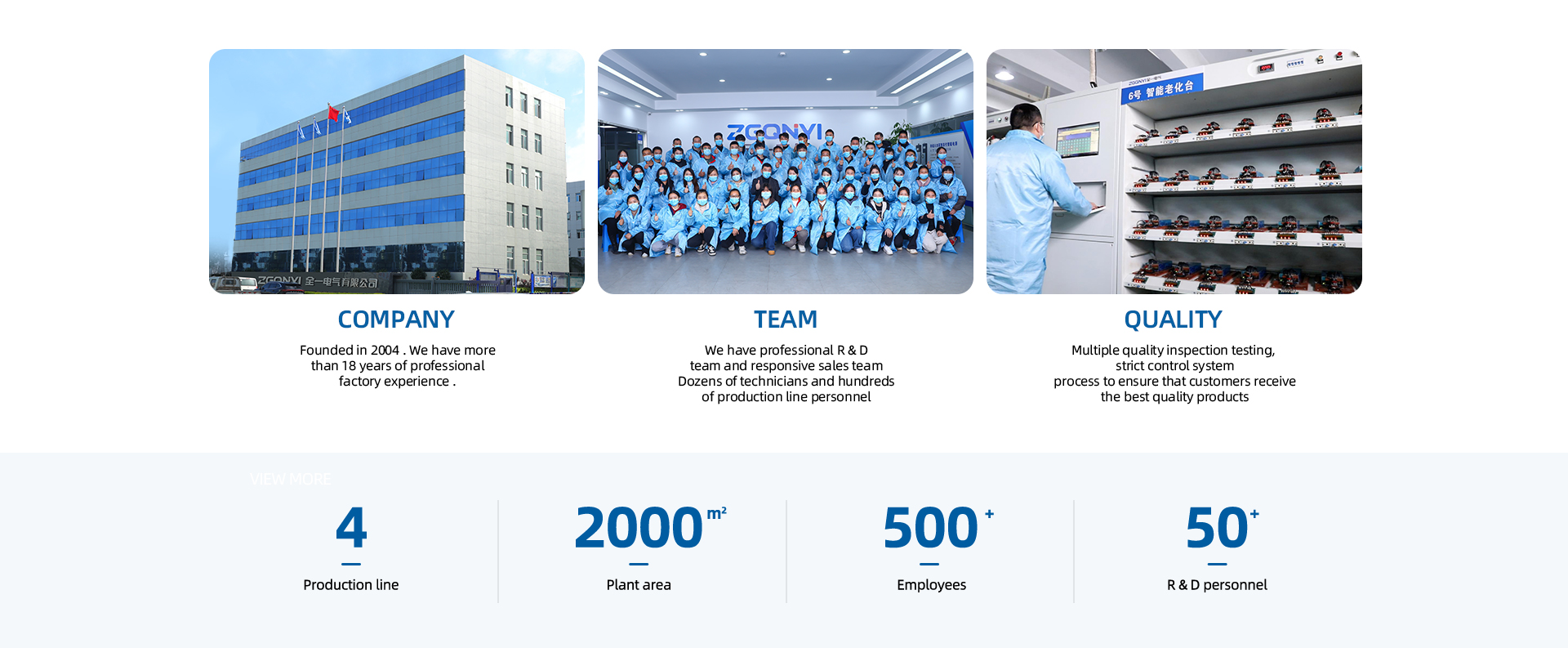
Located in the heart of China's electrical technology manufacturing base in Beibaixiang Town, Wenzhou, our enterprise brings 18 years of specialized R&D experience in AC/DC, DC/DC, and adjustable current-regulated power supply systems. Our integrated facility spans over 10,000 square meters of precision manufacturing and testing space.
With an active monthly output exceeding 500,000 units and an inventory of over 1,000 standardized industrial models, we serve international machine builders, automated system integrators, and distributor channels across North America, Western Europe, and Southeast Asia.
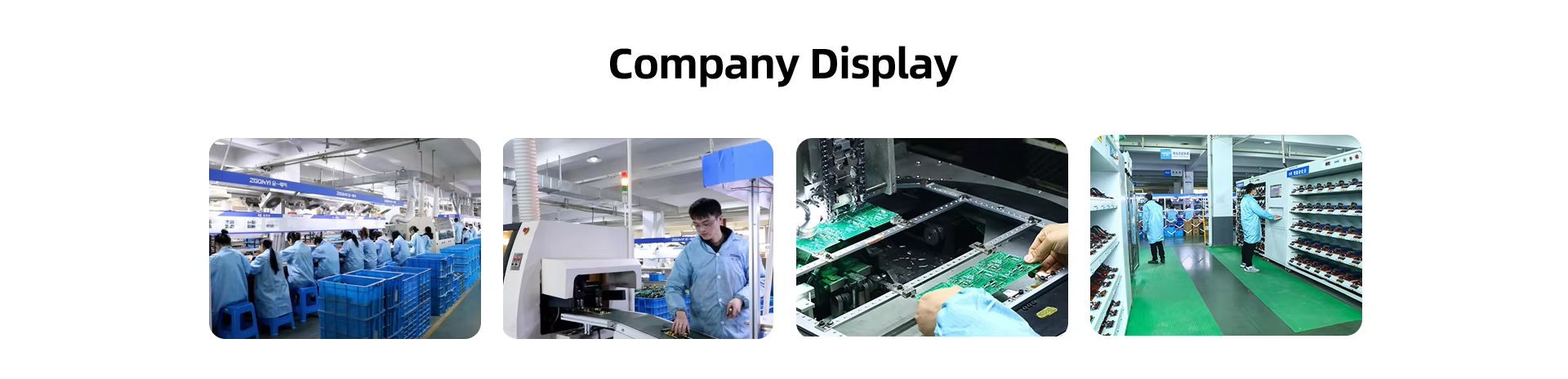
Every switching power supply passing through our assembly lines undergoes a multi-gate verification process:
Crucial technical and procurement clarifications answered by factory chief engineers to streamline quotation and integration processes.