18+
Years R&D Experience
10,000m²
Smart Factory Facility
500,000+
Monthly SMPS Units Output
1,000+
CE & RoHS Certified SKUs
Factory Direct Selection
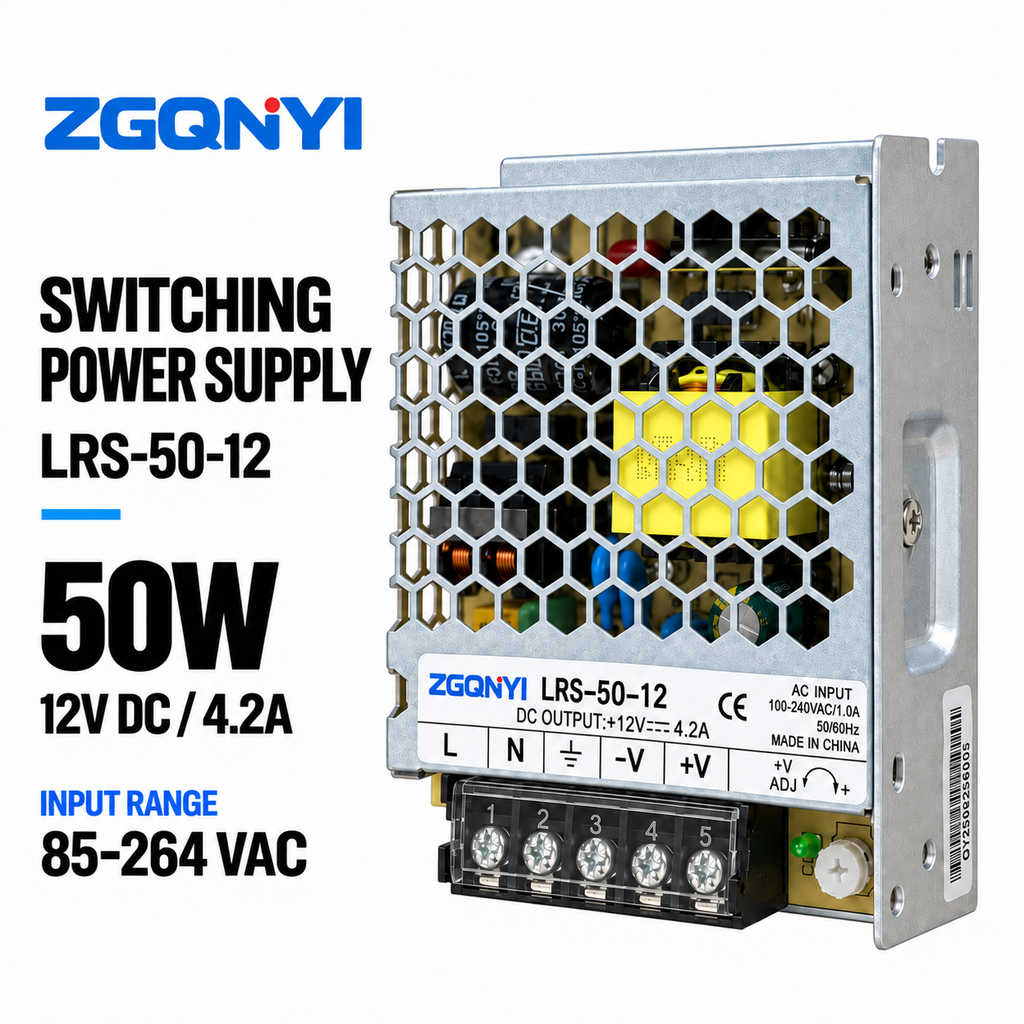
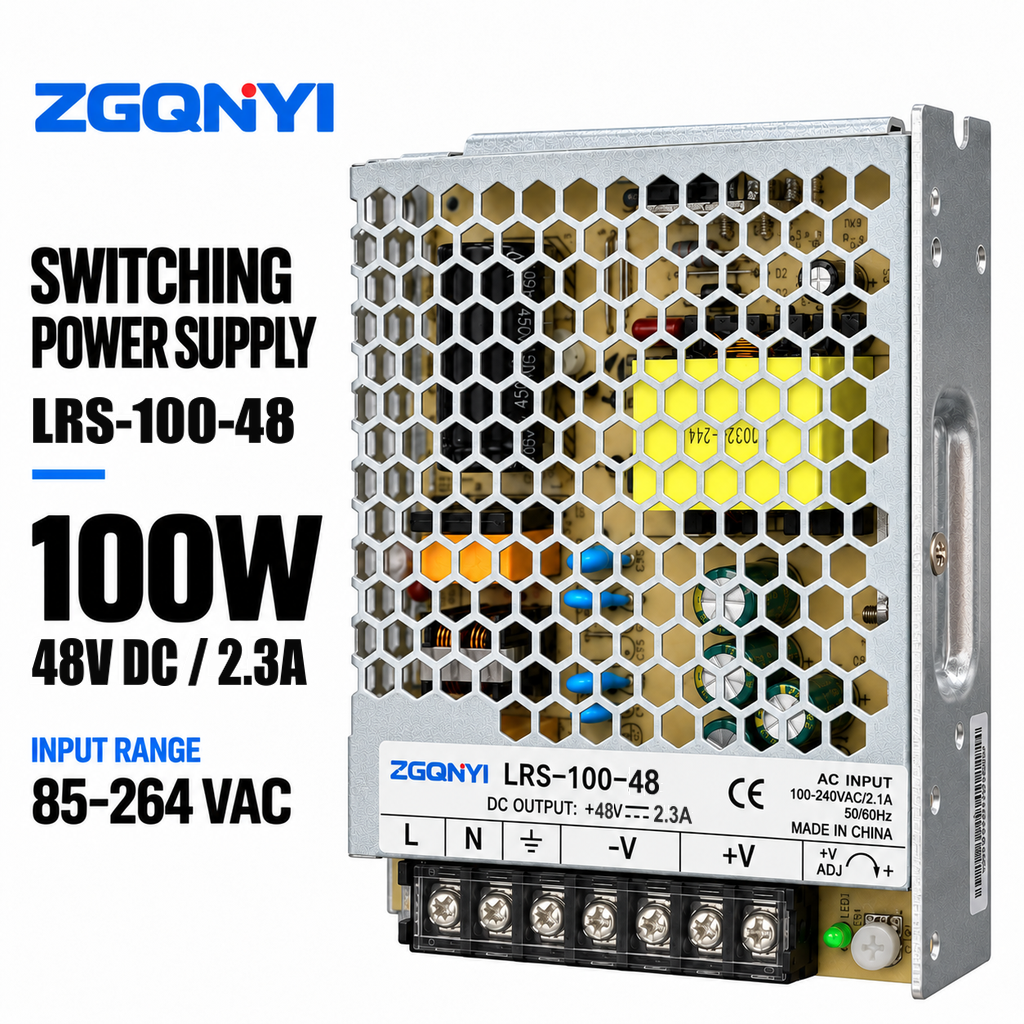
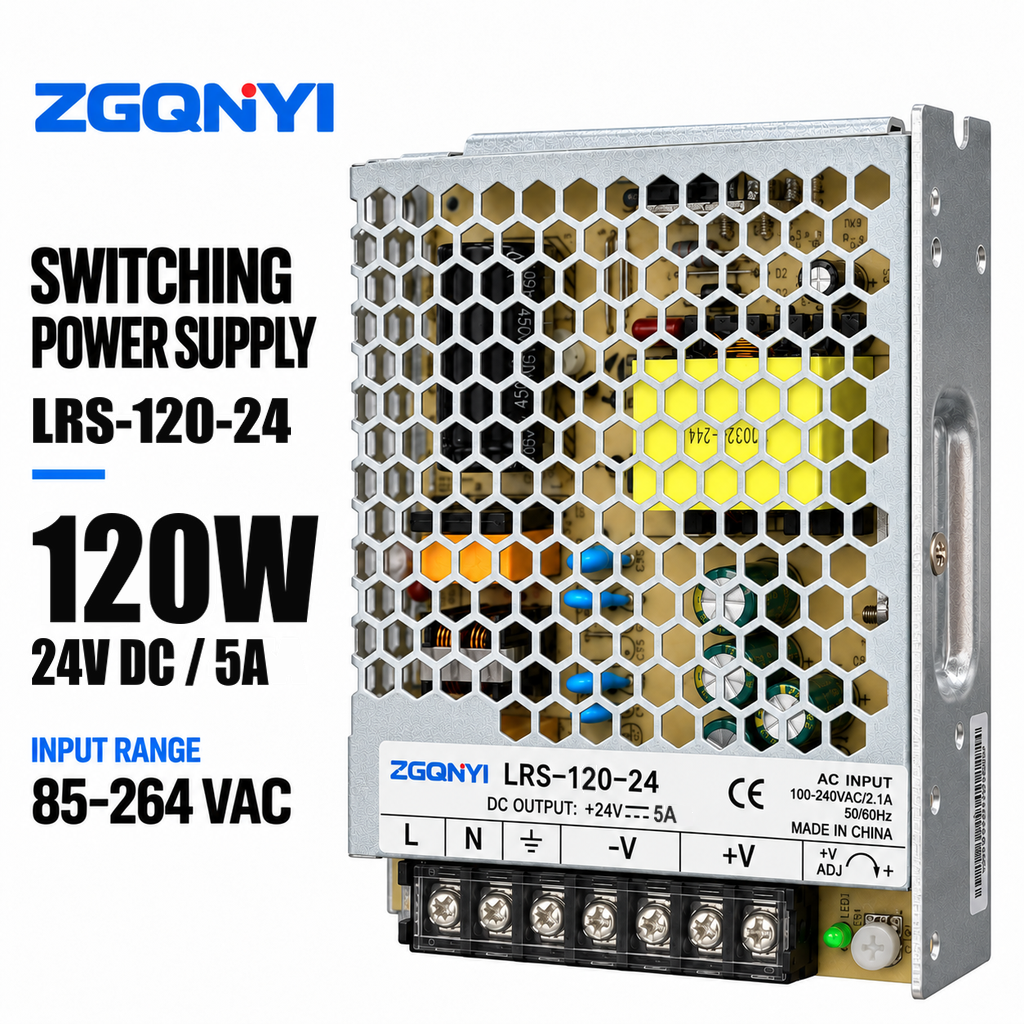
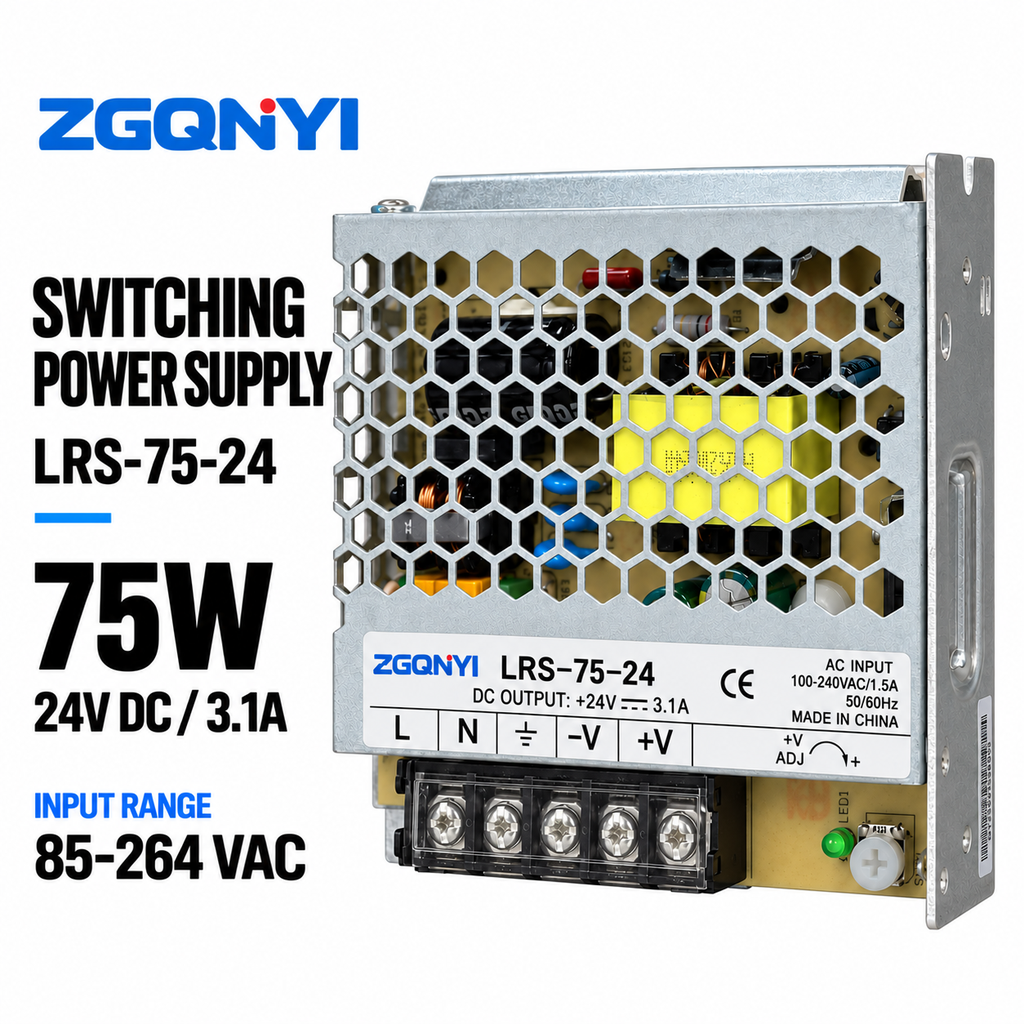
High Reliability Industrial Enclosed Power Supplies
Engineered for high MTBF, low electromagnetic emissions, and rigorous low-ripple line regulation. Select standard footprints or request targeted OEM topology revisions.
Factory Strengths
Engineering-Led Switching Power Supply Manufacturing
Located in the heart of China’s electrical manufacturing epicenter (Yanjiang Industrial Park, Beibaixiang Town, Wenzhou), Wenzhou Nuvros Electric Co., Ltd. consolidates 18 years of technical authority across AC/DC, DC/DC, and adjustable DC platforms.
18 Years Deep-Domain R&D Rigor
Over nearly two decades, our electrical engineering team has perfected resonant topology converters, low standby power consumption, active harmonic suppression circuits, and thermal optimization for enclosed converters operating in non-ventilated metal cabinets.
Mean Time Between Failures (MTBF) > 350,000 Hours
Modern 10,000 m² Facility & Scalability
With fully automated SMD placement lines, automatic wave soldering machines, automatic optical inspection (AOI), and centralized aging burn-in rooms, our production throughput comfortably exceeds 500,000 power supply units monthly to guarantee resilient lead times.
500k+ Units/Mo · Scalable Volume Delivery
Total Compliance (CE, RoHS & LVD/EMC)
Every industrial unit complies with international safety directives. Our standard catalog conforms to EN 62368-1, EN 55032 Class B emission standards, and EU RoHS limits, ensuring seamless OEM integration and expedited customs clearance across European, American, and APAC borders.
Validated Traceable Test Certifications
Strategic Procurement Analysis
Shifting Sourcing Trends in High-Power Industrial Power Supplies
In-depth technical criteria and market dynamics transforming B2B power converter procurement across European and North American industrial hubs.
1. Stringent Mandates for Harmonic Suppression & Active PFC
Global procurement teams now prioritize supplies with built-in Active Power Factor Correction (PFC > 0.95). In European automation corridors, non-PFC converters exceeding 75W fail strict EN 61000-3-2 guidelines. Modern installations demand active topology that reduces grid pollution, minimizes apparent current, and prevents harmonic resonance in plant sub-panels.
EN 61000-3-2 Compliance Mandatory for Export
2. Rise of Programmable CC/CV for Heavy Electrolytic Applications
Electrochemical machining, electrolysis hydrogen generation, and specialized surface electroplating lines are abandoning fixed-output supplies in favor of high-wattage (1kW to 18kW) Constant Current / Constant Voltage (CC/CV) modules. Buyers seek digital RS485 / Modbus-RTU remote control interfaces to modulate ampere-hour parameters dynamically during batch processing.
Dynamic Resistance Adapting Architectures
3. Ultra-Slim Form Factors & Thermal De-rating Optimization
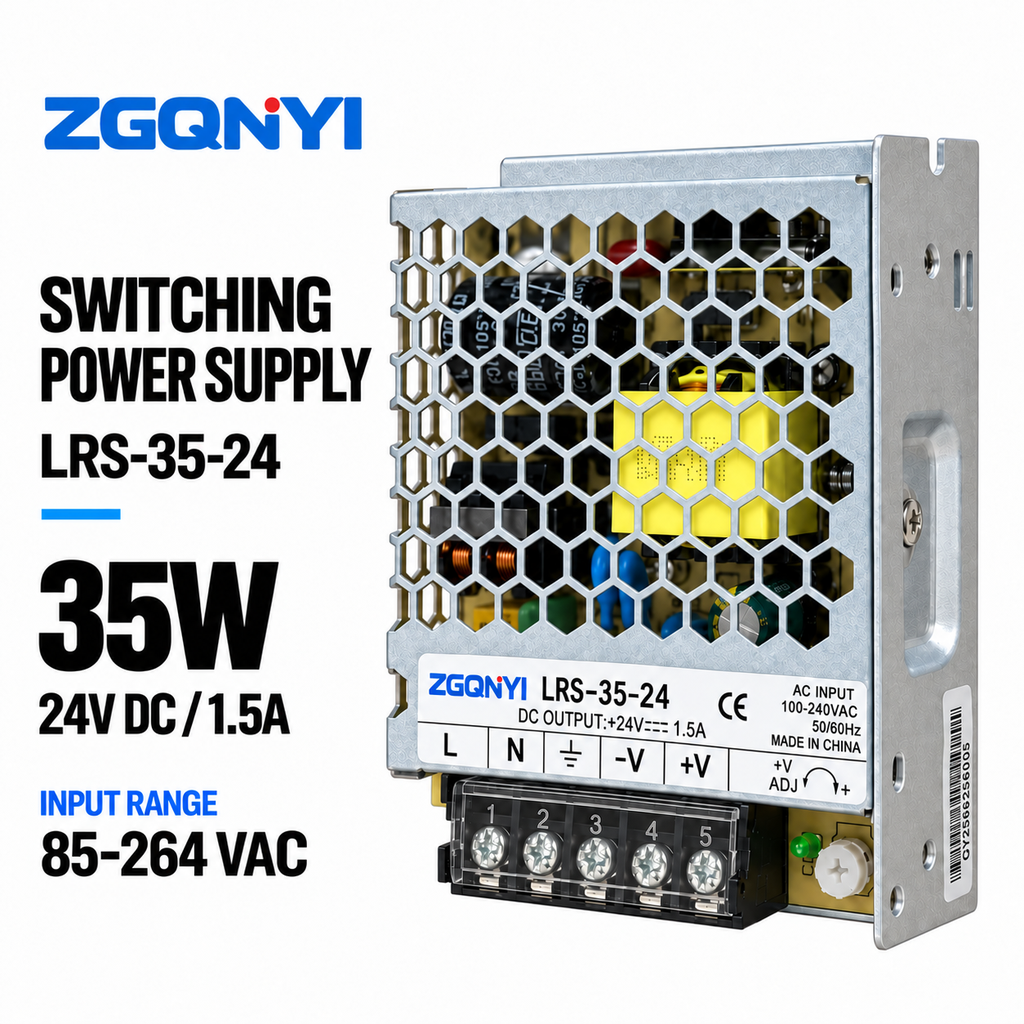
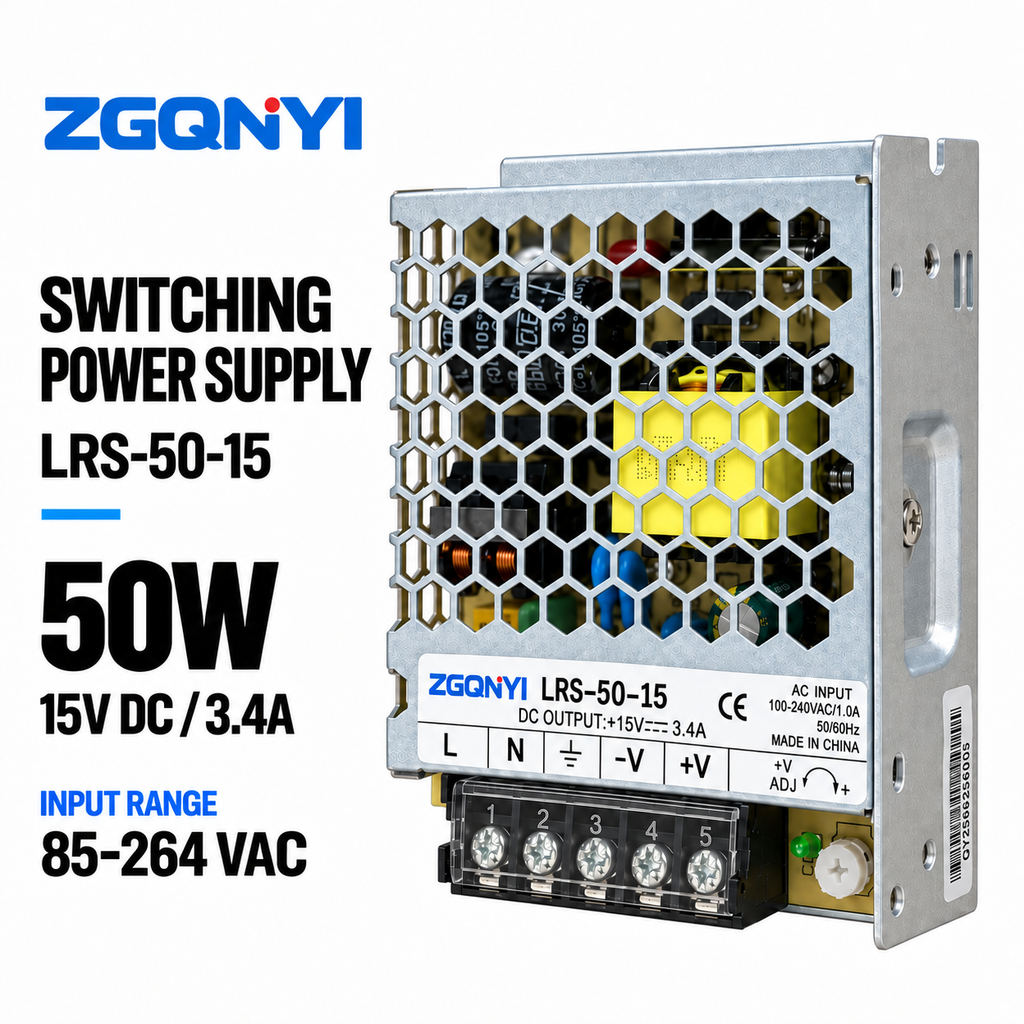
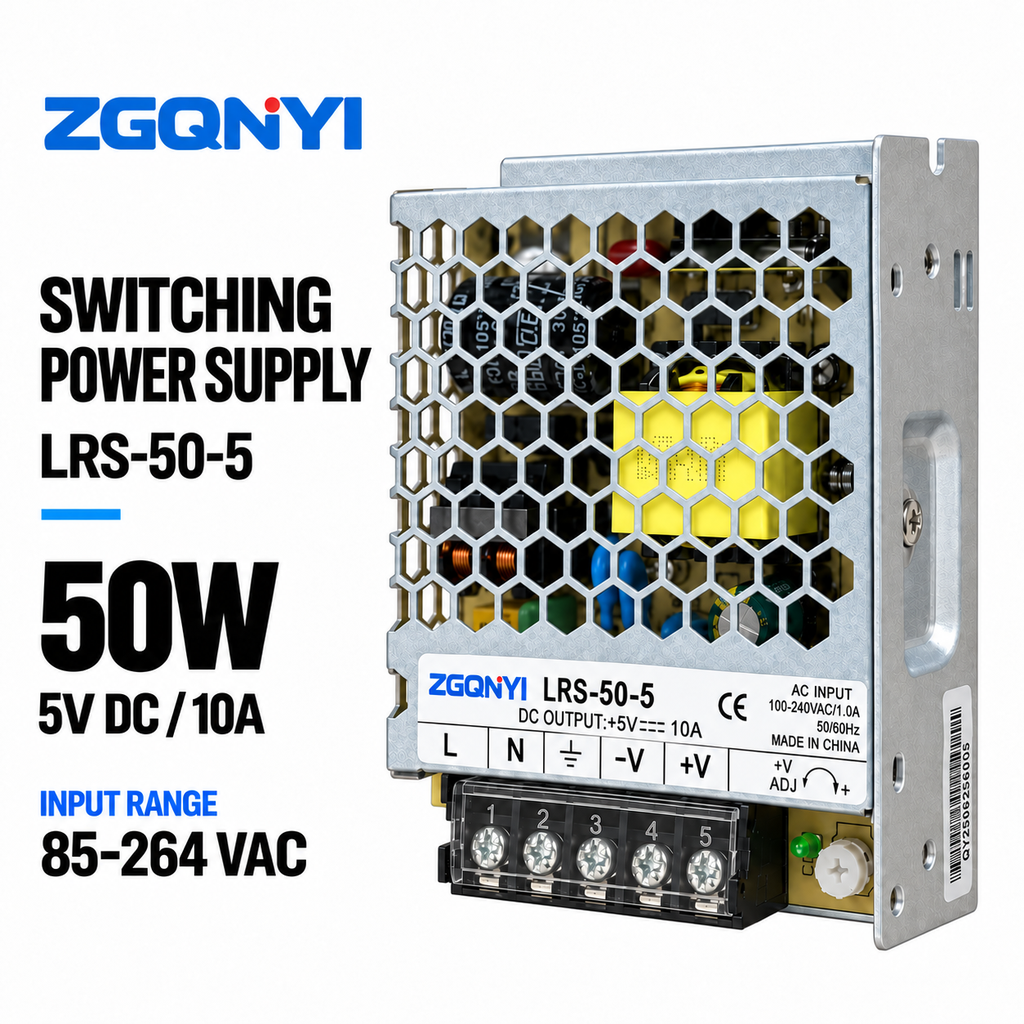
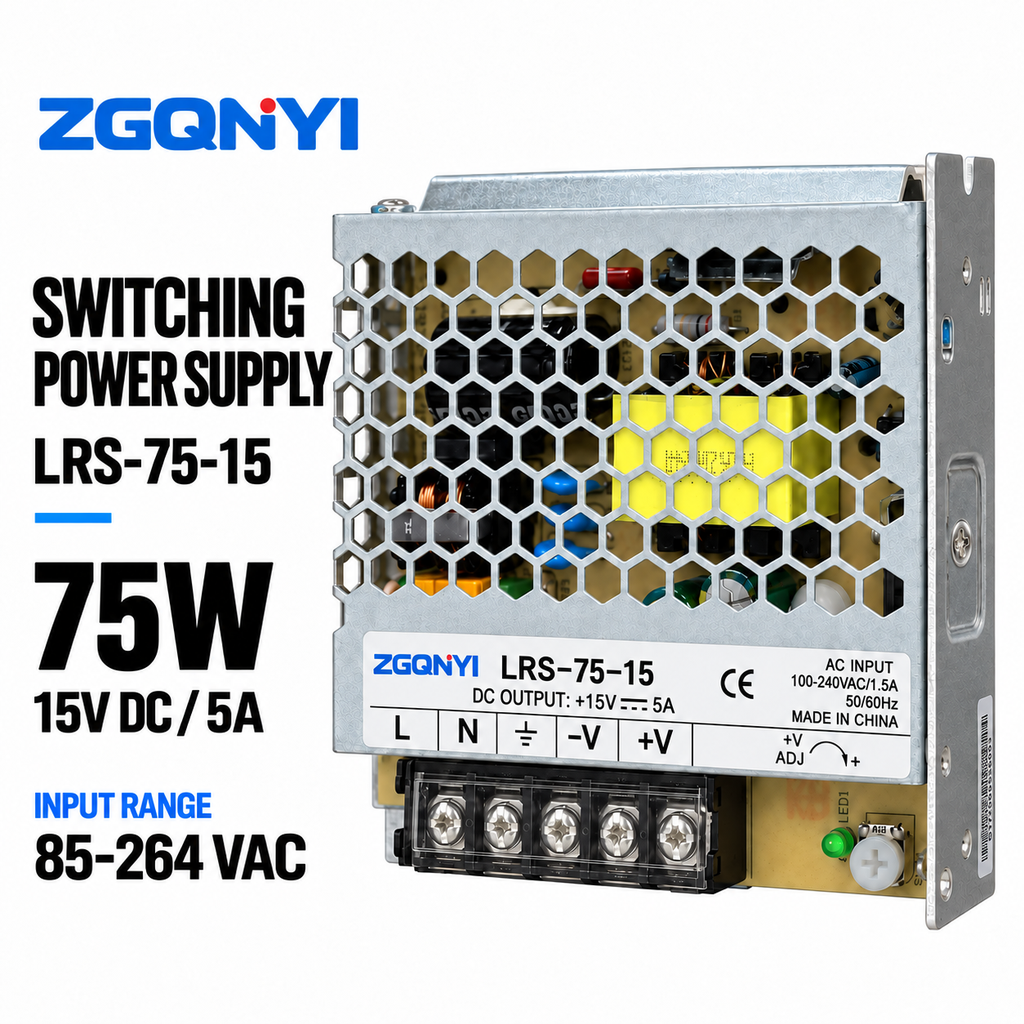
Cabinet floor space commands a high premium in robotics and packaging plants. Sourcing trends highlight the rapid obsolescence of bulkier older-generation PSUs in favor of ultra-low-profile chassis (such as the LRS series) and narrow DIN rail profiles. Buyers scrutinize high-temperature de-rating curves to ensure the SMPS delivers at least 70% load at 60°C ambient without auxiliary blowers.
High Power Density (W/in³) Prioritized
Technology Roadmap
Engineering Trajectories in Switching Power Electronics
A closer look at how wide bandgap semiconductors, digital control loops, and predictive diagnostics are redefining reliability in industrial switching equipment.
Silicon Carbide (SiC) & Gallium Nitride (GaN) Integration
Traditional silicon MOSFETs are rapidly approaching thermodynamic limits. The industry’s migration to SiC Schottky barrier diodes and GaN power transistors permits switching frequencies surpassing 200 kHz. This leap reduces transformer core sizes, cuts magnetic loss, and allows conversion efficiencies to exceed 94%, drastically lowering internal thermal rise.
DSP-Driven Digital Control Loops
Analog PWM controllers are ceding ground to Digital Signal Processors (DSP). Digital loop compensation enables autonomous voltage sag compensation, real-time transient response modulation, and dynamic parameter tuning, eliminating traditional analog drift caused by capacitor aging.
IoT-Enabled Predictive Maintenance & Telemetry
Next-generation high-power industrial power supplies integrate on-board micro-controllers that monitor electrolytic capacitor equivalent series resistance (ESR) degradation, cumulative operating hours, and ambient thermal cycling, transmitting early fault alarms via bus architecture prior to plant downtime.
Buyer Knowledge Base
Frequently Asked Questions in SMPS Sourcing
Essential technical and logistical answers curated by our senior application engineering team to support international supply chain audits.
What criteria distinguish genuine industrial-grade CE certification from standard self-declarations?
A comprehensive CE compliance profile requires testing under both the Low Voltage Directive (LVD 2014/35/EU, typically evaluated against EN IEC 62368-1 for audio/video, information, and communication technology equipment) and the Electromagnetic Compatibility Directive (EMC 2014/30/EU, tested against EN 55032 for emissions and EN 55035 for immunity). Industrial equipment frequently mandates EN 61000-6-2/4 heavy-industrial immunity levels. Qualified manufacturers provide full test reports detailing conducted emission scans, EFT/burst immunity, and hipot isolation voltage (e.g., 3.0kVAC I/P-O/P), rather than just an unsubstantiated Declaration of Conformity.
How should design engineers factor inrush current and safety derating margins?
For resistive loads, a headroom buffer of 20% to 25% is recommended to preserve electrolytic capacitor longevity (Arrhenius rule states capacitor life doubles for every 10°C drop in internal operating temperature). For inductive or capacitive loads—such as DC servomotors, solenoid valves, or capacitive LED driver stages—the initial cold start inrush current can spike to 200–500% of nominal rating for several milliseconds. In these contexts, select supplies equipped with constant current limiting over-current protection rather than foldback/hiccup shutdown, or over-dimension the wattage accordingly.
Can multiple single-output power supplies be configured in parallel or series?
Series connection to achieve higher DC rail voltage (e.g., combining two 24V units to produce 48V) is generally viable provided external reverse-biased bypass diodes (Schottky rated above output current and reverse voltage) are installed across each output terminal to prevent reverse polarity breakdown during asymmetric power-up. Parallel configuration for higher current or N+1 redundancy requires dedicated active current-sharing circuitry or built-in ORing FET / diode modules. Connecting standard non-paralleling units directly can cause one unit to enter current limit while the other idles, resulting in thermal imbalance and premature failure.
What are the lead times, MOQ thresholds, and OEM customization capabilities?
Standard stocked catalog models (e.g., LRS, S, DR, MDR, NDR series) are accessible with sample MOQs from 1 piece and typical dispatch within 3–7 business days. Custom OEM programs—including specific output voltages (such as 13.8V, 28V, 60V, or 110V), custom terminal block pinouts, conformal PCB coating for anti-corrosion/humidity resistance, branded metal enclosures, or customized constant current setpoints—are supported with rapid prototyping cycles within 10–14 days and production scale MOQs calibrated per unit power envelope.
What is the importance of MTBF vs. Actual Capacitor Service Life?
MTBF (calculated under MIL-HDBK-217F or Telcordia SR-332) represents statistical failure rates across enormous operational fleets, typically producing figures between 250,000 to 500,000 hours. It does not mean a single unit operates for 40 years. The practical lifespan limiter is almost always the input/output aluminum electrolytic capacitors, whose electrolyte evaporates over time. A supply running in a 50°C internal enclosure with 105°C-rated Japanese capacitors typically delivers an operational design lifespan between 45,000 to 60,000 continuous hours (approx. 5 to 7 years of 24/7 duty).
Need Custom Voltage Configuration or Direct Factory Pricing?
Consult with our Wenzhou application engineering team for customized voltage thresholds, CE test certificates, or volume OEM container agreements.