High-Efficiency Standard & Parallel-Ready Industrial PSUs
Engineered for high-reliability automation, CNC cabinets, LED infrastructure, and modular parallel configurations. Discover our baseline standard single-output models designed for robust duty cycles.
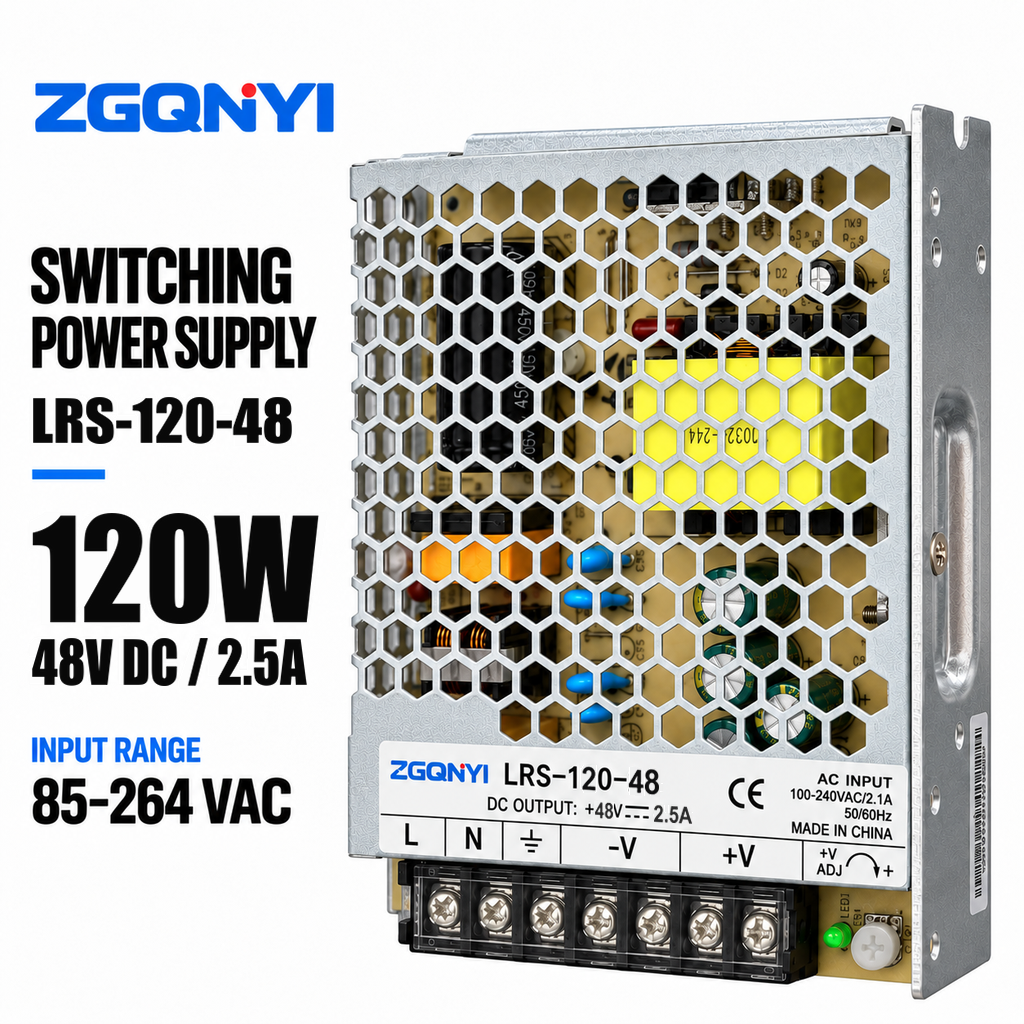
ZGQNYI LRS-120-48 120W 48V Industrial SMPS Power Supply AC DC Switching Converter
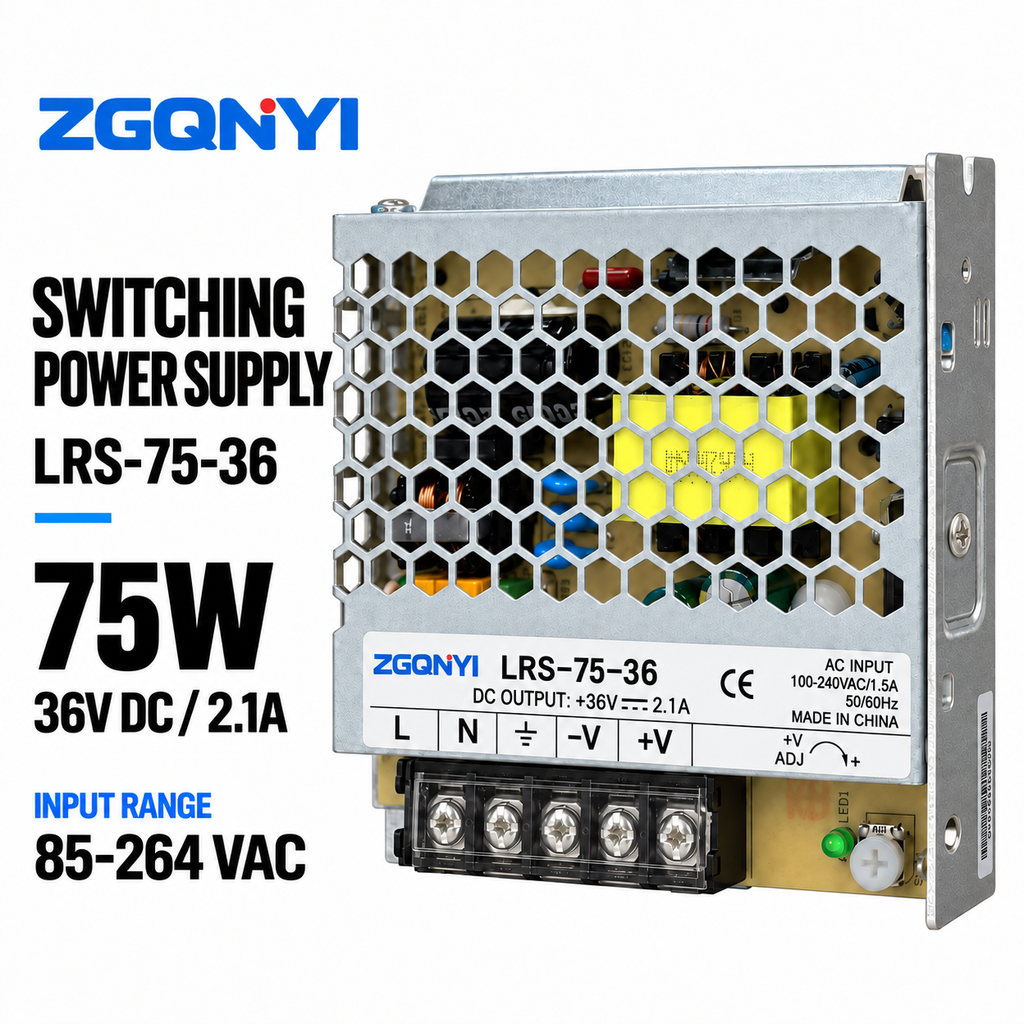
ZGQNYI LRS-75-36 Industrial Switching PSU 36V Enclosed AC DC Power Supply
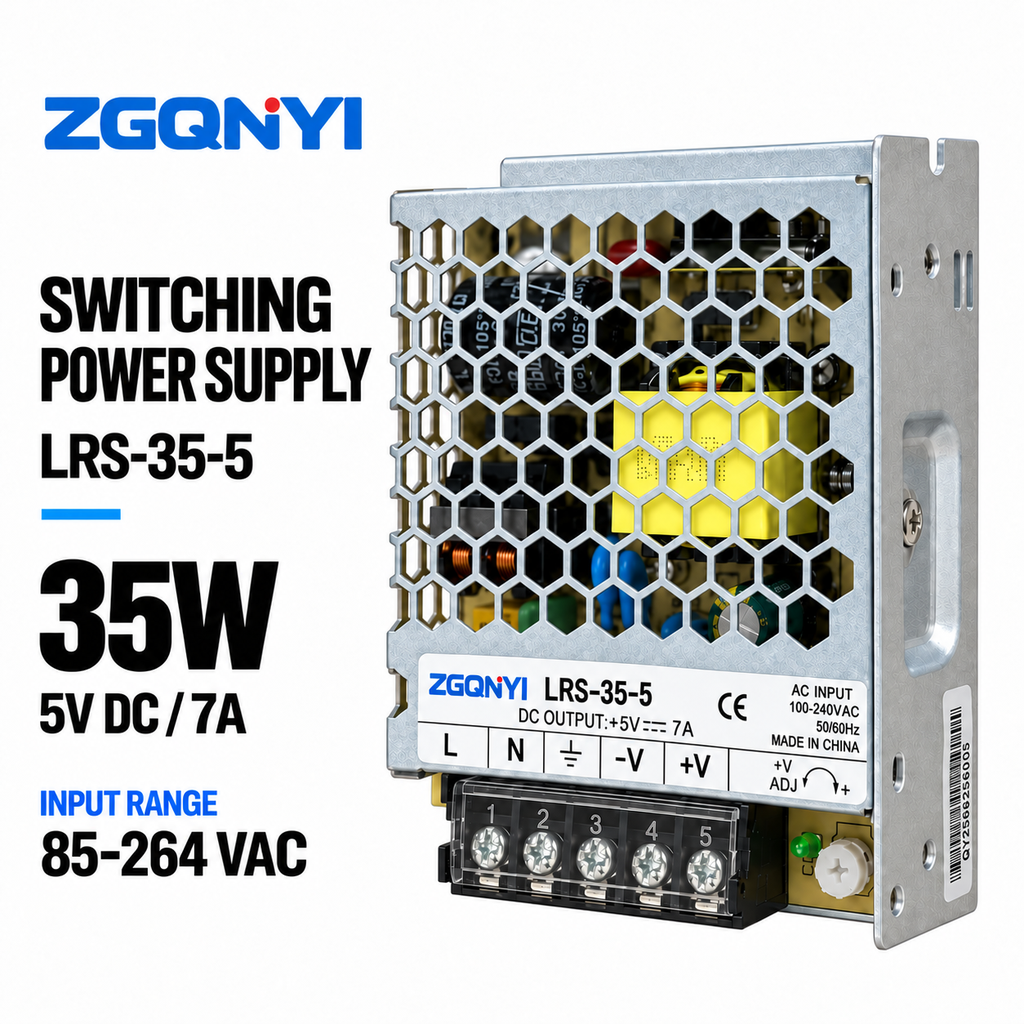
ZGQNYI LRS-35-5 5V DC Constant Voltage LED Driver AC DC Switching Power Supply
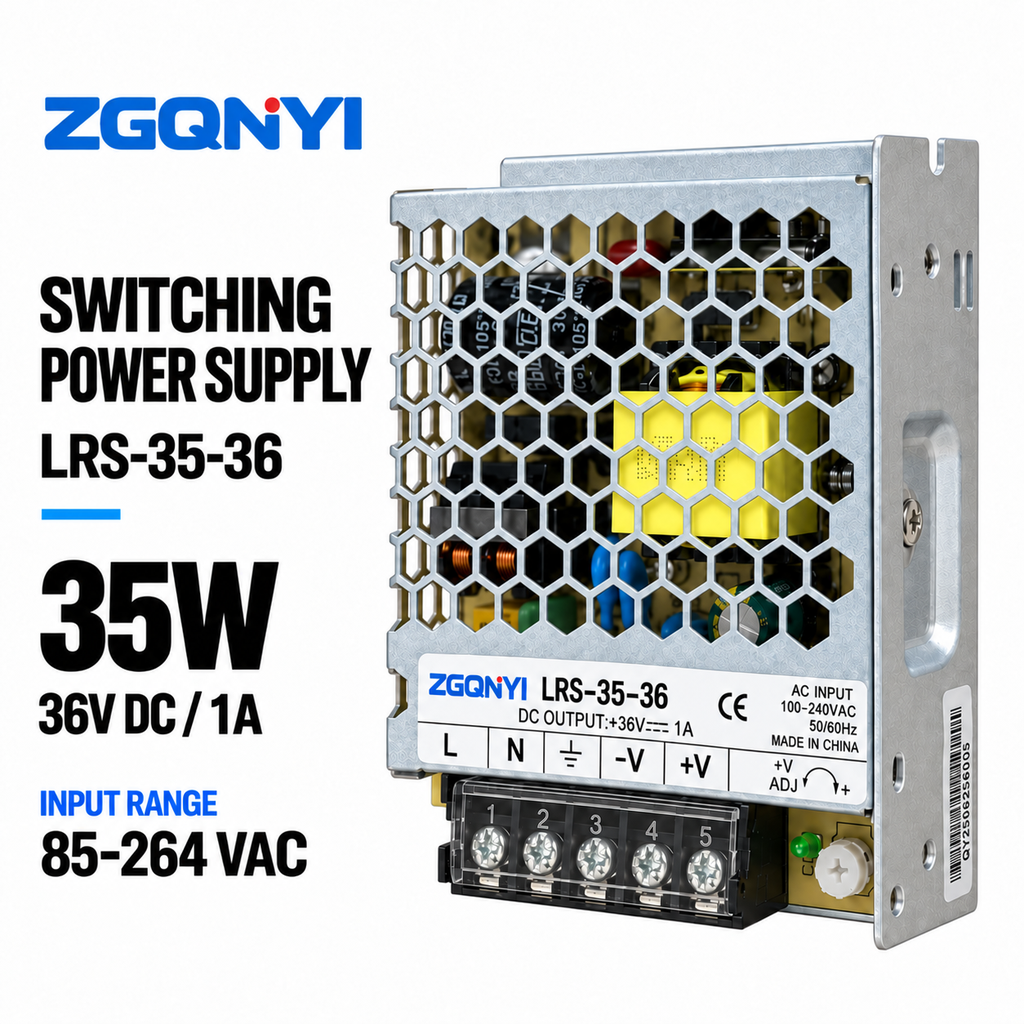
LRS-35-24 LRS Ultra-thin Single Group 24 Volt Power Supply Factory Direct Sales
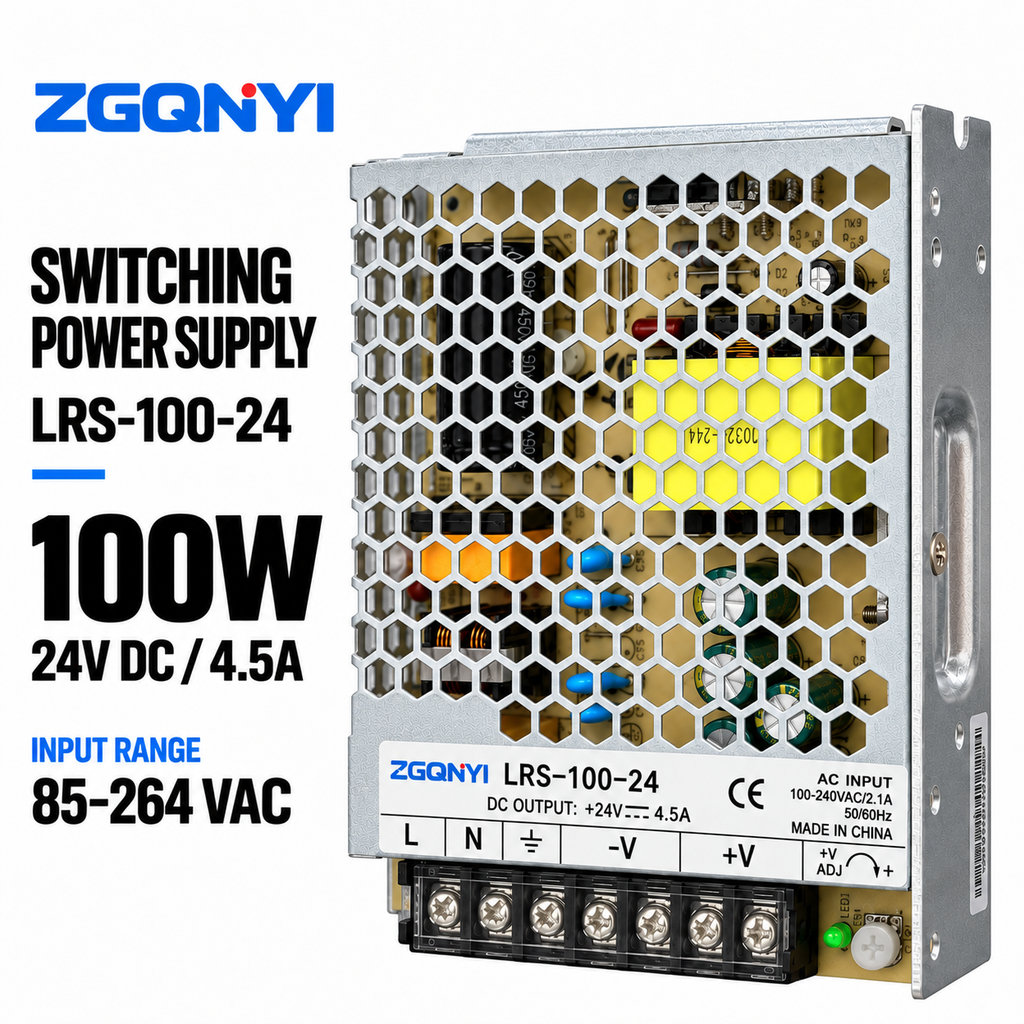
ZGQNYI LRS-100-24 100W 24V Switching Power Supply AC DC SMPS Single Output
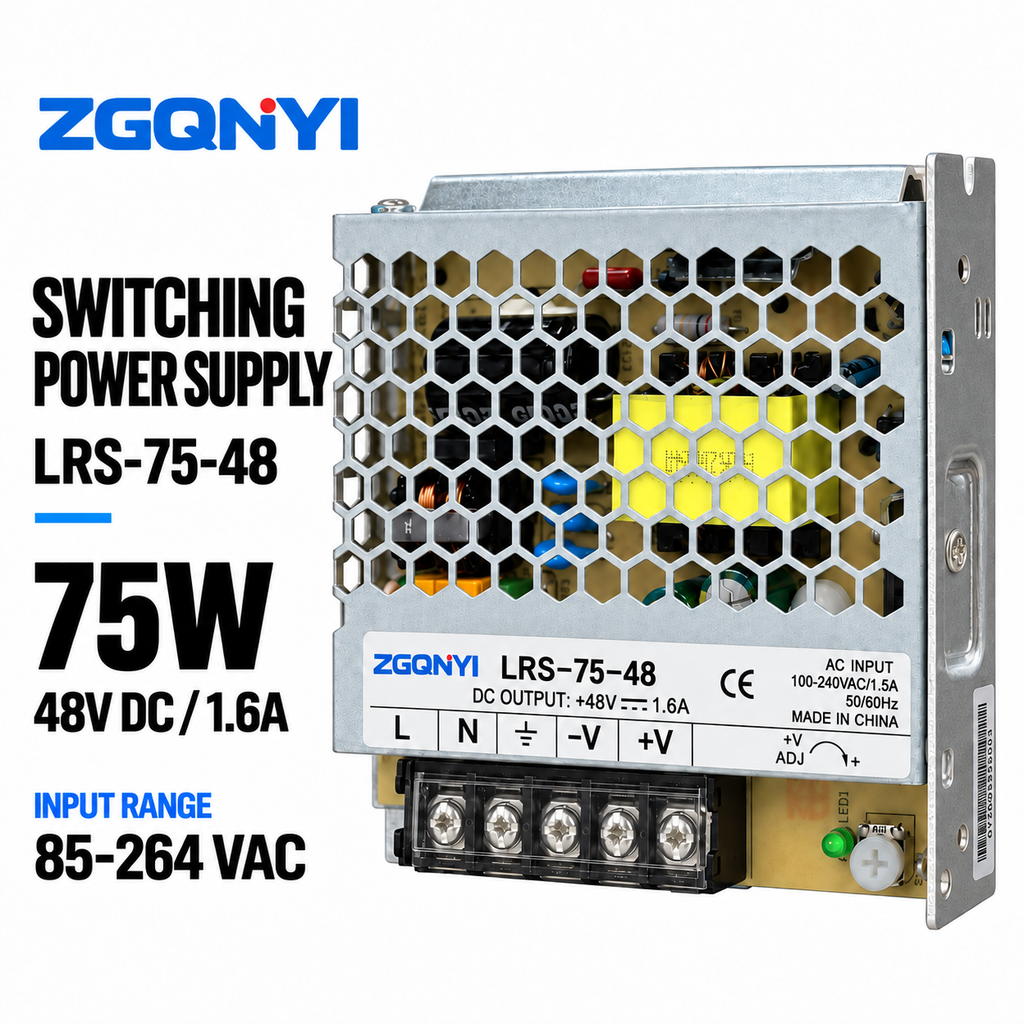
ZGQNYI Industrial 48VDC Power Supply LRS-75-48 Single Output AC to DC Converter
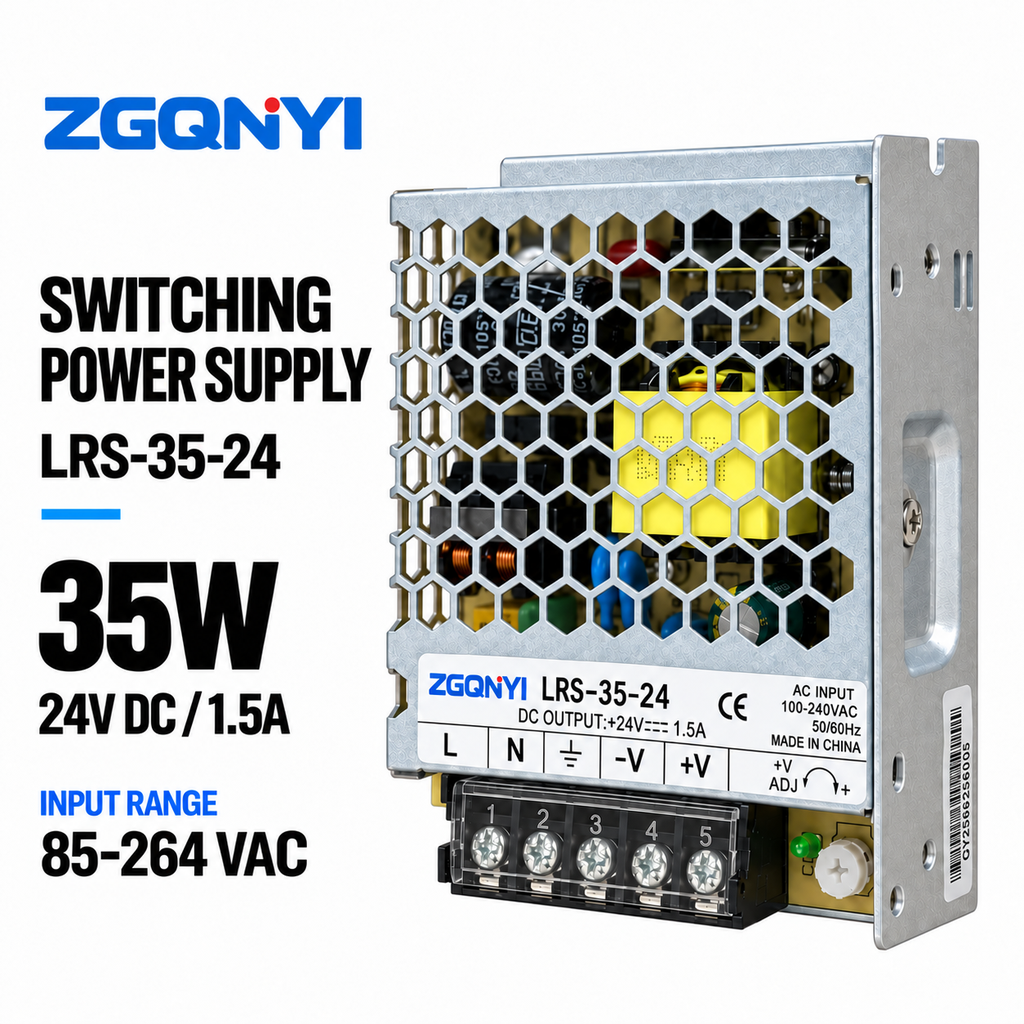
ZGQNYI LRS-35-24 24VDC Compact Enclosed Switching Power Supply SMPS
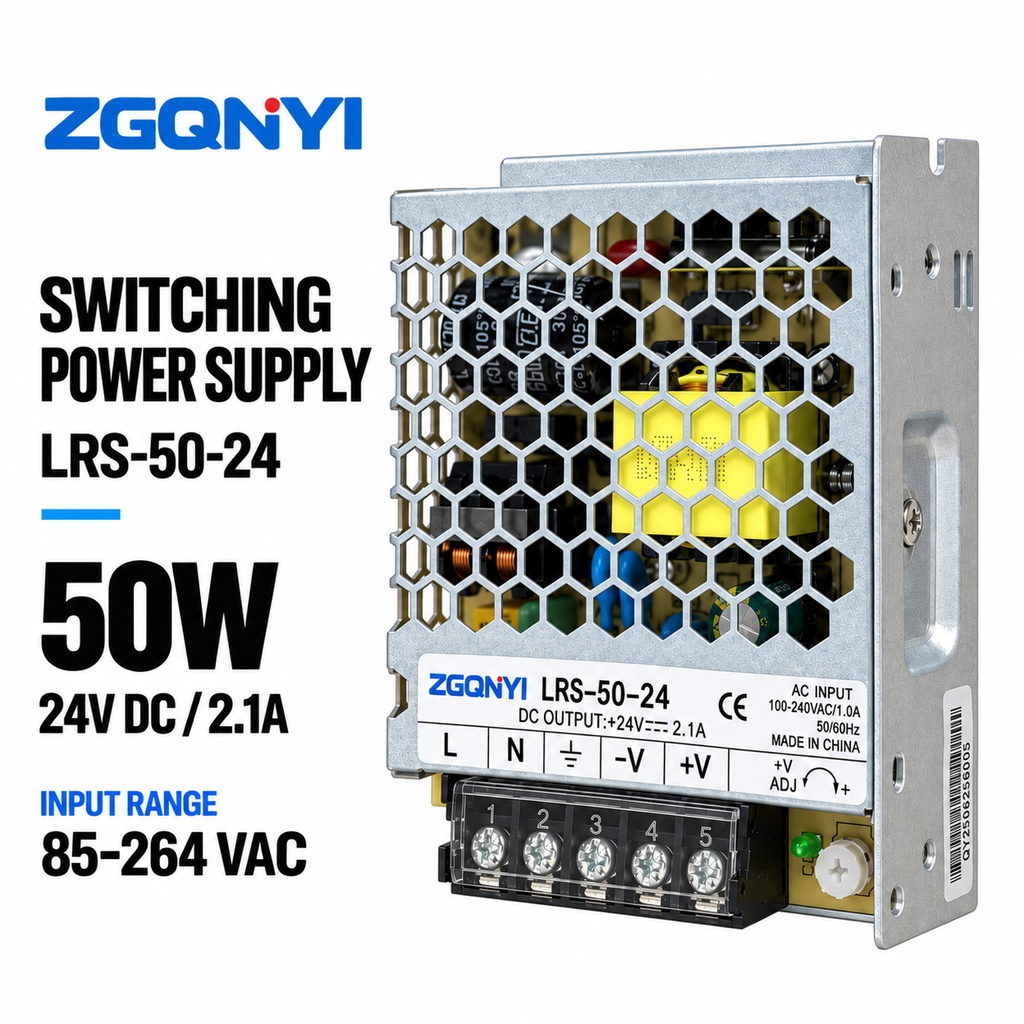
ZGQNYI LRS-50-24 24V Compact Switching Power Supply Single Output SMPS
Architectural Topology of Parallel Power Supply Systems: Redundancy, Current Sharing, and Thermal Balance
In high-reliability industrial automation, automated electrolytic baths, large-scale telecommunications hubs, and mission-critical PLC architectures, the failure of a centralized monolithic DC bus power supply translates into severe line downtime and catastrophic economic losses. As modern manufacturing equipment pushes toward non-stop operation, system integrators are actively substituting singular oversized power supplies with modular parallel-connected power architectures. Sourcing from certified Chinese manufacturers that master active current sharing, thermal tracking, and low-loss OR-ing topologies has become the benchmark standard for global OEM procurement directors.
Autonomous Droop Sharing Topologies
Droop sharing relies on a precisely calibrated, load-dependent negative voltage slope (typically 2% to 5% voltage droop from zero to full rated current). By eliminating the need for delicate external control wiring between multiple switching units, autonomous droop current sharing offers immense electromagnetic interference (EMI) immunity in high-noise automated environments like motor drives and induction heaters.
Active Current Share Bus (Master-Slave)
For high-precision DC rails requiring tight regulation (<±0.5%), dedicated share-bus circuitry interconnects internal feedback amplifiers. An integrated sensing circuit monitors shunt resistors or current-sense transformers, continuously communicating via an analog or high-speed digital bus to force each modular unit to supply precisely equal amperage (±2% balance), dramatically equalizing thermal stress across internal electrolytic capacitors.
Active OR-ing FETs vs. Schottky Diodes
Legacy parallel systems deployed heavy silicon Schottky diodes to prevent a short-circuited faulty power unit from pulling down the shared system bus. Modern parallel designs engineered at Wenzhou Nuvros incorporate low RDS(on) Active OR-ing MOSFET controllers. This decreases power dissipation by over 80%, curtails chassis thermal buildup, and eliminates the need for bulky heatsinks.
Mathematical Model of N+1 Redundant MTBF Scaling
Procuring N+1 redundant parallel power supplies elevates system Mean Time Between Failures (MTBF) exponentially. When deploying a non-redundant centralized supply, the system failure rate (λsys) directly equates to the individual component failure rate: λsys = λ. Conversely, in an N+1 parallel system containing n active modular units where only m units are required to satisfy maximum peak load (n = m + 1), the probability of catastrophic system outage drops according to combinatorial reliability metrics:
Rsystem(t) = ∑k=mn &binom;{n}{k} [R(t)]k [1 - R(t)]n-k
By maintaining lower internal operating temperatures through thermal load sharing, each individual unit's electrolytic capacitor electrolyte dry-out rate drops by half for every 10°C reduction in casing core temperature (Arrhenius Law), effectively extending equipment operational lifespans past 100,000 operational hours.
Modular Parallel Systems vs. Monolithic Centralized Power
Evaluating trade-offs between monolithic heavy switch-mode units, passive droop arrays, and digital active share buses for high-load industrial machinery.
| Evaluation Parameter | Monolithic Switcher (Single High-Power) | Passive Droop Parallel Array | Active Digital Bus Parallel (N+1 Hot-Swap) |
|---|---|---|---|
| Current Sharing Accuracy | N/A (Single Point of Failure) | ±8% to ±12% Balanced | ±1.5% to ±3% Precision |
| Redundancy & Fault Tolerance | Zero Redundancy (Crash brings down plant) | Manual N+1 (Depends on diode/FET decoupling) | Complete N+1 / N+2 Live Hot-Swap |
| Thermal Distribution | Localized intense heat concentration | Moderate (Unbalanced load creates hot spots) | Uniform dissipated gradient across rack |
| Maintenance Down-Time | 1 to 8 Hours (Requires full line shutdown) | Partial downtime during screw-terminal swap | Zero Downtime (Blind-mate hot-plug) |
| Spares Inventory & Logistics | Must inventory high-cost, specialized SKU | Unified low-cost standard SMPS units | Single modular SKU standard across factory |
| Harmonic Distortion (THD) & PFC | Complex Active PFC module required | Standard Passive/Active PFC per unit | Synchronized Active PFC > 0.98 |
Emerging Procurement & Technological Trends in Parallel Power Supplies
Global supply chain directors are transitioning from basic transactional buying to engineering-aligned, life-cycle-optimized power architectures. Explore the strategic shifts shaping international B2B procurement.
Gallium Nitride (GaN) and Silicon Carbide (SiC) Integration
The transition toward Wide-Bandgap (WBG) semiconductors is revolutionizing the power density of parallel power modules. By shifting switching frequencies from legacy 65kHz silicon MOSFET baselines up to 250kHz–1MHz with GaN/SiC devices, internal magnetic transformers and bulk filtering inductors shrink dramatically. Industrial buyers can achieve power densities exceeding 40W/in³, allowing 3kW to 6kW of modular parallel capacity to fit into compact 1U 19-inch sub-racks without sacrificing thermal margins.
Procurement Impact: Lower shipping weight per kilowatt, substantially reduced cabinet square footage in client facilities, and reduced lifecycle air conditioning overhead.
Digital Signal Processing (DSP) & Telemetry Integration
Analog PWM controllers are rapidly giving way to high-speed Digital Signal Processors (DSP) paired with PMBus, Modbus-RTU, or CANopen serial protocols. Next-generation parallel power supply modules continuous broadcast telemetry metrics: real-time output current, input harmonics, primary bulk capacitor ESR fluctuations, ambient temperature, and fan degradation status. This allows cloud SCADA platforms to predict component failures days before they occur.
Procurement Impact: Enables true predictive maintenance SLAs for automated factories, shifting the procurement conversation from unit price to Total Cost of Ownership (TCO).
Decoupling via Redundant Blind-Mate Cassettes
Screw-terminal wiring blocks are being phased out in high-end automation cabinets in favor of slide-in, rear-blind-mate cassette architecture. Equipped with floating backplane connectors and integrated low-loss OR-ing controllers, technicians can perform hot-swap replacements of damaged power supply modules in under 30 seconds without interrupting 24V/48V bus power to sensitive PLC logic controllers or industrial robotic cells.
Procurement Impact: Elimination of specialized on-site field electrician labor during PSU replacement and zero disruption to high-throughput production runs.
Supply Chain Regionalization & Cluster Efficiency
Global procurement teams are prioritizing Chinese manufacturing clusters that possess vertically integrated supply ecosystems. Wenzhou’s Yanjiang Industrial Park and adjacent electrical component ecosystems allow power supply factories to source magnetics, stamped aluminum housings, multi-layer PCBs, and specialized connectors within a 20-mile radius. This insulates international buyers from cross-border component delays and guarantees stable 14-day production turnarounds for OEM runs.
Procurement Impact: Compressed lead times, mitigated inventory stockouts, and enhanced price stability during global commodity fluctuations.
Frequently Asked Questions on Parallel Power Supplies
Addressing crucial electrical design, installation topology, international compliance, and custom factory manufacturing questions.
Standard single-output switch-mode supplies that lack internal active sharing pins or droop mode trimmers should not be hard-paralleled for increased continuous current capacity. When standard units are placed directly in parallel, minor factory voltage tolerances ensure one unit carries all the load while the second unit remains idle. If the load exceeds the capacity of the first supply, it will hit its overcurrent threshold (entering constant current limiting or hiccup protection), causing severe ripple and voltage instability. To safely combine standard units, external OR-ing diode/FET decoupling modules must be integrated, or models specifically engineered with an active current-share pin (CS) or internal droop circuitry must be specified during procurement.
In a Capacity Paralleling configuration, multiple units run in unison simply to satisfy a massive aggregate power demand (e.g., three 1000W units combined to power a continuous 2800W load). If any single unit fails, the remaining units overload and crash the bus. In an N+1 Redundant system, the system capacity is over-provisioned by exactly one modular unit (e.g., four 1000W supplies to power a 2800W load). If any unit experiences a catastrophic failure, it is instantaneously isolated by its OR-ing circuit, and the remaining three units continue supplying the system without a millisecond of voltage drop or interruption.
To prevent ground differential loops and unequal voltage drops across heavy-current runs, all modular units in a parallel rack must be wired using symmetrical star-topology bus bars rather than daisy-chained connections. Positive and negative conductors from each power supply to the central DC summing bar must have identical wire gauge, strand material, and length (matching resistance within ±5%). Furthermore, signal grounds for the active current sharing bus must remain isolated from heavy earth grounds to eliminate induced high-frequency switching noise from PWM controllers.
Industrial machinery shipped into Europe, the UK, and North America requires strict adherence to EN/IEC 62368-1 (Audio/Video, Information and Communication Technology and Electrical Equipment safety standard, which superseded EN 60950-1 and EN 60065). Additionally, because parallel switching units sum their electromagnetic interference emissions, supplies must comply with EN 55032 Class B / EN 55011 for conducted and radiated emissions, and EN 61000-3-2 for harmonic currents (Active PFC is mandatory for power draws above 75W in EU territories). RoHS 2.0 (Directive 2011/65/EU and amendment 2015/863) compliance is non-negotiable for environmental hazardous substance containment.
For standard catalog power supplies (such as LRS, NDR DIN Rail, or standard high-power units), Wenzhou Nuvros supports sample prototyping with an MOQ starting from 1 unit, with dispatches available within 48 to 72 hours. For custom OEM/ODM architectures involving specialized output voltages (e.g., 36V, 72V, 110V), conformal PCB coating for tropical or maritime installation, RS485/CANopen digital telemetry integration, or customized multi-bay 19-inch sub-rack assemblies, standard prototype tooling spans 14 business days, with production batches ranging between 100 to 500 units fulfilled in 20 to 25 calendar days.
Enclosed power supplies typically carry nameplate ratings specified at 25°C to 40°C ambient room temperatures. When mounted inside dense industrial control cabinets alongside variable frequency drives (VFDs) and contactors, internal temperatures frequently hit 50°C to 60°C. High-quality power supplies incorporate a transparent thermal derating curve—typically dropping from 100% capacity at 50°C down to 50% capacity at 70°C. When sizing parallel arrays, procurement engineers should always integrate a 25% to 30% safety headroom above peak load to ensure switching semiconductors and electrolytic capacitors remain within safe thermal margins.
Request Your Custom Parallel Power Engineering Spec Sheet
Connect immediately with Wenzhou Nuvros Electric's senior power supply engineers. We review your cabinet thermal envelopes, input voltages, transient load demands, and provide tailored product datasheets, 3D CAD step files, and factory-direct volume pricing within one business hour.