Featured Industrial Switch Mode Power Supplies
Engineered for 24/7 mission-critical operations: compact enclosed chassis, high MTBF ratings, universal AC input, and rigorous EMC/EMI Class B compliance.

1. Industrial Topology Architectures & Electrical Topographies
Modern industrial switch mode power supplies function as the core arterial infrastructure for automated machinery, robotics, telecommunication cells, and electrolytic chemistry. In evaluating tier-one Chinese power supply design, systems are classified by primary topology selection, directly impacting efficiency matrices, electromagnetic interference (EMI) footprints, and component thermal dissipation under severe duty cycles:
Quasi-Resonant Flyback Topologies
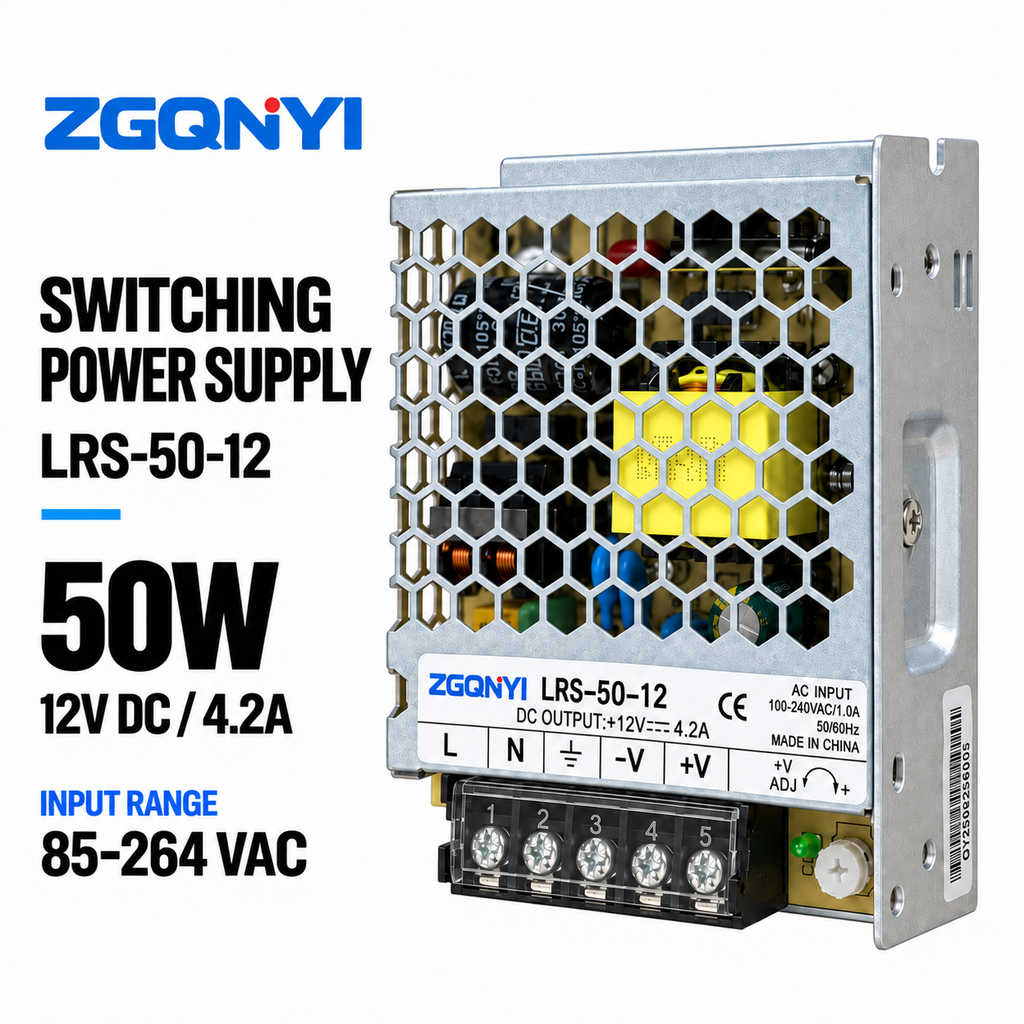
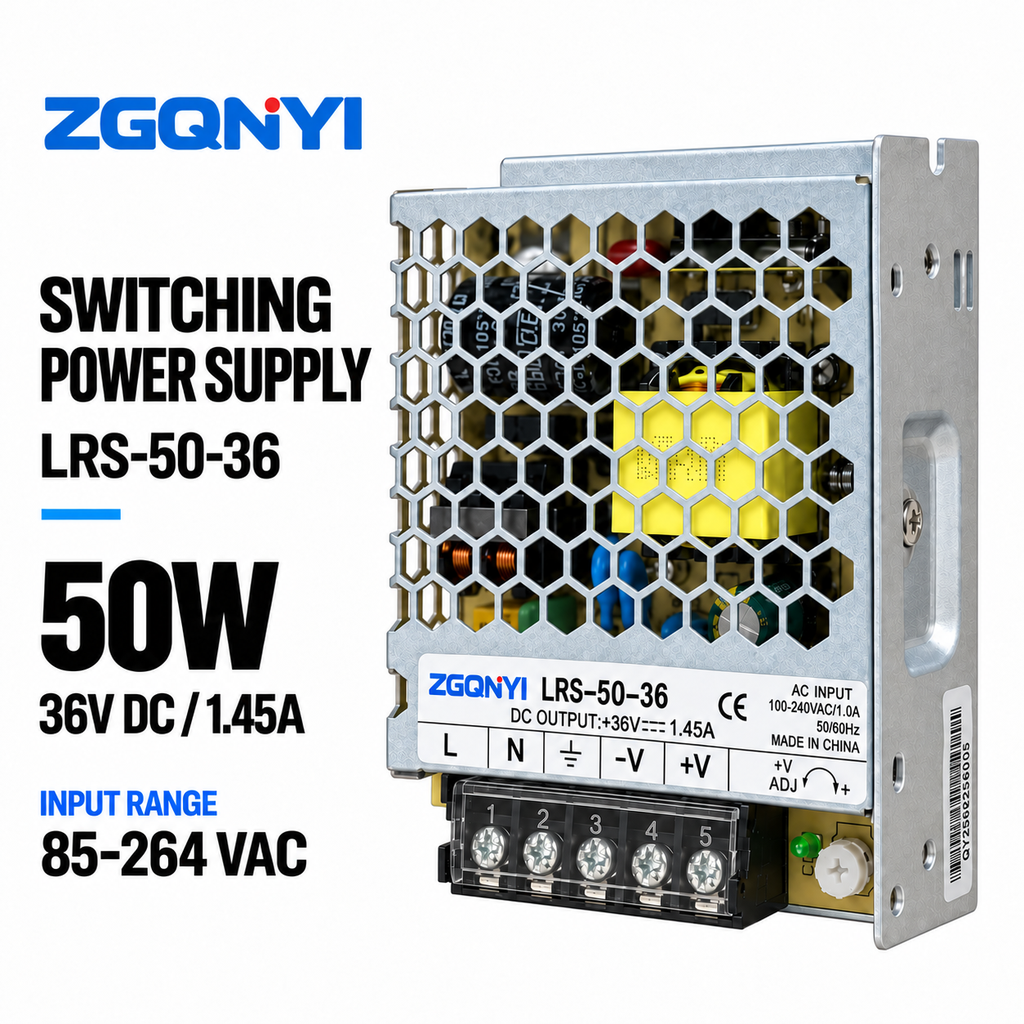
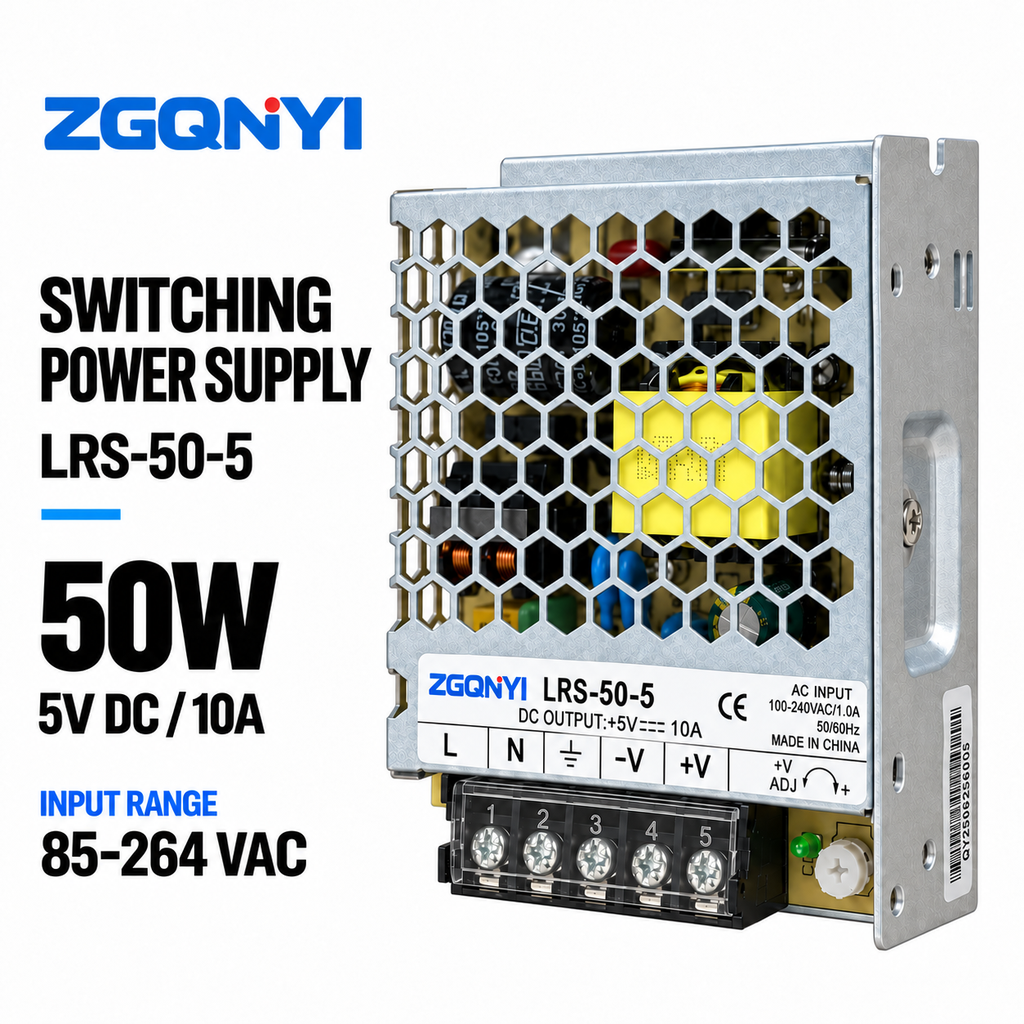
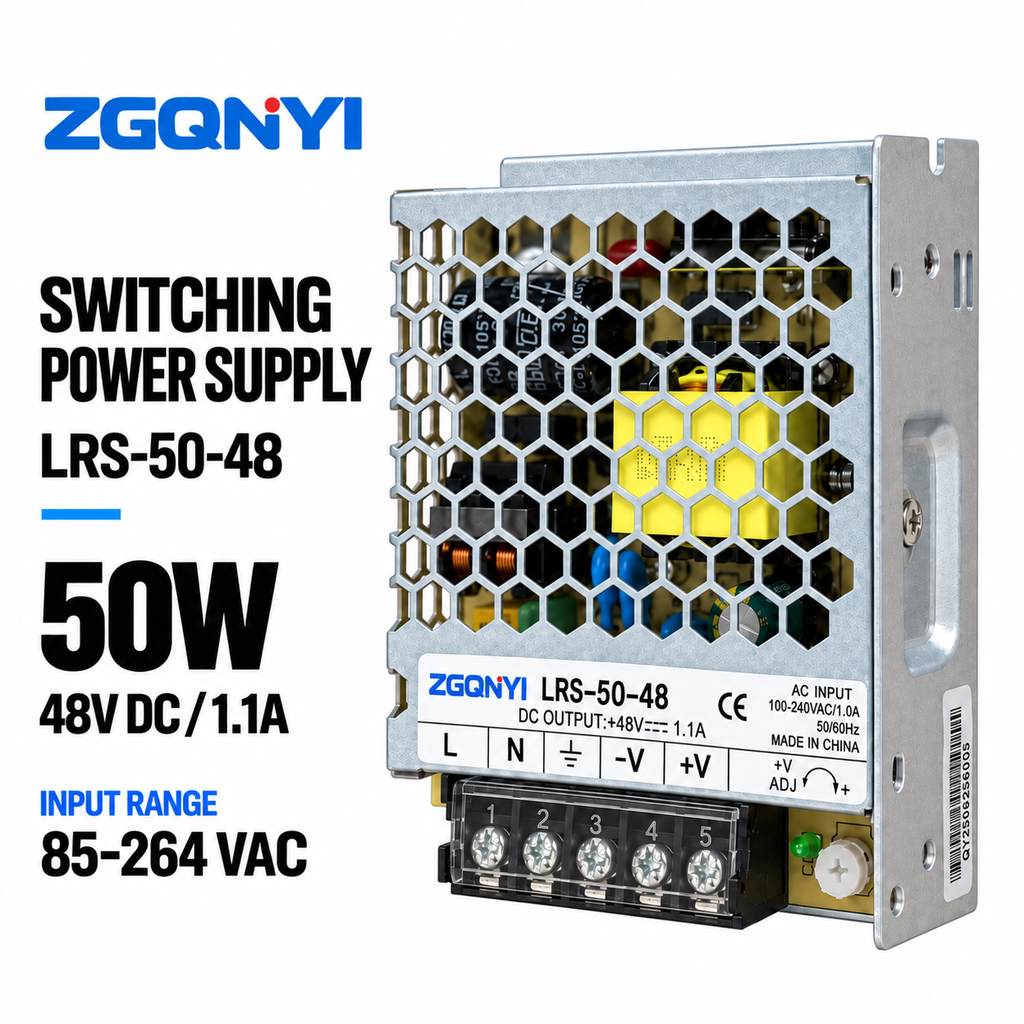
Predominantly utilized in low-to-medium power bands (15W to 75W, including our LRS-35, LRS-50, and DR-15 rail series). By implementing Valley Switching Quasi-Resonant (QR) controllers, turn-on MOSFET switching losses are minimized, elevating low-profile enclosed thermal efficiency up to 89% without forced convective cooling.
Two-Switch Forward with Active Clamp
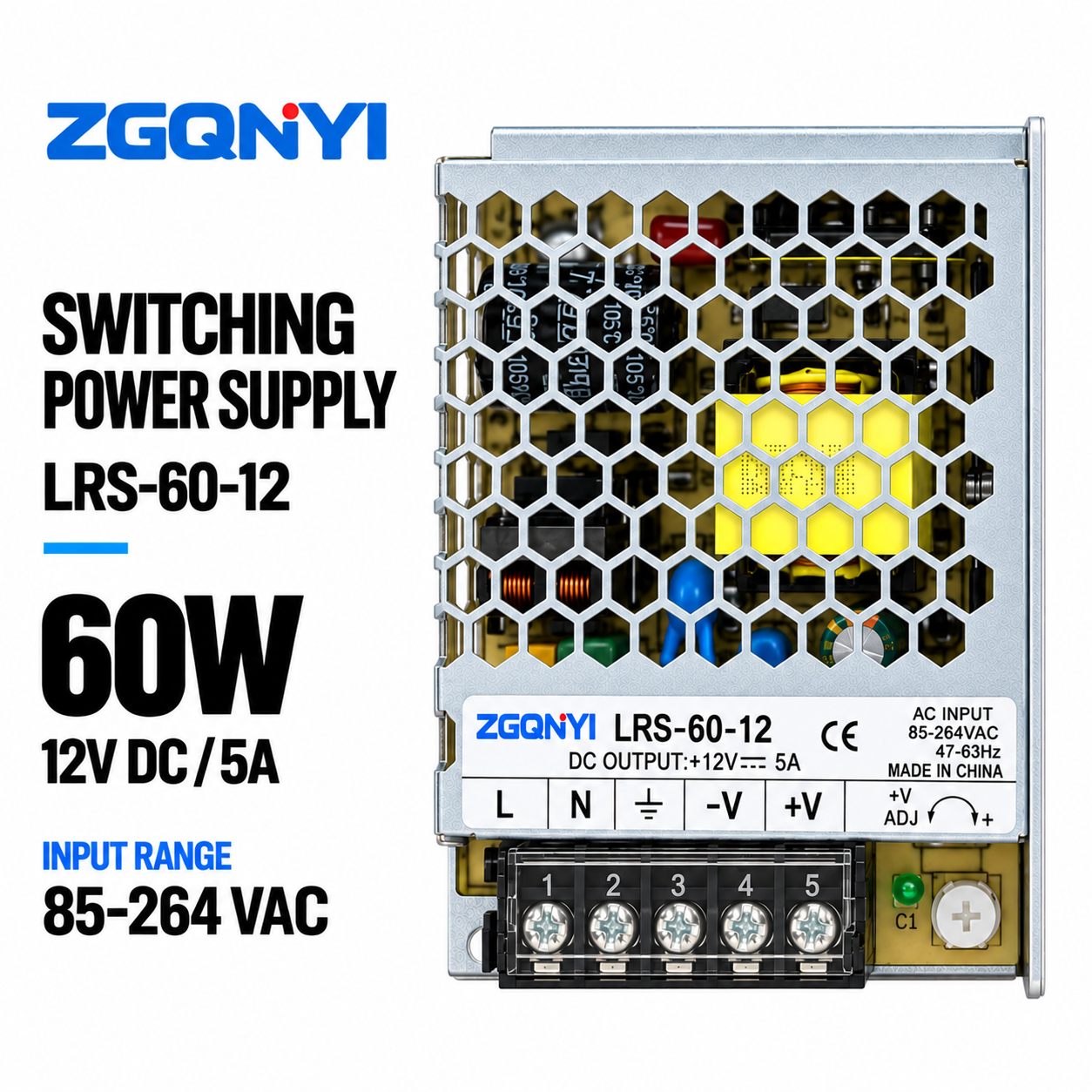
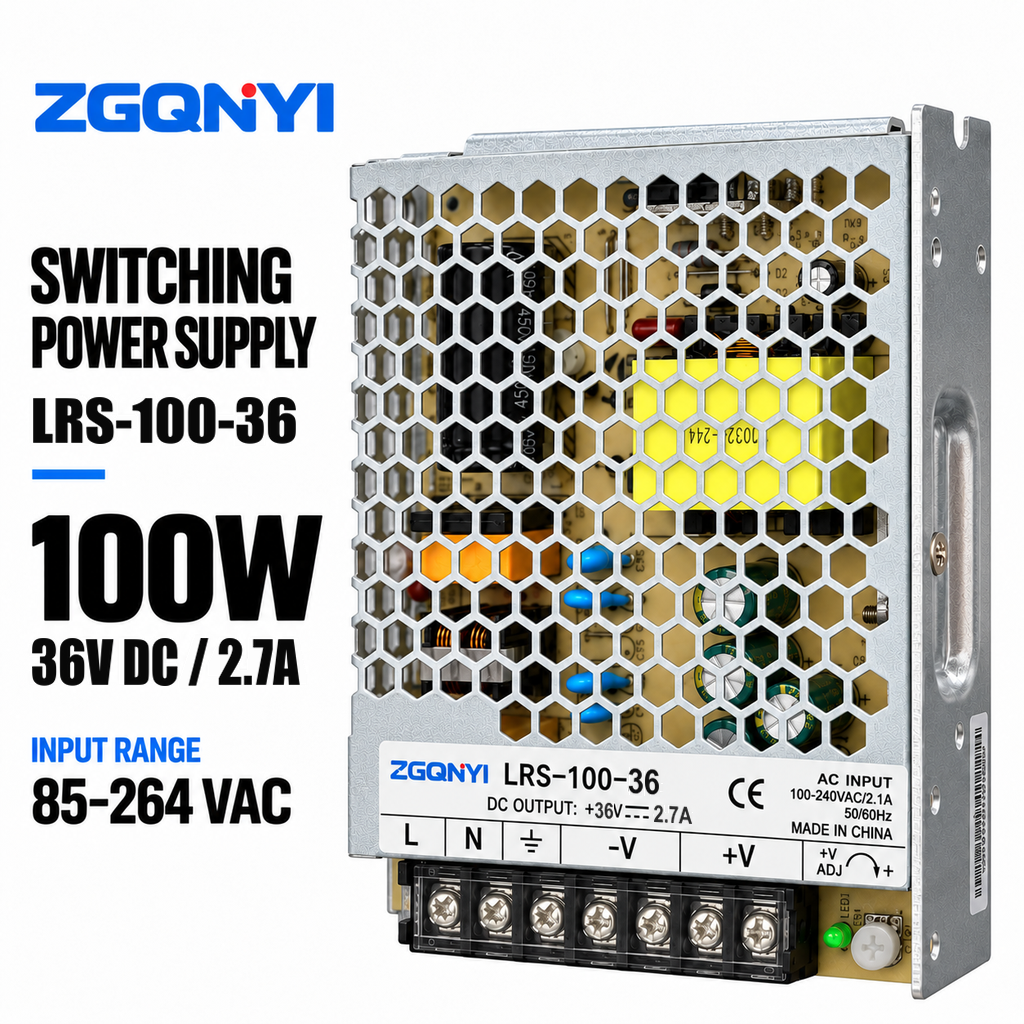
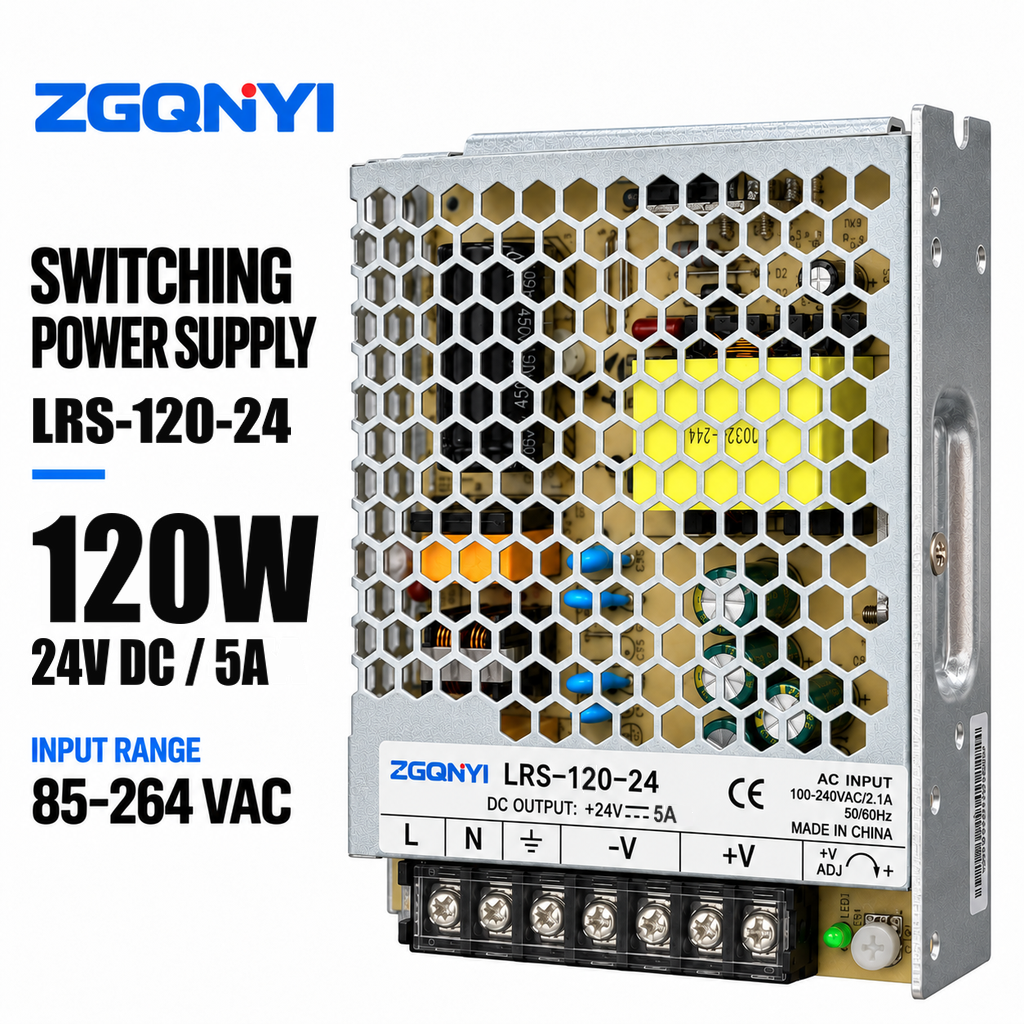
Deployed widely across 75W to 350W industrial power rails (such as LRS-100, LRS-120, NDR-120, and NDR-240). This architecture prevents voltage spikes across primary switches, safely utilizing lower voltage-rated MOSFETs with significantly reduced $R_{DS(on)}$, stabilizing transient recovery times under inductive load step-changes.
Full-Bridge LLC Resonant Converters
Standardized in high-power industrial lines (1kW to 18kW platforms). Achieving Zero Voltage Switching (ZVS) on the primary side and Zero Current Switching (ZCS) on the secondary stage, LLC resonant tank designs push energy conversion efficiency beyond 94.5%, enabling reliable operation in electroplating, battery formation, and water electrolysis.
In the ultra-thin enclosed segment represented by the ZGQNYI LRS Series (35W–350W), spatial optimization is paramount. Through low-profile planar magnetic transformers and automated SMT double-sided PCB reflow, chassis heights are strictly held to 30mm (1U profile). This allows seamless retrofitting inside cramped control panels, 3D printing frames, digital signage displays, and edge telecom repeaters.
2. Comprehensive SMPS Series Technical Specification Matrix
To streamline engineering qualification, the following matrix compares the core operating topologies, protection architectures, and environmental parameters across standard industrial families manufactured at our Wenzhou production complex:
| Series Platform | Rated Power Range | Nominal Output Voltages | Efficiency (Typ.) | PFC Stage | Protection Topologies | Typical Industrial Deployment |
|---|---|---|---|---|---|---|
| LRS Ultra-Thin Enclosed | 35W – 500W | 5V, 12V, 24V, 36V, 48V DC | 86% – 91.5% | Passive / Active (>200W) | Hiccup / Constant Current Limiting, OVP, OLP, Short Circuit | CNC Controllers, 3D Printers, LED Signage, Automation Cabinets |
| NDR Industrial DIN Rail | 75W – 480W | 12V, 24V, 48V DC | 88% – 93.0% | Built-in Active PFC (PF>0.98) | Constant Current Limiting, Thermal Shutdown, Auto-Recovery | TS-35/7.5 or TS-35/15 Rail Mount, PLC Panels, Distributed I/O |
| MDR / DR Slim DIN Rail | 15W – 100W | 5V, 12V, 15V, 24V DC | 81% – 88.0% | Standard Passive Input Filter | Overload, Clamp Type OVP, Continuous Short Circuit | Building Management Systems (BMS), Access Control, Security |
| QYR Digital Display Rail | 60W – 150W | 12V, 24V DC Adjustable | 87% – 90.0% | Integrated Filter Stage | Digital Current Cut-off, OVP, Dual-Threshold Over-Temp | Field Diagnostics, Switchgear Cabinets, Load Calibration Test Racks |
| High-Power Industrial CC/CV | 1,000W – 18,000W | 0–16V up to 0–220V Fully Adj. | 92% – 95.5% | Active Interleaved PFC (>0.99) | Programmable CC/CV Loop, Phase-Loss, Thermal Sensor Cutoff | Water Treatment, Electroplating Lines, Battery Cell Formation, EV Charging |
| IP67 Waterproof Potted | 60W – 500W | 12V, 24V Constant Voltage | 90% – 93.5% | Active PFC (>0.95 at Full Load) | Thermal Derating, Overload Foldback, Short Circuit Auto-Reset | Architectural Lighting, Tunnel Infrastructure, Harsh Chemical Washdown |
3. Strategic Future Procurement Trends in Industrial Power Conversion (2025–2030)
Procurement directors and Chief Technology Officers (CTOs) are facing rapid paradigm shifts driven by global regulatory pressures, volatile supply chains, and evolving technological demands. Successful procurement teams are pivoting from transactional spot purchasing to long-term architectural partnerships with established Chinese original manufacturers. Key sourcing vectors include:
1. Total Cost of Ownership (TCO) & ErP EcoDesign Compliance
- Thermal-to-Electricity Ratio: An efficiency increase from 88% to 93% reduces cabinet internal heat waste by over 40%, directly lowering cabinet air-conditioning loads and extending external PLC component lifespans.
- Standby Power Consumption: Compliance with EU EcoDesign Lot 6 and US DoE Level VI dictates no-load standby dissipation under 0.3W, making low standby flyback ICs mandatory across all OEM tenders.
- Power Factor Penalties: Industrial power utilities enforce strict peak power penalties. European EN 61000-3-2 regulations require Active PFC for any power supplies above 75W, requiring procurement teams to reject older passive designs.
2. Supply Chain Resilience & Upstream Component Traceability
- Silicon Dual-Sourcing: Top Chinese manufacturers have insulated assembly lines against semiconductor shortages by validating dual-footprint PCB designs supporting both global and tier-1 domestic microcontrollers and MOSFETs.
- Electrolytic Capacitor Metallurgy: Demanding 105°C long-life (5,000 to 10,000 hour rated) solid-state and low-ESR electrolytic capacitors from verified supply chains to ensure MTBF exceeds 300,000 hours per Telcordia SR-332.
- Direct Cluster Sourcing: By concentrating production in Beibaixiang Town, Wenzhou—the capital of China’s electrical engineering industry—manufacturers secure rapid sheet metal fabrication, transformer winding, and testing jigs within a 15km logistics radius.
4. Emerging Engineering & Technological Trajectories
The industrial power supply horizon is advancing through material science and digital loop control breakthroughs. When designing next-generation equipment, engineering leaders must account for the following evolutionary milestones:
Wide Bandgap (GaN & SiC) Adoption
Gallium Nitride (GaN) high-electron-mobility transistors (HEMT) and Silicon Carbide (SiC) Schottky diodes are transitioning into industrial power systems. By operating at switching frequencies above 250kHz, magnetics shrink by 45%, boosting power density past 25W/in³ while substantially eliminating switching heat losses.
Digitally Controlled PMBus / RS485
Analog PWM loops are being augmented with digital signal controllers (DSC). High-power systems (1kW–18kW) and high-end DIN rail units now feature built-in RS485 or CANopen communication ports utilizing the PMBus protocol to transmit real-time telemetry (input voltage, temperature, current load, and ripple degradation warnings).
Active Parallel N+1 Redundancy
Process continuity without unscheduled downtime requires zero-glitch N+1 parallel operation. By utilizing internal active ORing MOSFET controllers rather than lossy passive Schottky diodes, units dynamically balance current load sharing via a single analog communication link with less than 2% variance.
5. Wenzhou Nuvros Electric: Manufacturing Rigor & Enterprise Advantages
Operating out of Yanjiang Industrial Park, Beibaixiang Town, Wenzhou, Wenzhou Nuvros Electric Co., Ltd. (Nuvros) represents the gold standard of high-capacity, precision-engineered industrial power manufacturing in China. With an 18-year institutional focus on power conversion technology, our facility bridges high-volume production scale with strict engineering compliance:
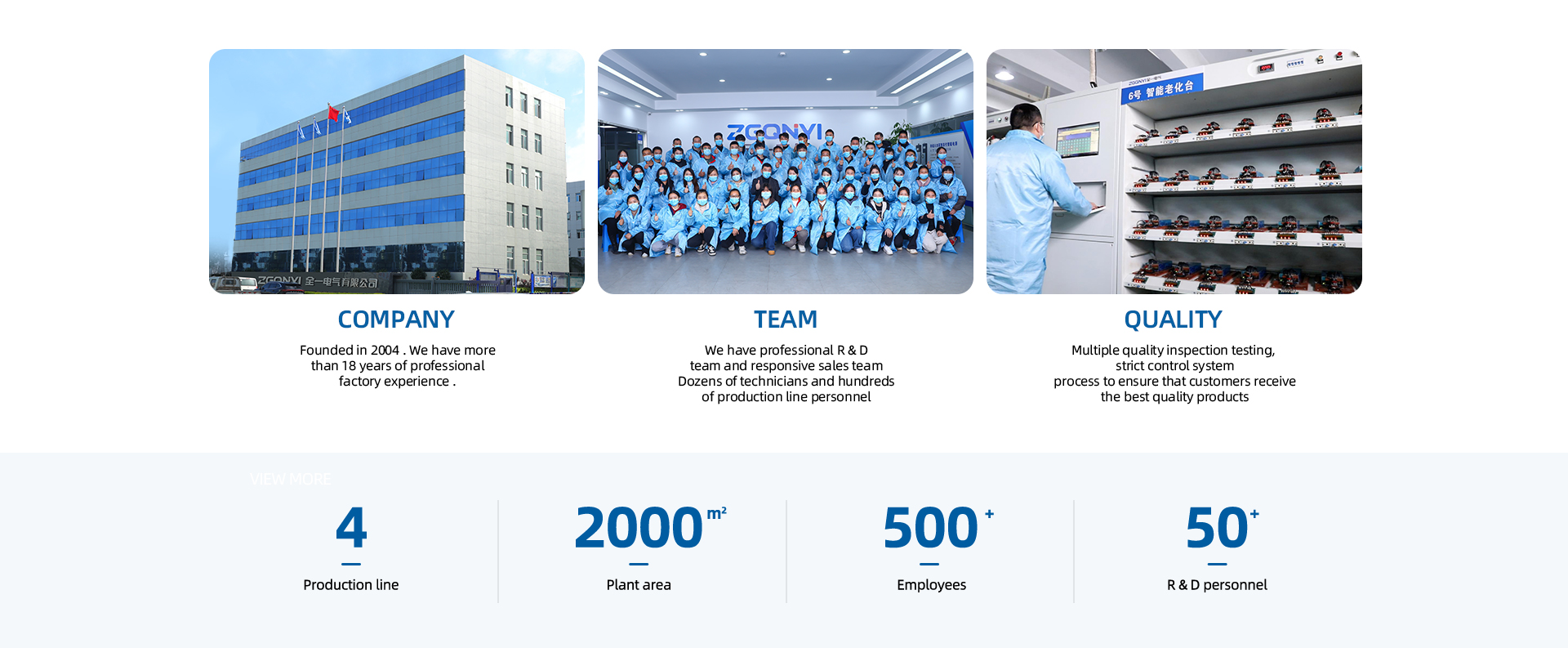
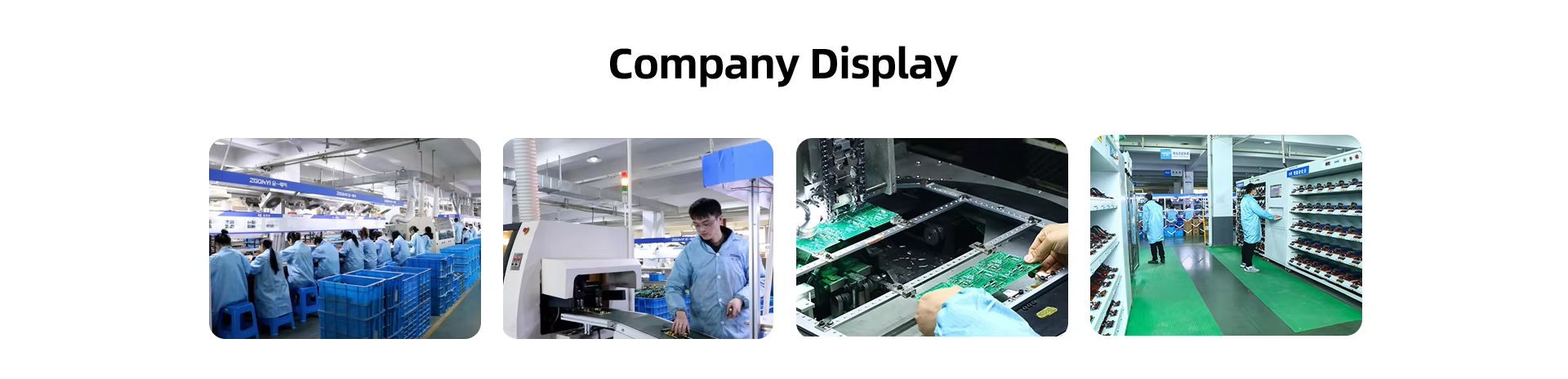
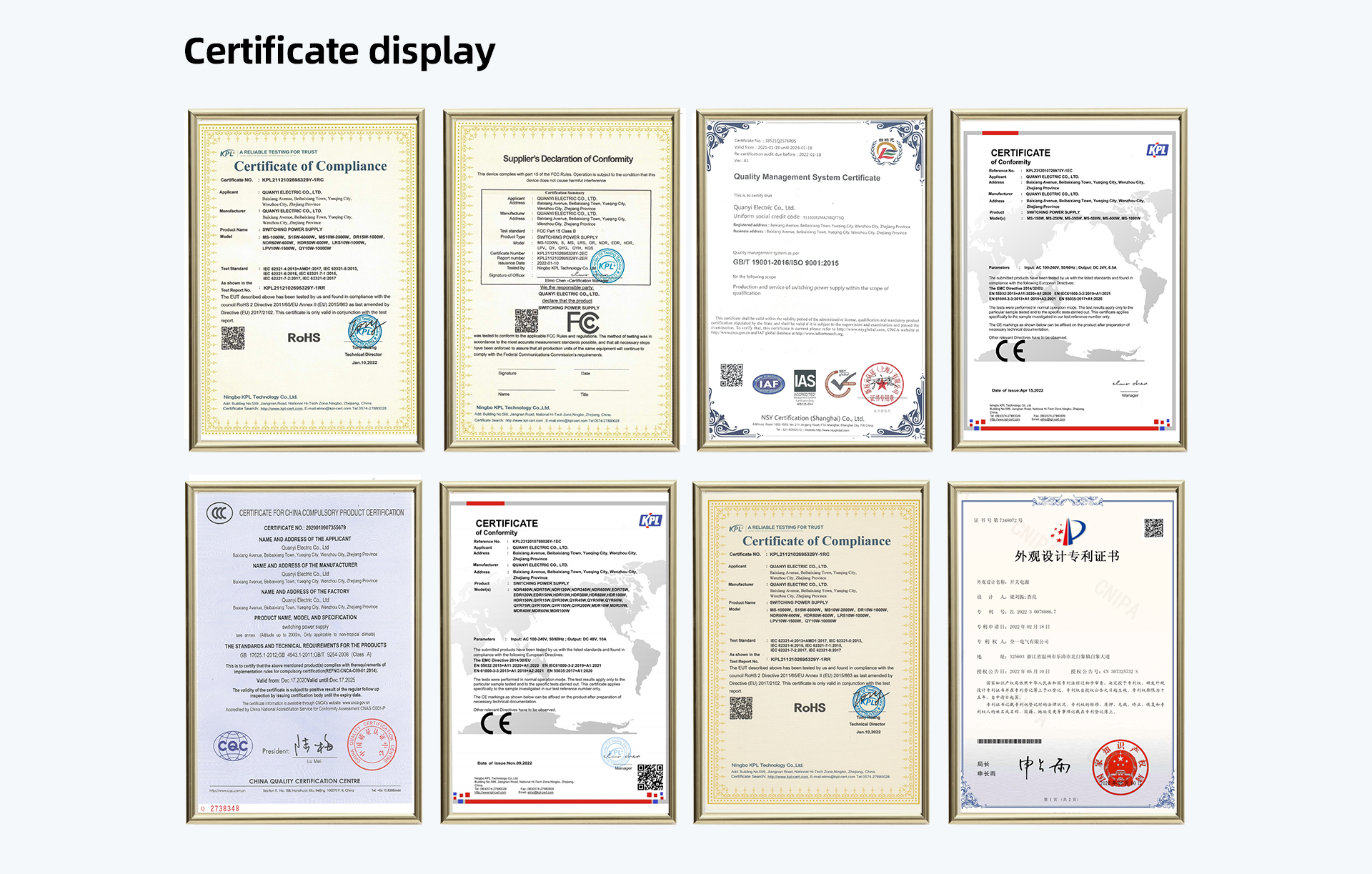
Infrastructure & Production Scale: Our 10,000 m² modern headquarters integrates automated paste printers, high-speed Yamaha and Panasonic pick-and-place surface-mount arrays, 10-zone nitrogen reflow ovens, and dual-wave selective soldering machines. This capital infrastructure sustains a steady throughput exceeding 500,000 units per month, maintaining comprehensive safety buffer stocks for fast turnaround cycles.
Uncompromising Quality Assurance Protocols: Unlike low-tier assemblers that utilize batch sampling, every single power supply produced by Nuvros passes a strict four-stage qualification regime:
- Automated Optical Inspection (AOI) & X-Ray: Microscopic scanning for solder bridging, tombstoning, and voiding under high-current planar transformer pads.
- Automated In-Circuit Test (ICT): Instant verification of component tolerances, transformer polarities, and trace isolation integrity.
- 100% Dynamic Full-Load Burn-In: Every power supply undergoes a 4-hour dynamic burn-in test at elevated ambient temperatures (50°C) with periodic AC power cycling to trigger infant mortality screening.
- Chroma 8000 Automated Test Equipment (ATE): Final computerized safety and performance checks: Line/Load regulation, ripple/noise (mVp-p), efficiency verification, 3,000VAC Hi-Pot primary-to-secondary dielectric withstand test, and ground continuity validation.
6. Technical & Procurement FAQ for Industrial Power Supply Sourcing
Detailed answers addressing real-world engineering questions encountered by procurement professionals and electrical system architects:
How does Nuvros calculate MTBF, and what methodology is applied?
Mean Time Between Failures (MTBF) is established in compliance with MIL-HDBK-217F Notice 2 (Parts Stress Analysis) and validated against field empirical databases according to Telcordia SR-332 (Bellcore) standards. Calculations are benchmarked at an ambient operating temperature of 25°C under continuous 100% rated load conditions. For example, our standard LRS series demonstrates an MTBF figure exceeding 320,000 hours, while the NDR DIN Rail series achieves over 450,000 hours. The primary determining factor in operational longevity remains internal electrolytic capacitor junction thermal stress, which is modeled using Arrhenius' law: every 10°C drop in internal capacitor temperature doubles the operating lifespan of the converter.
What is the difference between Constant Current (CC) Limiting vs. Hiccup Mode protection?
Hiccup Mode triggers when an overload condition (typically 110%–140% of rated current) is detected, causing the control IC to immediately shut down pulse-width modulation (PWM) switching, wait for a specified recovery interval (e.g., 500ms), and attempt a soft restart. If the short-circuit persists, this cycle repeats harmlessly without destructive thermal buildup. This is ideal for resistive lighting, general sensor rails, and electronics.
Constant Current (CC) Limiting, found on our NDR rail series and high-power DC systems, dynamically reduces the output voltage while maintaining the current at a clamped maximum threshold without shutting down. This is critical for driving highly capacitive loads, starting DC motors with high inrush demands, charging electrochemical battery banks, and powering electrolytic plating tanks without triggering nuisance power shutdowns.
How should thermal derating be managed when operating inside closed cabinets?
Standard industrial power supplies utilize natural convective airflow cooling and are rated for 100% continuous full load up to an ambient temperature of +50°C (+40°C on ultra-compact models). Beyond this threshold, internal thermal dissipation creates hotspots on power switches and rectification stages. Electrical designers must consult the manufacturer's specific Derating Curve. Typically, between +50°C and +70°C, the power supply must be derated by 2.0% to 2.5% of total capacity per °C. As an engineering safety rule: size the power supply so that normal steady-state load does not exceed 70% to 80% of nominal capacity, or integrate forced air ventilation (minimum 20 CFM) when ambient temperatures exceed 50°C.
Can two or more standard switching power supplies be wired in series or parallel?
Series Connection: Yes. Standard identical units (such as two 24V LRS units) can be wired in series to supply 48V DC. However, reverse-biased Schottky diodes must be connected across the output terminals of each power supply to prevent reverse polarity breakdown during startup sequencing.
Parallel Connection: For standard models lacking dedicated active current-share pins, passive parallel wiring is not recommended for increased capacity because slight voltage variances (e.g., 24.01V vs. 23.95V) will cause one unit to enter current limiting while the other remains idle. For true capacity expansion or N+1 redundancy, specify our parallel-capable models equipped with active droop share or dedicated current-sharing communication lines, coupled with external ORing diodes or active MOSFET isolation modules.
What is the procedure for custom OEM/ODM parameters (voltage, housing, connectors)?
Nuvros provides a structured OEM/ODM engineering workflow. Once mechanical dimensions, non-standard voltage ranges (e.g., 18V, 32V, 60V, 150V), custom conformal coating (polyurethane/silicone against chemical salt spray), private buyer labels, and specific terminal connectors are specified:
1. Engineering Feasibility Review: 48-hour turn-around with preliminary schematics and pricing.
2. Rapid Prototyping: Working engineering bench samples delivered within 10 to 14 business days.
3. Pilot Run & Compliance Testing: Pre-compliance EMC, surge immunity (EN 61000-4-5 up to 4kV line-to-earth), and Hi-Pot validation.
4. Mass Production: Fully automated assembly runs backed by continuous lot traceability codes.
Which trade terms, delivery options, and payment methods are supported for international shipments?
We support standard international Incoterms including FOB Ningbo / Shanghai, CIF, CFR, EXW, FCA, and DDP (Delivered Duty Paid directly to client distribution warehouses in North America and the European Union). Accepted transaction currencies include USD, EUR, and CNY via wire transfer (T/T), confirmed irrevocable Letters of Credit (L/C at sight), PayPal for prototyping samples, and Escrow. Containerized sea freight, rail freight via China-Europe Railway Express, and expedited air cargo (DHL, FedEx, UPS) are dispatched daily from our logistics hubs.
Consult Our Industrial Power Engineering Team
Looking to qualify customized switching power supply models, request sample units for bench validation, or negotiate direct-from-factory volume agreements? Connect directly with our Wenzhou technical sales department.