Precision Output Portfolio
High-Efficiency Switching Power Supply Recommendations
Engineered for high-frequency conversion, minimal electromagnetic emission, and resilient heat dissipation across mission-critical automation systems.
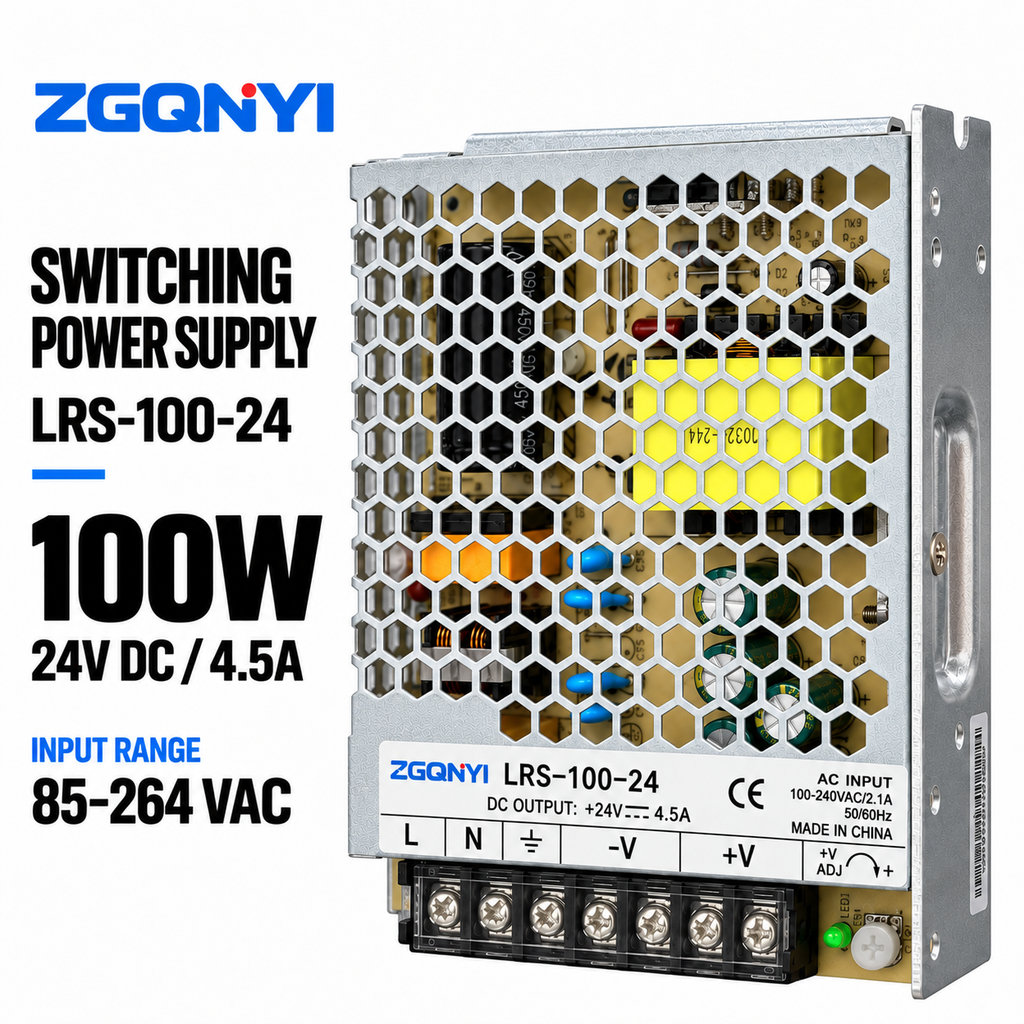
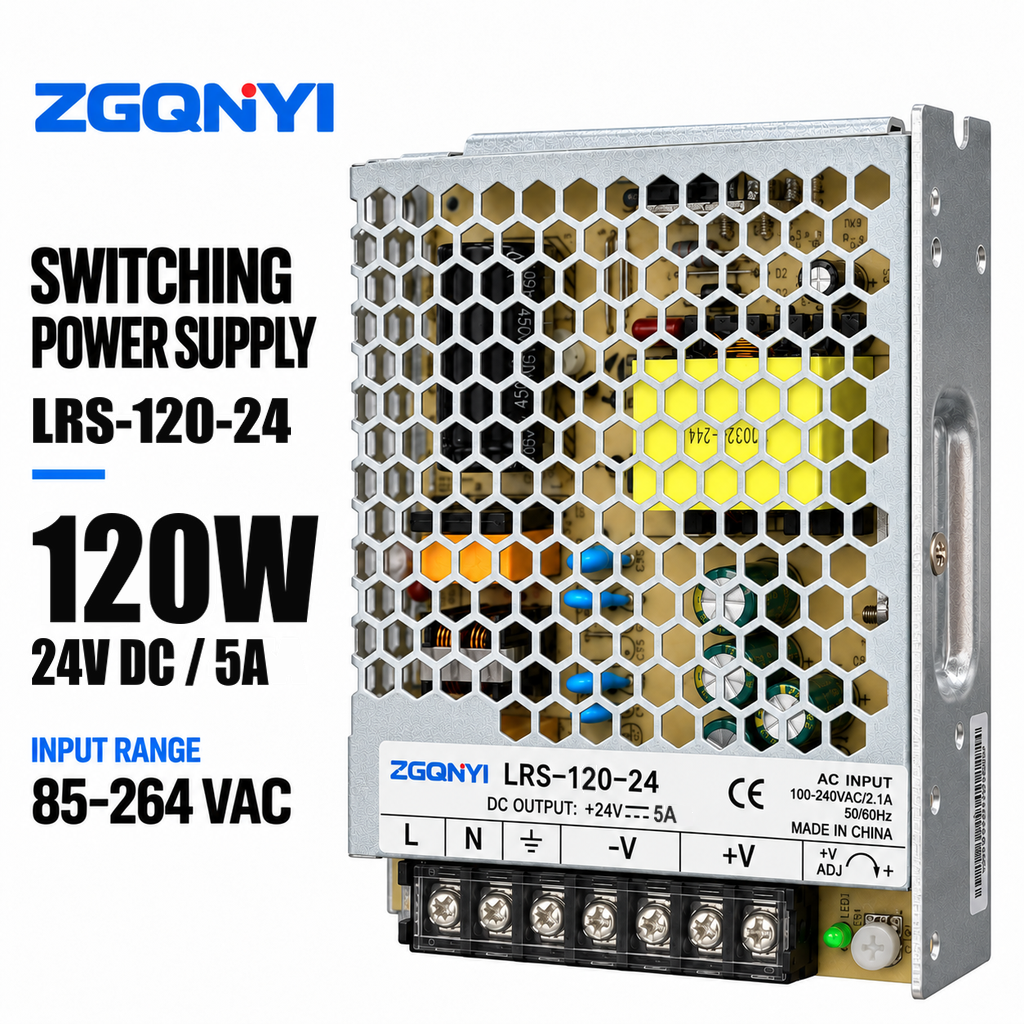
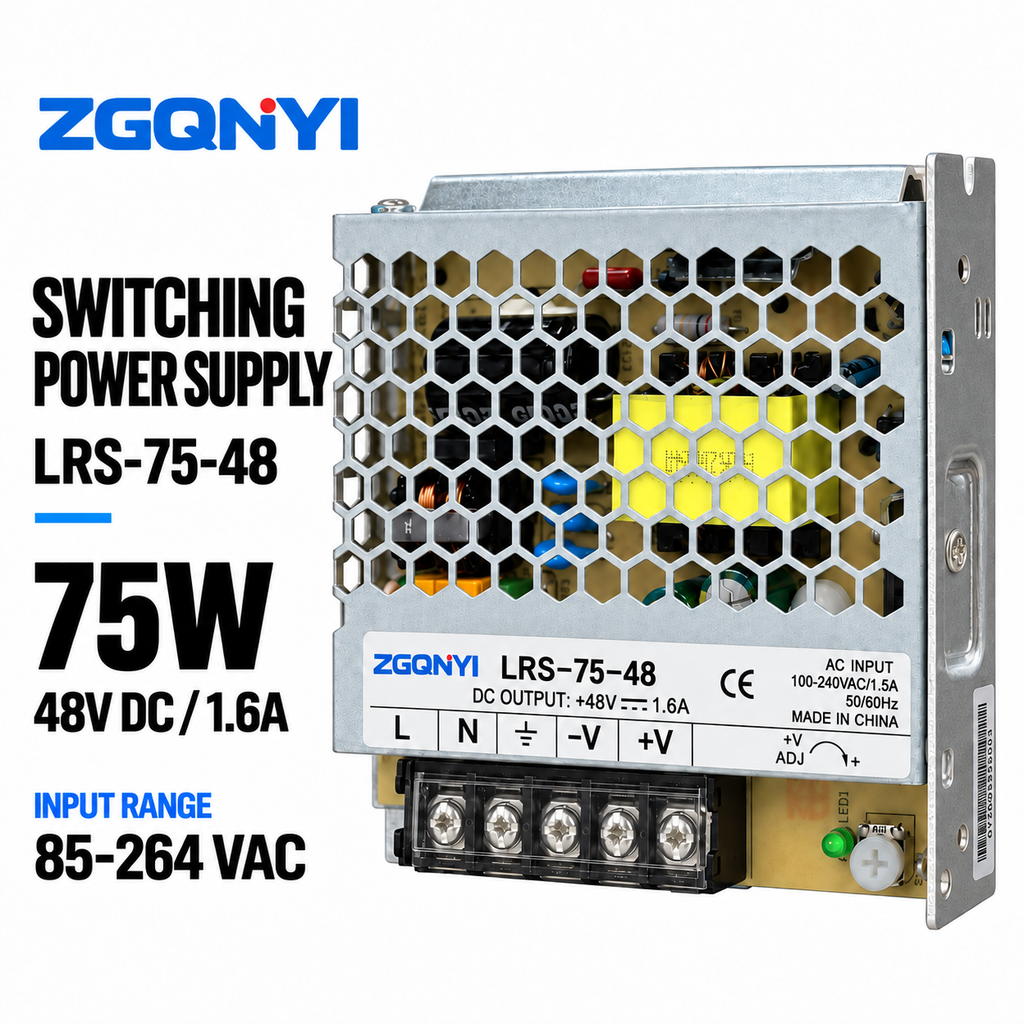
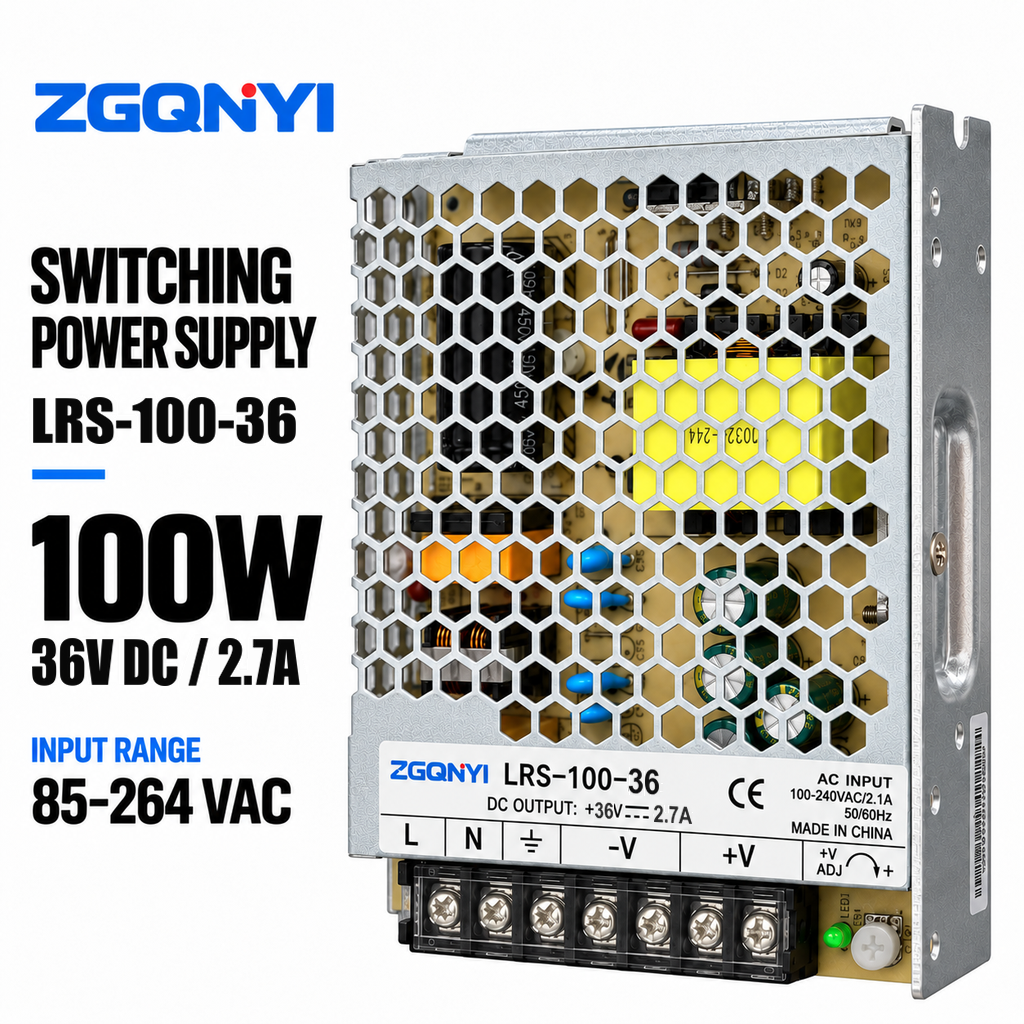
18+
Years R&D Specialization
10,000m²
Facility Footprint
500K+
Monthly Unit Throughput
1,000+
Standard Industrial Skus
Engineering Whitepaper
High-Frequency Power Conversion: Technical Architectures & Thermal Topology
In modern electrical engineering, the shift from traditional linear transformer configurations to high-frequency switched-mode power supplies (SMPS) marks a revolution in energy conversion density, dynamic regulation performance, and system miniaturization. A high frequency power supply operates by converting incoming single-phase (85–264VAC) or three-phase alternating current into direct current, chopping it via advanced power semiconductor switches (MOSFETs or GaN/SiC transistors) at frequencies ranging from tens of kilohertz to well over one megahertz, and stepping down the voltage across high-permeability ferrite magnetic cores.
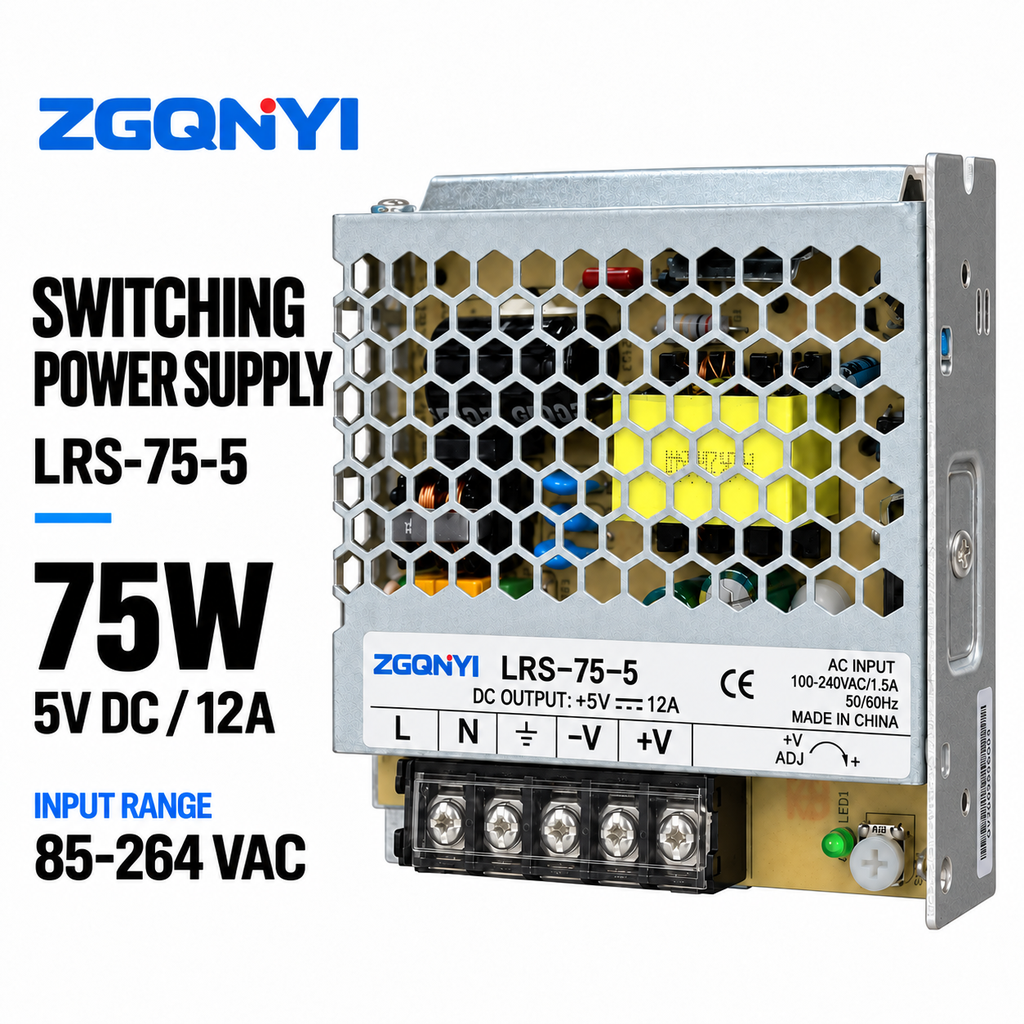
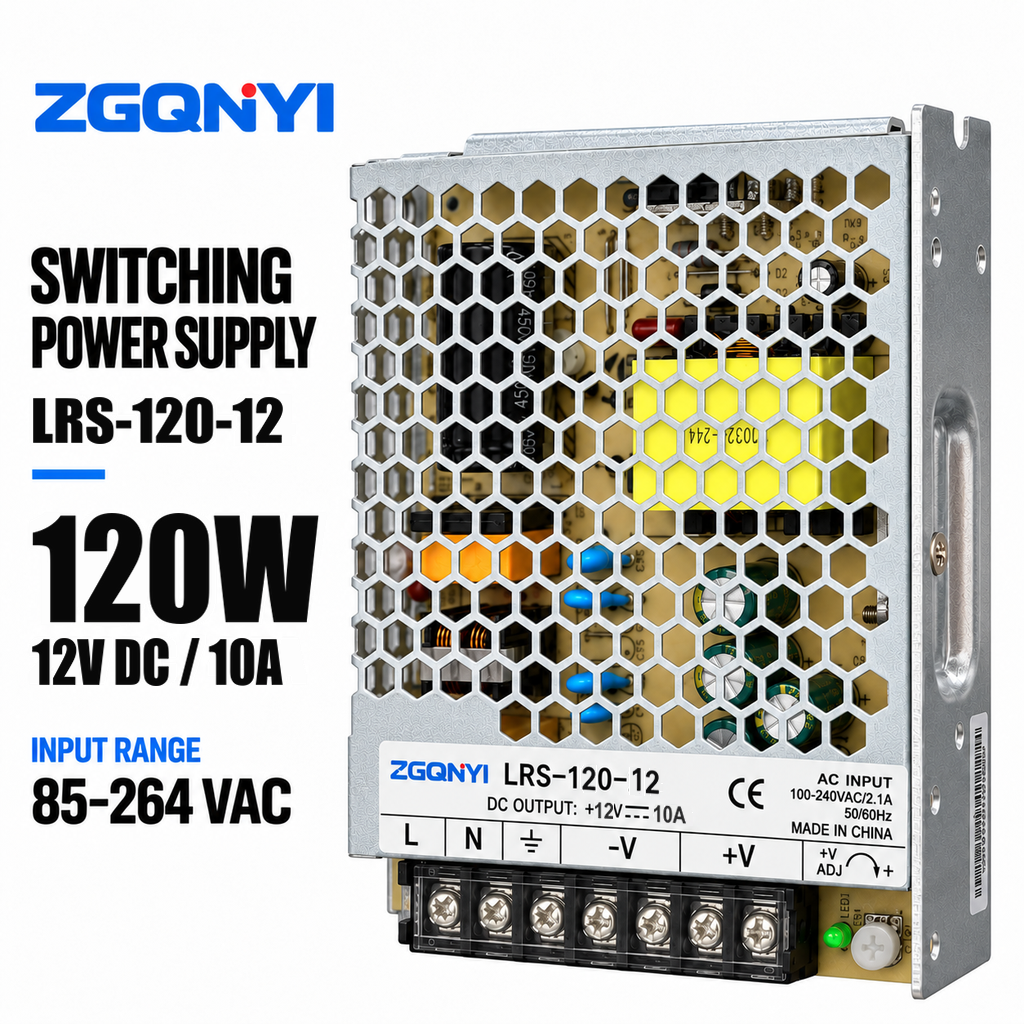
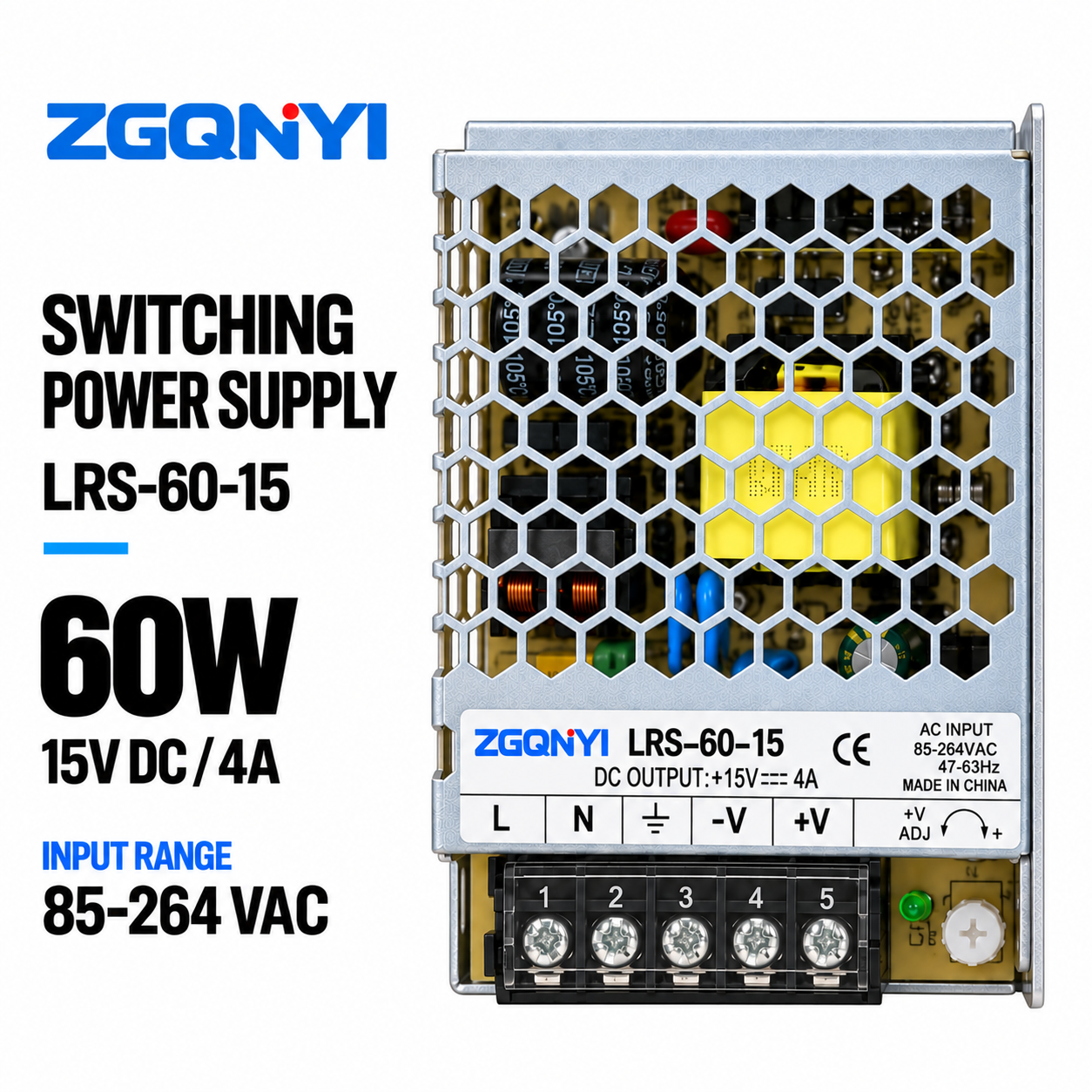
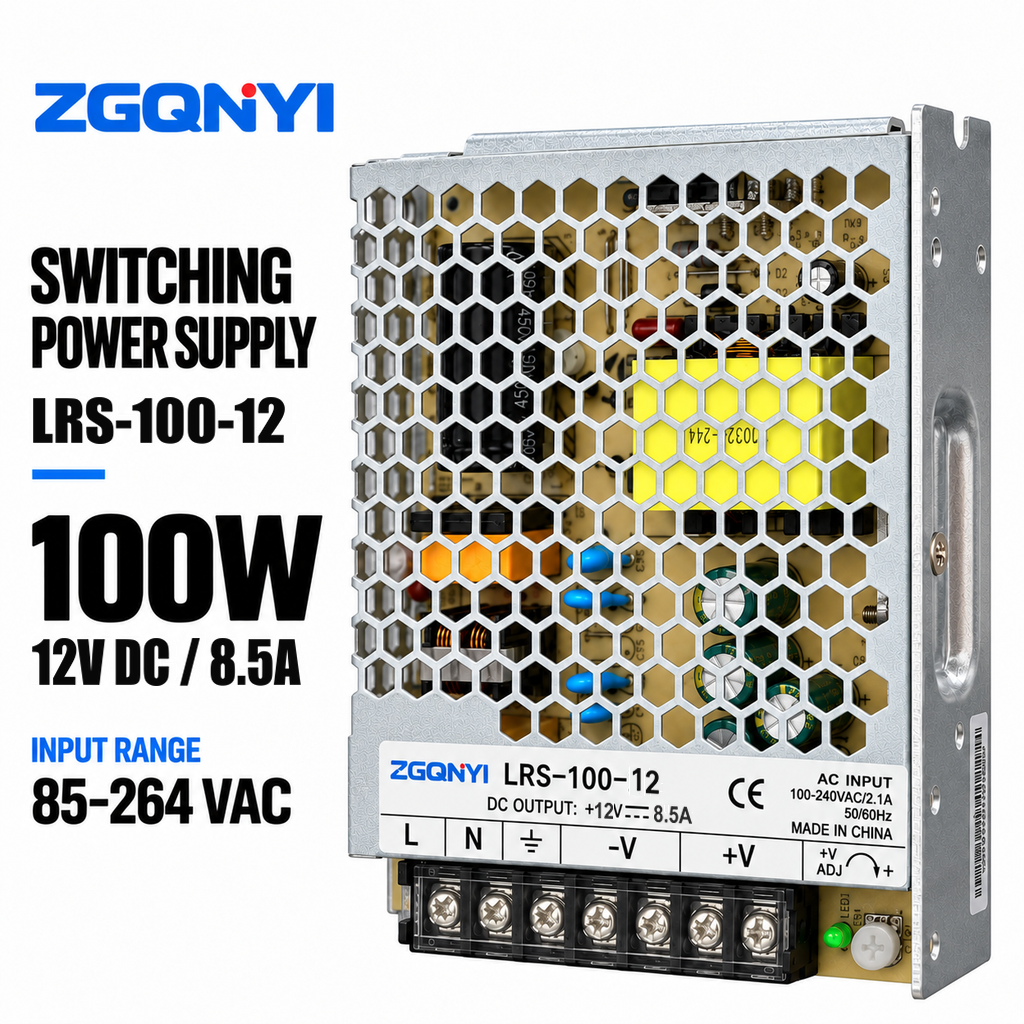
Operating at elevated switching frequencies dramatically reduces the physical geometry required for inductive and capacitive storage stages. Faraday's Law dictates that higher frequencies require lower magnetic flux swing per cycle, allowing power density ratings exceeding 15–30W/in³ in contemporary low-profile industrial chassis such as the ZGQNYI LRS series. However, higher switching velocity introduces secondary challenges, notably high di/dt and dv/dt electromagnetic emissions, hard-switching thermal losses, and stray parasitic resonance. As an authoritative China manufacturer and exporter, our engineering facilities focus heavily on soft-switching resonant topologies, zero-voltage switching (ZVS), and planar transformer integrations that minimize thermal stress while sustaining electrical conversion efficiency above 91%.
Industrial system architects demand robust transient responses and unwavering reliability under electrical distortion. Our high-frequency topology embeds Active Power Factor Correction (PFC), driving operational power factors beyond 0.98, attenuating 3rd and 5th harmonic distortions, and fully conforming to international EN 61000-3-2 class A requirements. By combining multi-stage galvanic isolation with high dielectric breakdown barriers (up to 3.75kVAC isolation between input and output), these switching units deliver pristine, uncorrupted direct-current rails to sensitive instrumentation, PLCs, optical scanners, and multi-axis CNC controllers.
Advanced Resonant LLC Converters
By pairing zero-current switching (ZCS) and zero-voltage switching (ZVS) topologies, our switching stages slash switching power losses by over 45%, maximizing operational life in enclosed, fanless cabinet architectures.
Industrial Protection Matrices
Complete multi-layer circuit protections integrate constant current limiting, crowbar overvoltage suppression, auto-recovering thermal shutdown, and hiccup-mode output short-circuit safeguard loops.
Electromagnetic Compatibility (EMC)
Equipped with dual-stage common-mode and differential-mode line filters, meeting strict EN 55032 (CISPR32) Class B radiated emissions and preventing interference in dense logic networks.
Procurement Intelligence
Future Procurement Trends in Industrial Power Electronics
Analyzing global supply chain migration, technological convergence, and efficiency mandates for tier-1 system integrators and distributors.
1. Widespread Integration of Wide-Bandgap (WBG) Semiconductors (GaN & SiC)
The traditional silicon MOSFET has reached theoretical thermal and breakdown limits in standard packaging. Strategic industrial procurement is visibly transitioning toward Gallium Nitride (GaN) and Silicon Carbide (SiC) switching platforms. These wide-bandgap materials facilitate switching operations at 500kHz to 2MHz without significant dissipation losses. As an early adopter across our high-power (1kW–18kW) and compact series, Wenzhou Nuvros utilizes wide-bandgap components to yield an immediate 20% footprint reduction, higher thermal headroom, and diminished cabinet cooling overhead.
2. Digital Power Management, Telemetry & PMBus/RS485 Telematics
In the Industry 4.0 paradigm, passive DC power conversion is insufficient. Procurement engineers are systematically specifying power supplies with bidirectional digital interfaces (Modbus-RTU, RS485, CANopen, or Ethernet/IP). Modern factory automated panels require live visibility over operating parameters: real-time ripple indicators, dynamic current draws, ambient heatsink temperatures, and cumulative operational run-time for predictive maintenance. Our digital-display DIN-rail and chassis-mount models satisfy this market demand by replacing external ammeters and voltmeters with native sensor-level feedback loops.
3. Total Cost of Ownership (TCO) Over Upfront Bill of Materials (BOM)
Forward-thinking purchasing managers now calculate power supply ROI through lifecycle metrics rather than baseline procurement price. An SMPS operating at 82% efficiency dissipates twice as much heat energy as a high-frequency converter operating at 91%. In heavy continuous duty (such as electrolysis cells, plating baths, 24/7 telecom towers, and data centers), that 9% discrepancy compounds into hundreds of kilowatt-hours consumed per node, not counting the parasitic energy required for air conditioning. Opting for high-frequency, active PFC power solutions directly lowers operating expenditure while boosting mean time between failures (MTBF) past 300,000 operational hours.
4. Supply Chain Resilience & Modularity for High-Mix Manufacturing
The post-disruption era has made standard enclosed architectures with multi-pin universal footprints (e.g., standard LRS or DIN configurations) essential to minimize vendor lock-in. Global buyers prioritize wholesale manufacturing exporters possessing unified production ecosystems capable of rapid lead-time adjustment, dual-source electrolytic capacitor pipelines, and domestic silicon sourcing that safeguard volume orders against global geopolitical turbulence.
Technological Roadmap
Evolutionary Trajectory of High-Frequency SMPS
A half-century progression from brute-force linear dropouts to ultra-compact, digitally modulated resonant conversions.
The technological evolution of DC power supply architectures has traversed three major epochs. Early industrial power relied on mains-frequency (50/60Hz) linear transformers paired with series pass regulation. While delivering pristine, noise-free outputs, linear architectures suffered from immense bulk, heavy copper weight, and an abysmal energy conversion efficiency rarely exceeding 45–55%. The remaining energy was radiated entirely as ambient heat, demanding heavy extruded aluminum thermal finning.
The second generational leap introduced Hard-Switched Pulse Width Modulation (PWM) topologies (Flyback, Forward, Half-Bridge) operating between 20kHz and 100kHz. This phase represented a substantial leap forward, cutting magnetic volume by 80% and lifting efficiency into the 75–85% bracket. Nevertheless, hard-switching involves switching transistors on and off when both voltage across and current through the device are non-zero. This creates inevitable overlapping switching losses that climb in direct proportion to operational frequency, effectively capping thermal scalability and limiting maximum switching velocity.
Today, the industry is anchored in the third generation: Soft-Switched Multi-Resonant & Active Clamp Topologies. By designing the resonant circuit parameters so that the power transistor turns on at zero voltage (ZVS) or turns off at zero current (ZCS), the switching loss envelope is theoretically zeroed out. This allows converters to drive switching frequencies into the megahertz spectrum, allowing planar PCB transformers, ceramic filtering capacitors, and exceptionally compact aluminum chassis profiles. Modern high frequency switching power supplies seamlessly conquer demanding dynamic step loads, maintaining ultra-stable voltage margins within 1% even during 50% dynamic load surges.
B2B Sourcing Handbook
High Frequency Power Supply Procurement FAQ
In-depth responses to critical technical, compliance, and international logistics questions raised by enterprise procurement officers.
What are the key technical criteria for specifying a high frequency power supply for industrial control cabinets?
Specifying engineers must balance five primary parameters: (1) Nominal Output Voltage and Trim Range: Verification of potentiometric adjustment headroom (e.g., ±10% to ±15%) to offset system bus cable drops; (2) Continuous Power Rating & Headroom: Adhering to the standard engineering practice of applying a 20–30% overhead safety margin above continuous load; (3) Transient Inrush & Peak Handling: Sizing for motor, inductive contactor, or capacitive inrush currents that can spike to 300% of nominal rating; (4) Thermal Derating Curve: Verifying output degradation thresholds across elevated internal cabinet temperatures (typically beginning between 50°C and 70°C); and (5) EMC/Isolation Breakdown: Ensuring isolation values exceed 3000VAC and conducted EMI adheres to EN 55032/CISPR22 Class B standards.
How does operating at high switching frequency affect ripple, noise, and downstream logic circuitry?
High switching frequencies inherently reduce the physical amplitude of low-frequency ripple components (such as 100/120Hz mains hum) while shifting residual ripple into elevated frequency spectra (100kHz–1MHz). This enables tiny, high-grade ceramic surface-mount capacitors and compact ferrite beads to suppress high-frequency artifacts far more effectively than massive electrolytic bulk capacitors. For downstream precision logic—such as microcontrollers, analog-to-digital converters (ADCs), and precision sensor arrays—our power supplies feature dual-stage LC post-filters that constrain peak-to-peak output ripple and noise under 80–120mVp-p, avoiding data line corruption or erratic clock cycling.
What electrical certifications and compliance documentations should international buyers demand?
When sourcing wholesale power supplies from China for deployment in Europe, North America, or Australasia, buyers must mandate documented proof of: (1) Low Voltage Directive (LVD) Compliance: IEC/EN/UL 62368-1 (the modern standard superseding 60950-1 and 60065) ensuring comprehensive electrical shock, energy hazard, and flammability protection; (2) Electromagnetic Compatibility (EMC): Conformance to EN 55032 / EN 55035, EN 61000-4-2 (ESD immunity), EN 61000-4-4 (Electrical fast transient/burst), and EN 61000-4-5 (Surge immunity up to 2kV line-to-line, 4kV line-to-earth); (3) Harmonic Distortion: Compliance with EN 61000-3-2 Class A/D; and (4) Environmental Directive Conformance: RoHS 2.0 (2011/65/EU) and REACH certifications verifying restriction of hazardous substances.
Why is Constant Voltage / Constant Current (CV/CC) mode vital for heavy industrial processes?
Standard power supplies utilize hiccup-mode or foldback protection: when an overcurrent event occurs, the unit trips off and attempts intermittent restarts. While effective for simple resistive circuits, this mode fails in dynamic chemical or electrochemical processes such as electroplating, electro-chlorination, anodizing, water treatment, or heavy lithium battery charging. In these applications, internal cell impedance fluctuates dramatically based on bath temperature and ionic concentration. A dual-loop CV/CC supply automatically shifts from voltage regulation to constant current regulation when load thresholds are hit, sustaining uninterrupted ion transfer, preventing bath burnout, and protecting internal semiconductor arrays from destructive over-stress.
What are the lead times, minimum order quantities (MOQ), and OEM custom capabilities?
Standard models (such as our LRS, S, and standard DIN-rail units) maintain continuous buffer inventories in Wenzhou, supporting sample orders starting at 1 piece with dispatch within 48 to 72 hours. For volume wholesale orders, typical production turnaround ranges between 12 and 18 business days. OEM/ODM custom development—including bespoke output voltage profiles (e.g., 18V, 36V, 60V, or 110V), conformal PCB coating for tropical or humid environments, custom laser-etched metal casings, customized harness terminations, and customized communications protocols (CAN/RS485)—typically requires a 10–14 day engineering prototype cycle followed by complete volume delivery within 30 days.
How does Wenzhou Nuvros ensure rigorous quality assurance across massive production runs?
Every manufactured unit undergoes a documented multi-tier Quality Assurance process. First, Incoming Quality Control (IQC) tests critical components (active MOSFETs, diodes, high-temperature 105°C rated low-ESR electrolytic capacitors) via rigorous sample inspection. Second, automated SMT lines with high-speed AOI (Automated Optical Inspection) ensure solder paste fidelity. Third, 100% of finished assemblies are routed through full-load thermal burn-in aging racks (at 40°C–50°C ambient for 4 to 8 hours continuous) cycling on/off states to expose infant component mortalities. Finally, Outgoing Quality Control (OQC) validates isolation withstand voltage, hi-pot grounding, line/load regulation, and acoustic silence prior to vacuum-sealed packaging.
Manufacturing Authority
Why Partner with Wenzhou Nuvros Electric Co., Ltd.?
Combining 18 years of technical mastery, deep vertical supply integration, and an expansive export infrastructure servicing tier-1 global partners.
Headquartered in Beibaixiang Town, Wenzhou—the premier electrical engineering and component industrial hub of China—Wenzhou Nuvros Electric Co., Ltd. has established an authoritative engineering standard across the power supply sector. Operating an integrated factory and laboratory footprint exceeding 10,000 square meters, our company integrates end-to-end R&D, magnetic core prototyping, robotic automated surface mount assembly, and high-voltage testing infrastructure under one roof.
With an aggregate production capability exceeding 500,000 switching units per month, Nuvros provides global buyers with stable pricing, agile batch engineering, and comprehensive lifecycle support. Our product range extends from low-profile single-output enclosed chassis (35W–500W) to complex industrial rack-mount adjustable power stations (1kW–18kW) equipped with active digital power factor correction and real-time telemetry.
Vertical Supply Integration
Direct geographic positioning within the Wenzhou electrical cluster provides uninhibited access to premium ferrites, copper winding, and stamping enclosures, securing price stability and rapid turnarounds for international clients.
Rigorous In-House Testing
Equipped with Chroma programmatic dynamic load simulators, high-bandwidth digital oscilloscopes, calibrated EMC anechoic chambers, and comprehensive full-load 100% burn-in environmental test rooms.
Agile OEM & ODM Engineering
A specialized R&D engineering squad ready to customize voltage rails, current limits, mechanical form factors, and telemetry protocols, transitioning initial concepts to certified samples within days.
Uncompromising Component Standards
Exclusively sourcing from top-tier component vendors, employing premium high-temperature long-life electrolytic capacitors and genuine power silicon to guarantee expansive MTBF ratings.
Global Compliance Footprint
Broad catalog of listed standard models carrying certified CE, RoHS, and comprehensive safety test reports, facilitating hassle-free customs clearance and fast integration into your export products.
Dedicated International Logistics
Seamless processing across all standard Incoterms (FOB Ningbo/Shanghai, CIF, CFR, DDP, EXW) with verified documentation support, multi-currency processing (USD, EUR, CNY), and rapid inquiry turnaround.
Accelerate Your Power Architecture with Factory Direct Engineering
Need customized electrical topologies, high-frequency modifications, detailed compliance dossiers, or wholesale container quotes? Our experienced sales engineers are on standby to consult on your exact specifications.
Contact Us