Top 10 AC DC Switching Power Supply Supplier & Suppliers
Precision Industrial Power Solutions: Comprehensive engineering analysis, procurement benchmarking, and next-generation SMPS architectures for automation, LED, and control infrastructure.
Engineered AC DC Switching Power Supplies
Field-proven enclosed and DIN rail power converters designed for superior thermal resilience, stable ripple performance, and mission-critical 24/7 industrial deployment.
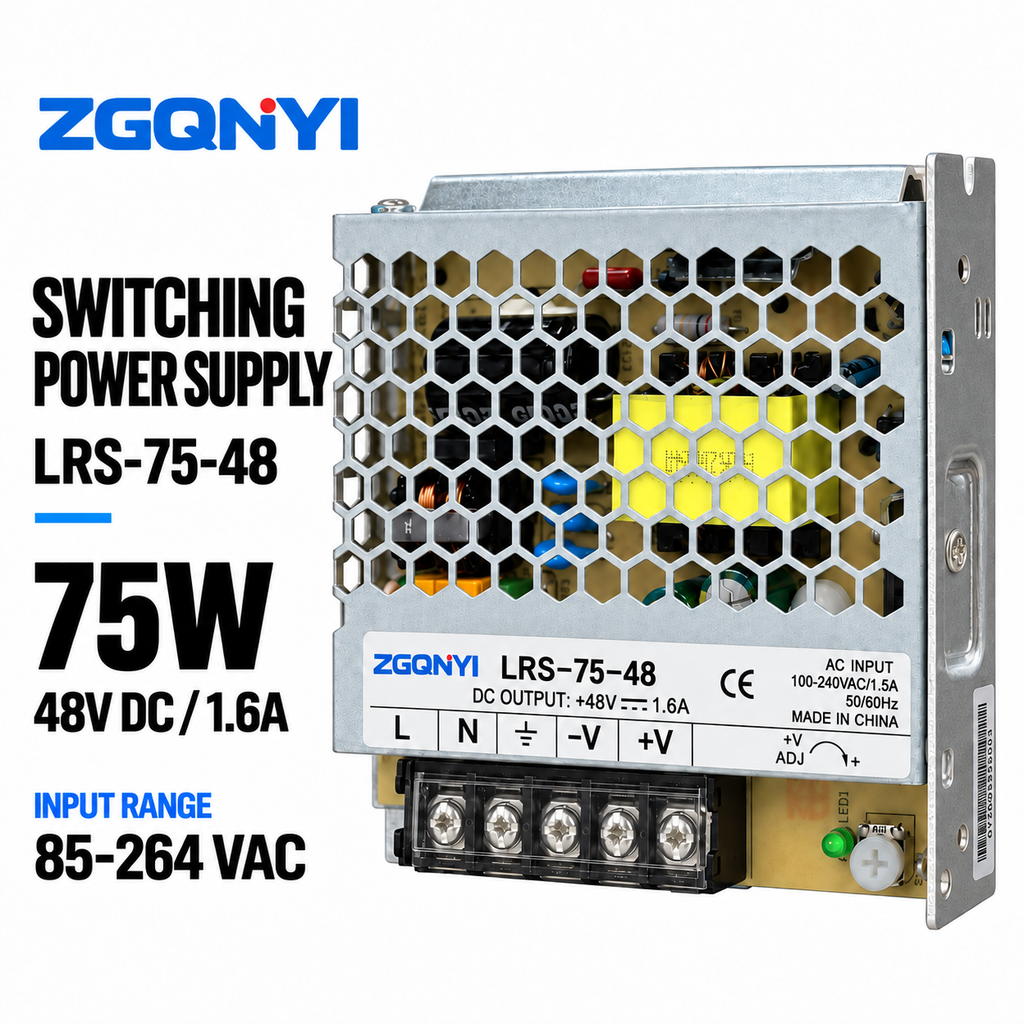
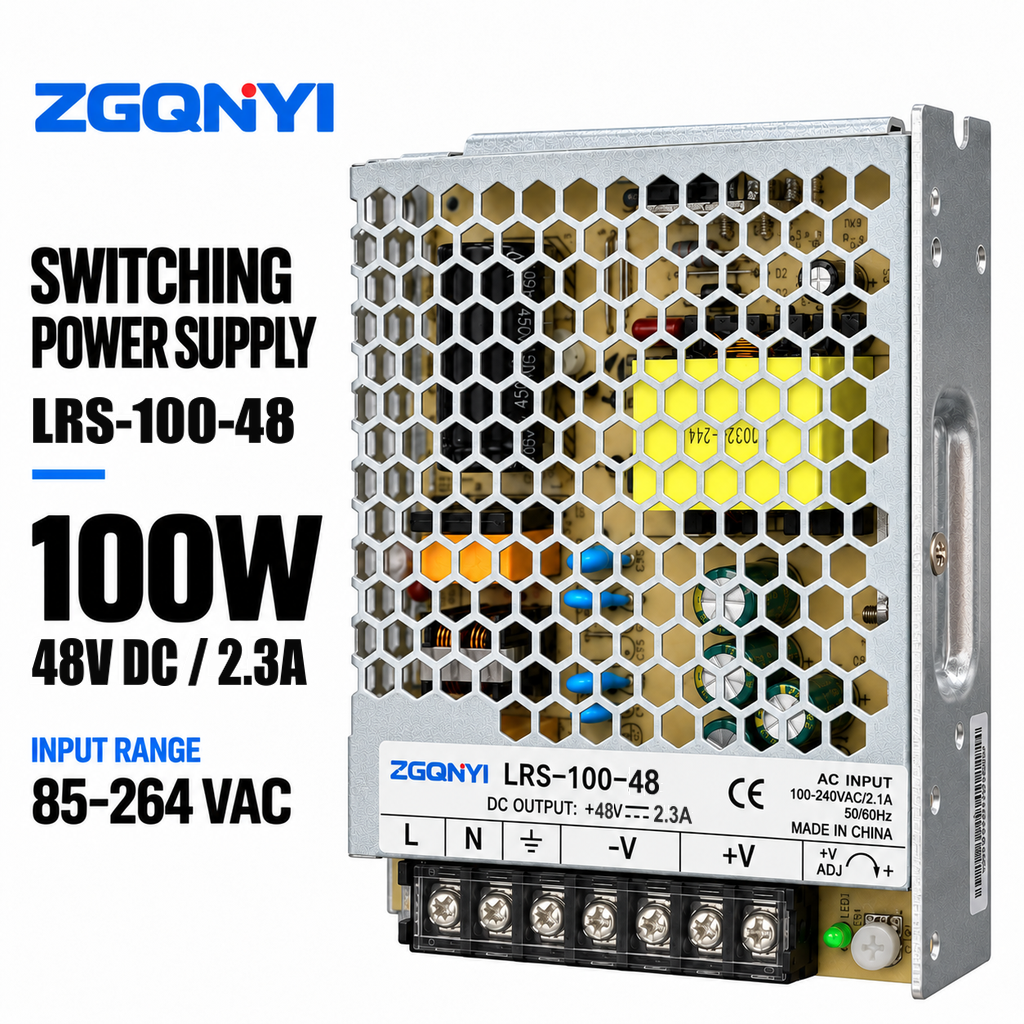
ZGQNYI Industrial 48VDC Power Supply LRS-75-48 Single Output AC to DC Converter SMPS
Technical Specs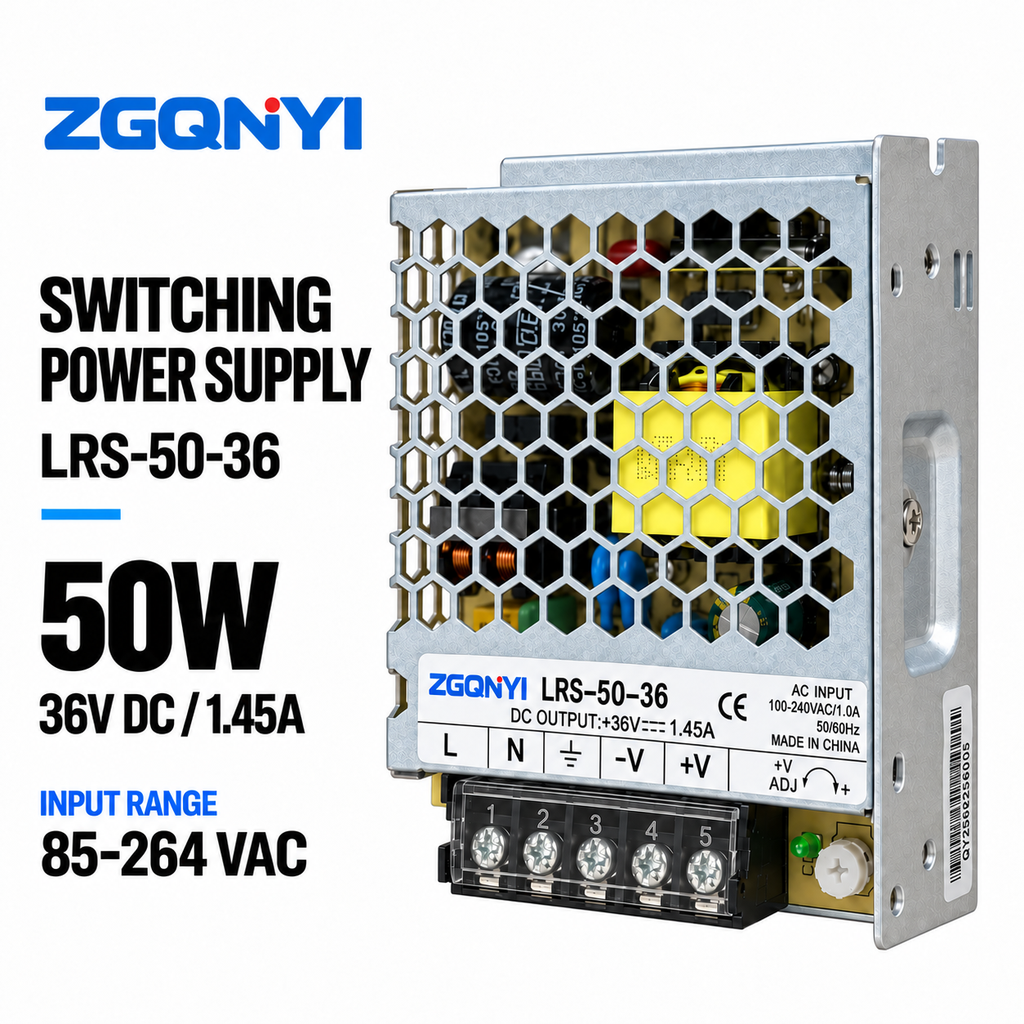
ZGQNYI LRS-50-36 Industrial Switching PSU 36V Compact Enclosed AC to DC Power Supply
Technical Specs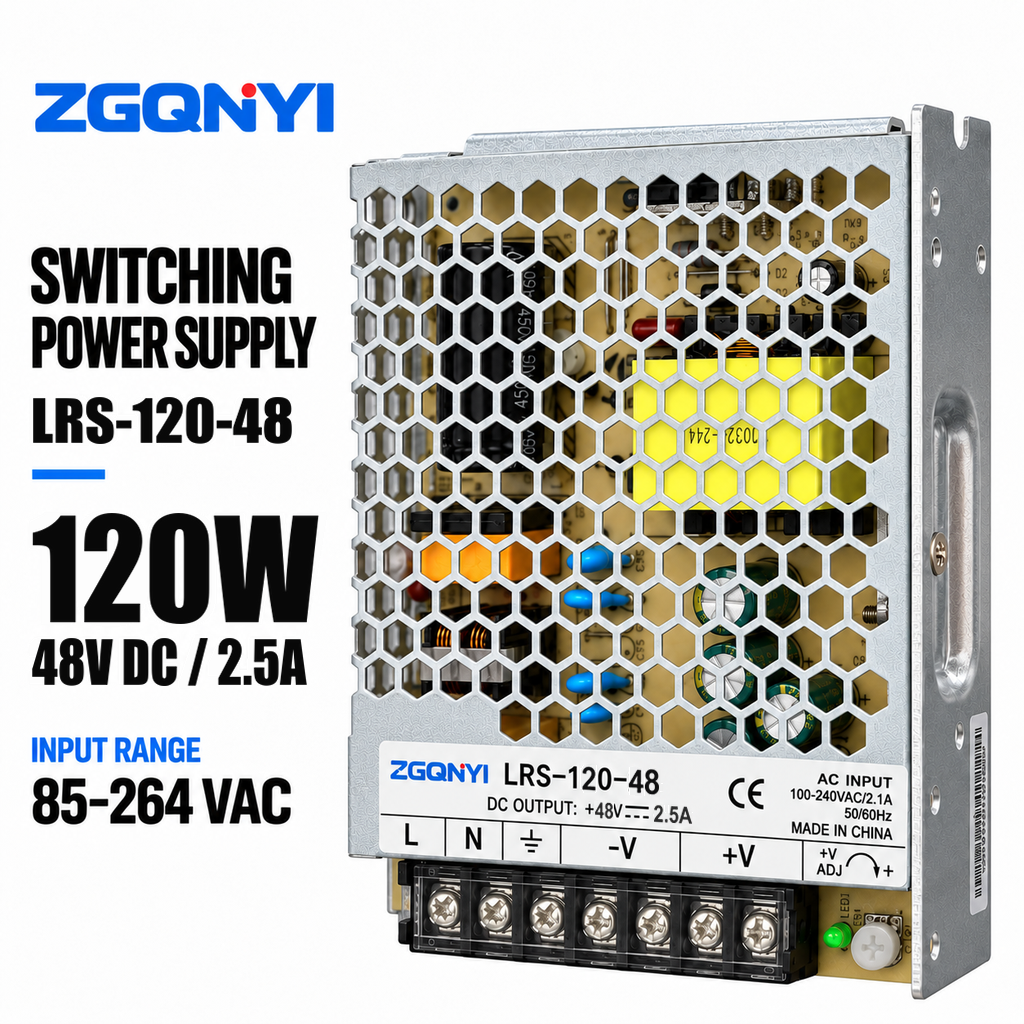
ZGQNYI LRS-120-48 120W 48V Industrial SMPS Power Supply AC DC Switching Converter
Technical Specs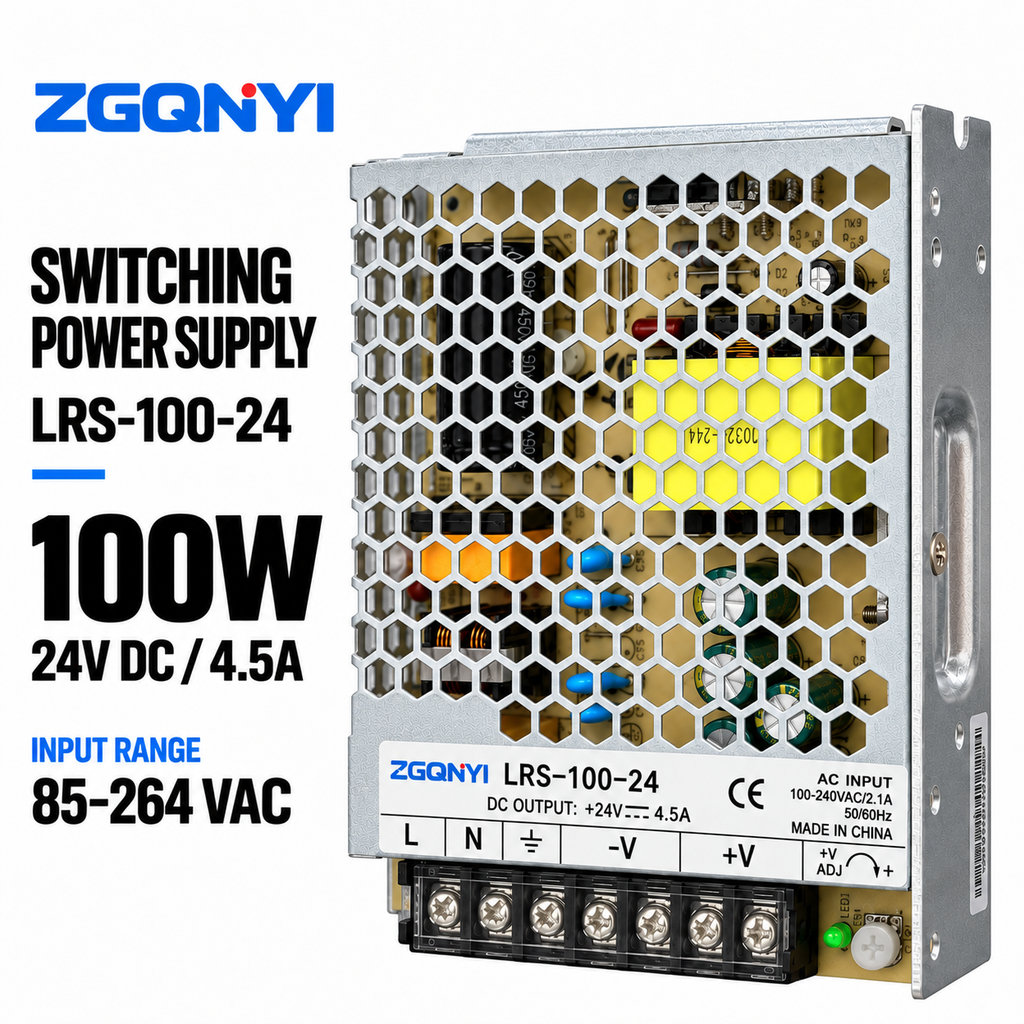
ZGQNYI LRS-100-24 100W 24V Switching Power Supply AC DC SMPS Single Output PSU
Technical Specs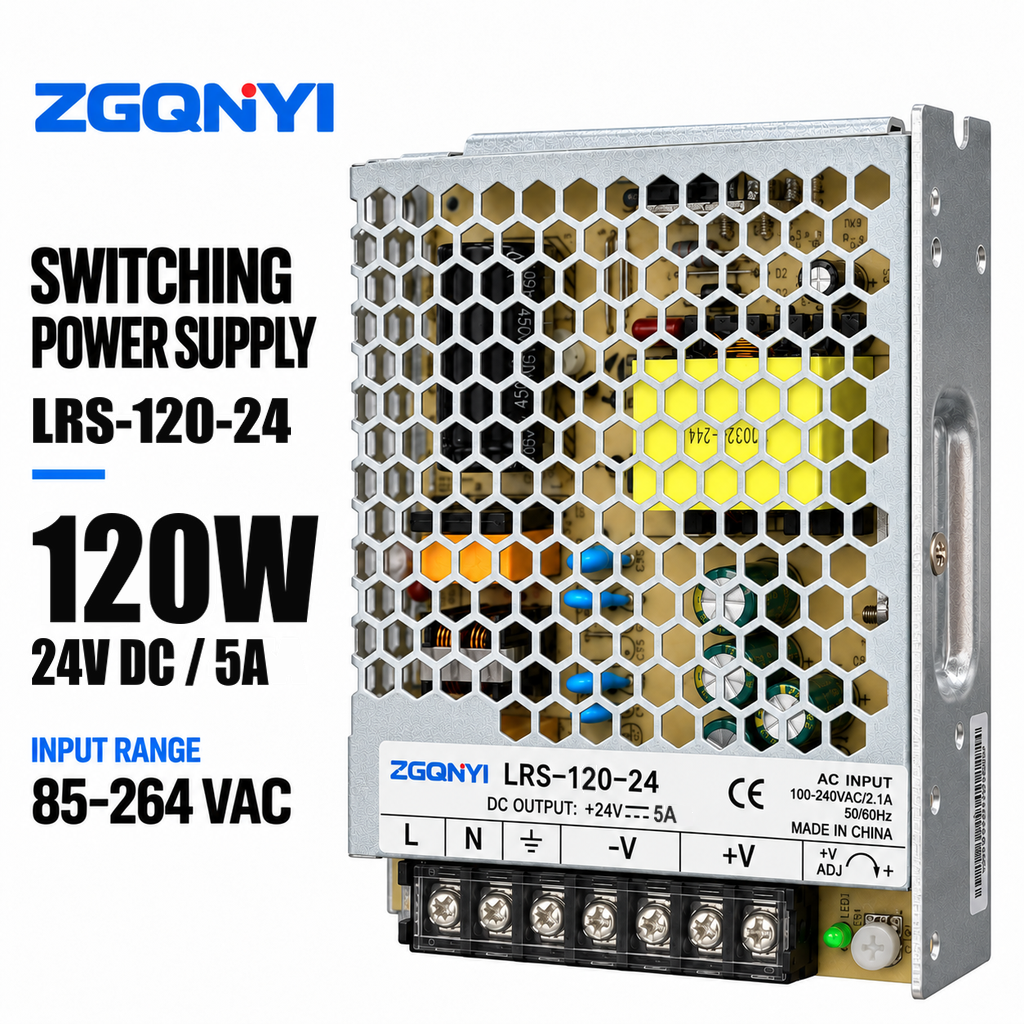
ZGQNYI LRS-120-24 120W 24V Industrial Power Supply AC DC SMPS Single Output Switching PSU
Technical Specs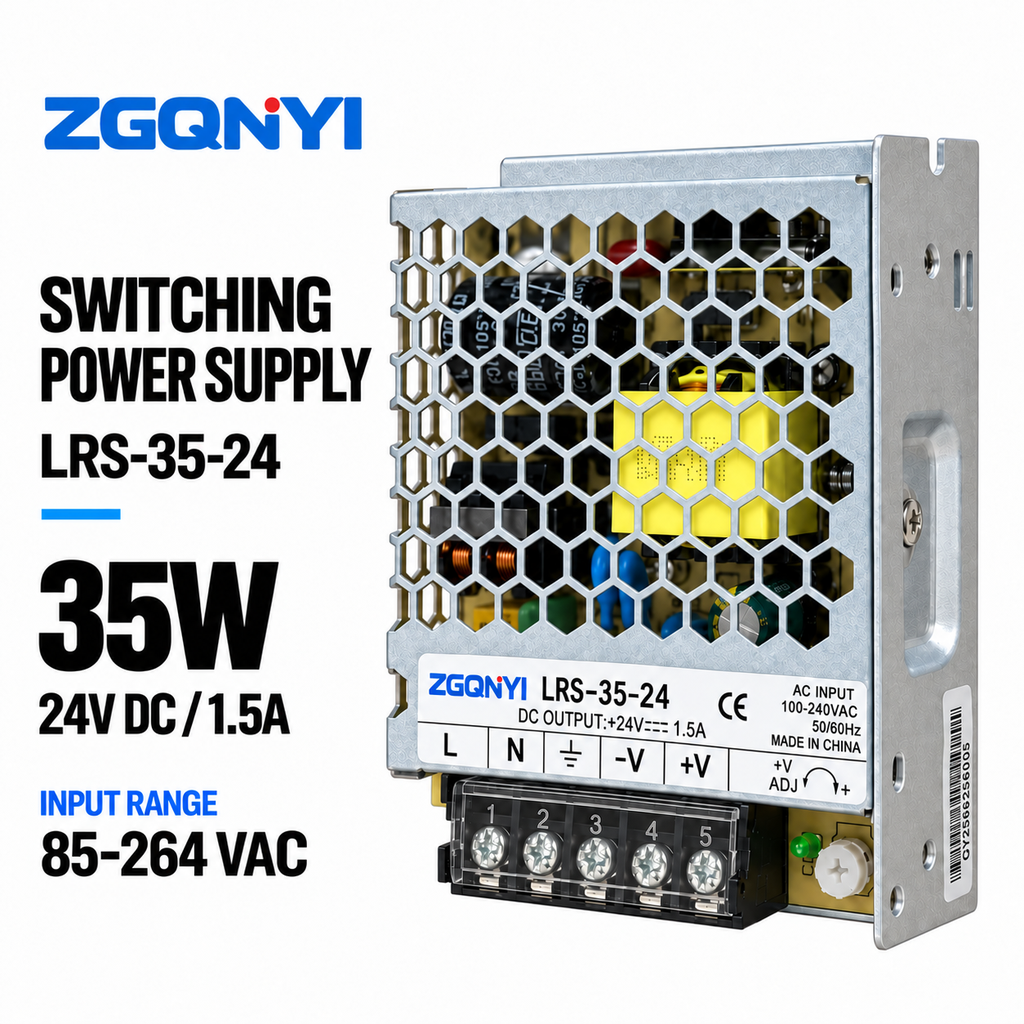
ZGQNYI LRS-35-24 24VDC Compact Enclosed Switching Power Supply Industrial AC DC SMPS
Technical Specs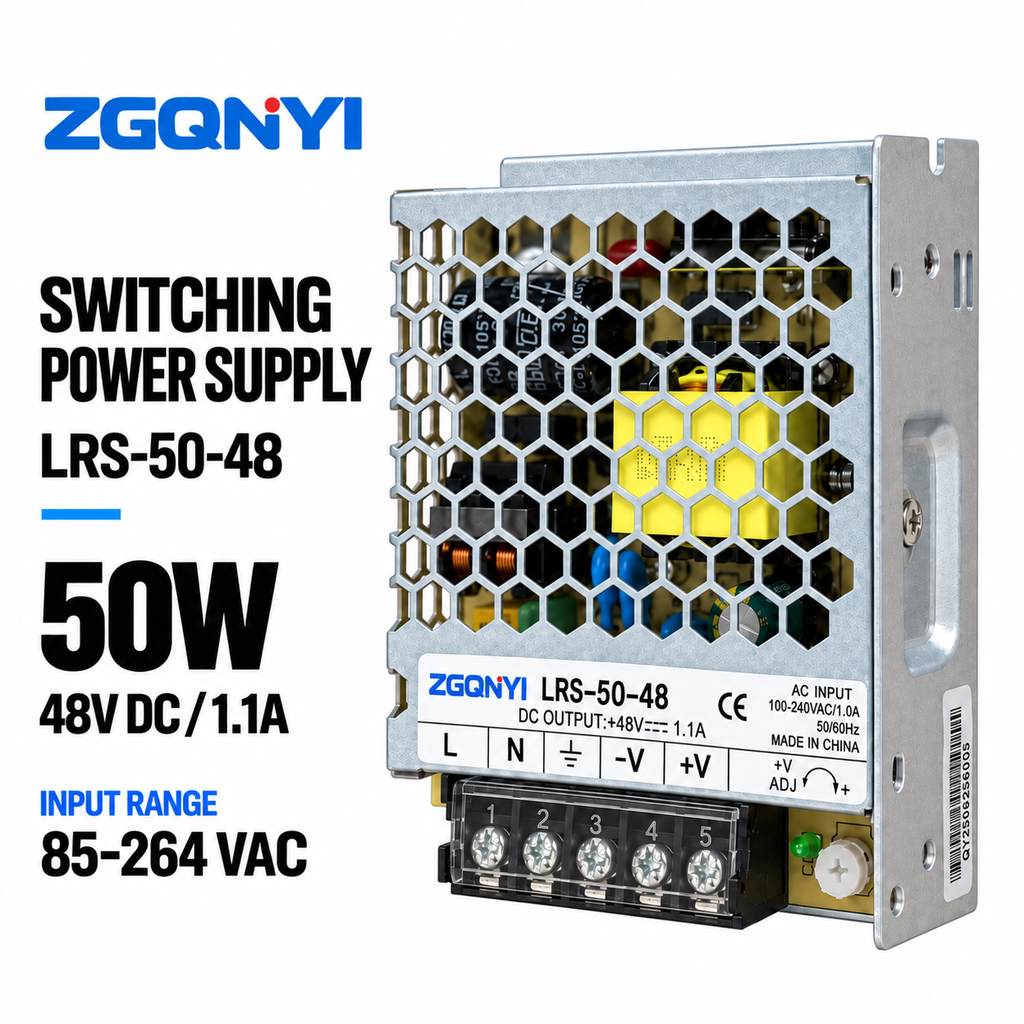
ZGQNYI LRS-50-48 48V Compact Enclosed Switching Power Supply Single Output AC to DC SMPS
Technical Specs18+
Years Engineering R&D
500,000+
Units Monthly Production
10,000 m²
Modern Manufacturing Space
≤ 1 Hour
Average Engineering Response
Industry Insight
Future Procurement Trends in AC DC Power Supplies
A strategic overview of supply chain shifts, total cost of ownership (TCO) optimization, and emerging industrial standards reshaping high-reliability SMPS procurement.
Wide Bandgap Semiconductor Integration
Global procurement teams are shifting away from conventional silicon towards Gallium Nitride (GaN) and Silicon Carbide (SiC) architectures. These compound semiconductors enable switching frequencies exceeding 200 kHz while minimizing thermal loss. For procurement directors, this translates into a 30% reduction in physical chassis volumes and significant freight optimization across bulk hardware container shipments.
Supply Chain Resiliency & Dual Sourcing
The post-disruption era has cemented modular multi-sourcing as standard operating procedure. Top-tier system integrators prioritize original equipment manufacturers capable of delivering pin-to-pin, form-factor-compatible drop-in alternatives to legacy designs, bypassing proprietary supply lock-ins without compromising UL, CE, and RoHS international certifications.
Total Life Cycle Cost & ErP Directives
Procurement criteria have migrated from upfront unit pricing toward comprehensive Lifetime Cost Calculations. Under modern ErP directives and stringent carbon-neutral policies, power supplies boasting active PFC (>0.98) and ultra-low no-load power consumption (<0.5W) represent tangible recurring electrical energy savings across massive multi-megawatt industrial facilities.
R&D Roadmap
Technological Evolutions in AC DC Switching Topologies
Analyzing key structural transformations: from legacy analog PWM hard switching to digital LLC resonant converters with telemetric predictive telemetry.
Digital Power Architectures & Telemetry
Standard analog control loops are being augmented with microcontrollers supporting PMBus, I2C, and RS485 industrial protocols. Modern SMPS units provide real-time thermal telemetry, dynamic current-limit programming, and predictive MTBF reporting, allowing automated control cabinets to initiate preventative maintenance prior to hardware catastrophic failure.
Zero Voltage Switching (ZVS) Resonance
LLC half-bridge resonant topologies ensure soft-switching transition characteristics across variable load profiles. Minimizing parasitic capacitive losses at turn-on suppresses conducted and radiated Electromagnetic Interference (EMI), dramatically reducing the reliance on massive common-mode choke coils and improving power density metrics up to 25W/in³.
High Overload & Peak Power Handling
Dynamic motor inductive start-ups and capacitive surges demand heavy reserve handling. Contemporary converters incorporate multi-mode peak load capability, delivering up to 150-200% rated current for 3 to 5 seconds. This critical tolerance eliminates the need to over-specify total nominal PSU wattage solely for handling brief intermittent motor start cycles.
Manufacturing Capability
Wenzhou Nuvros Electric Co., Ltd.
Located in the heart of China's premier electrical manufacturing hub—Beibaixiang Town, Wenzhou—Nuvros Electric delivers industrial-grade power transformation hardware engineered over an 18-year history of dedicated R&D. Spanning over 10,000 square meters of specialized production space, our facilities feature automated Surface Mount Technology (SMT), automated vacuum potting lines, and imported full-spectrum burn-in test chambers.
We manufacture comprehensive product families ranging from compact ultra-thin LRS chassis units and DIN Rail NDR/DR platforms to massive 1kW–18kW high-power constant-current/constant-voltage (CC/CV) power supplies. Backed by an ISO-aligned quality verification process and a monthly output capacity exceeding 500,000 units, we serve critical systems worldwide across factory automation, robotics, electrolysis, telecom, and solar infrastructure.
18-Year SMPS R&D Engineering Team
500,000 Pcs Monthly Production Capacity
Rigorous 100% Full-Load Burn-in Testing
Full OEM / ODM Circuit & Housing Customization
Engineering Project Consultation
Direct access to technical drawings, sample prototyping, custom voltage curve matching, and full testing documentation.
Inquire Now
Procurement Guide
Frequently Asked Questions in SMPS Sourcing
Essential technical guidelines addressing common qualification hurdles, thermal safety, international compliance, and custom OEM manufacturing workflows.
How do you accurately calculate power margins and thermal derating for enclosed control panels?
As a standard engineering practice, switching power supplies should be sized with a minimum 20% to 30% headroom above the system's nominal continuous load. In dense or sealed industrial control cabinets where internal ambient temperatures often surpass 50°C, engineers must refer to the manufacturer's thermal derating curve. For instance, most standard SMPS models maintain 100% capacity up to 45°C or 50°C, beyond which output derates linearly by 2% to 2.5% per degree Celsius up to 70°C. Sizing without headroom accelerates electrolyte vaporization in filter capacitors, sharply truncating product lifespan.
What is the difference between Constant Voltage (CV) and Constant Current (CC) operating modes?
Constant Voltage (CV) supplies regulate a steady output voltage (e.g., exactly 24V or 48V DC) while current dynamically fluctuates according to load impedance. Conversely, Constant Current (CC) units clamp the output current to a preset ceiling while allowing voltage to fluctuate within an operating window. In applications like electroplating, battery storage charging, and electrolysis baths, internal resistance drops as temperature rises. A CV/CC hybrid supply automatically switches from voltage stabilization to current limiting when resistance plunges, protecting downstream equipment and internal circuits against overcurrent damage.
Why is Active Power Factor Correction (PFC) essential for international trade compliance?
Under international electromagnetic compatibility frameworks such as IEC/EN 61000-3-2, electrical loads above 75 Watts sold into the European Union and other regulated territories must limit harmonic distortion injected back into the AC grid. Active PFC utilizes high-frequency boost controllers to bring the power factor above 0.95 (approaching unity), ensuring the input AC current waveform aligns precisely in phase with AC voltage. This significantly lowers reactive losses, prevents circuit breaker tripping from harmonics, and drastically diminishes phase interference in multi-unit rack mountings.
What validation protocols ensure high MTBF and minimal field RMA rates in mass manufacturing?
Reliability in high-volume SMPS lines rests upon three foundational quality stages: first, Incoming Quality Control (IQC) rigorously screening active ICs and requiring long-life 105°C-rated electrolytic capacitors; second, stringent in-circuit testing (ICT) to verify solder joint integrity and parasitic impedance; and third, mandatory 100% full-load thermal burn-in testing (typically 4 hours at elevated chamber temperatures between 40°C and 50°C) with periodic on-off load cycles to eliminate early infant mortality before goods are packaged and cleared for export.
What customizable parameters are available for industrial OEM and ODM projects?
Nuvros provides extensive engineering flexibility for private-label and specialized requirements. Mechanical configurations encompass customized mounting brackets, conformal coating for high-humidity/saline atmospheres, IP67 waterproof potting, low-profile extruded aluminum enclosures, and specialized connector interfaces. Electrically, our engineers can tailor input voltage windows (such as wide-range 85–264VAC or 3-phase 380VAC inputs), adjust fixed or variable output voltages up to 220VDC, program specific CC/CV trip curves, and integrate RS485 / Modbus communication interfaces.
Ready to Scale Your Power Infrastructure?
Request standard product datasheets, schedule engineering reviews for custom SMPS development, or request prototype verification samples with guaranteed sub-1-hour engineering response time.