OEM / ODM Wenzhou, Zhejiang, China [email protected]
English Avg. response ≤ 1h Quick Contact

Top 10 Digital Power Supply Factories & Suppliers

Global Engineering Whitepaper: Tier-1 SMPS OEM/ODM Benchmarking, High-Density Topologies, Programmable Architectures, and Technical Procurement Protocols

Recommended High-Performance Power Systems

Precision-engineered, CE/RoHS compliant standard enclosed switching power supply modules for industrial automation, robotics, LED backlighting, and heavy-duty embedded infrastructure.

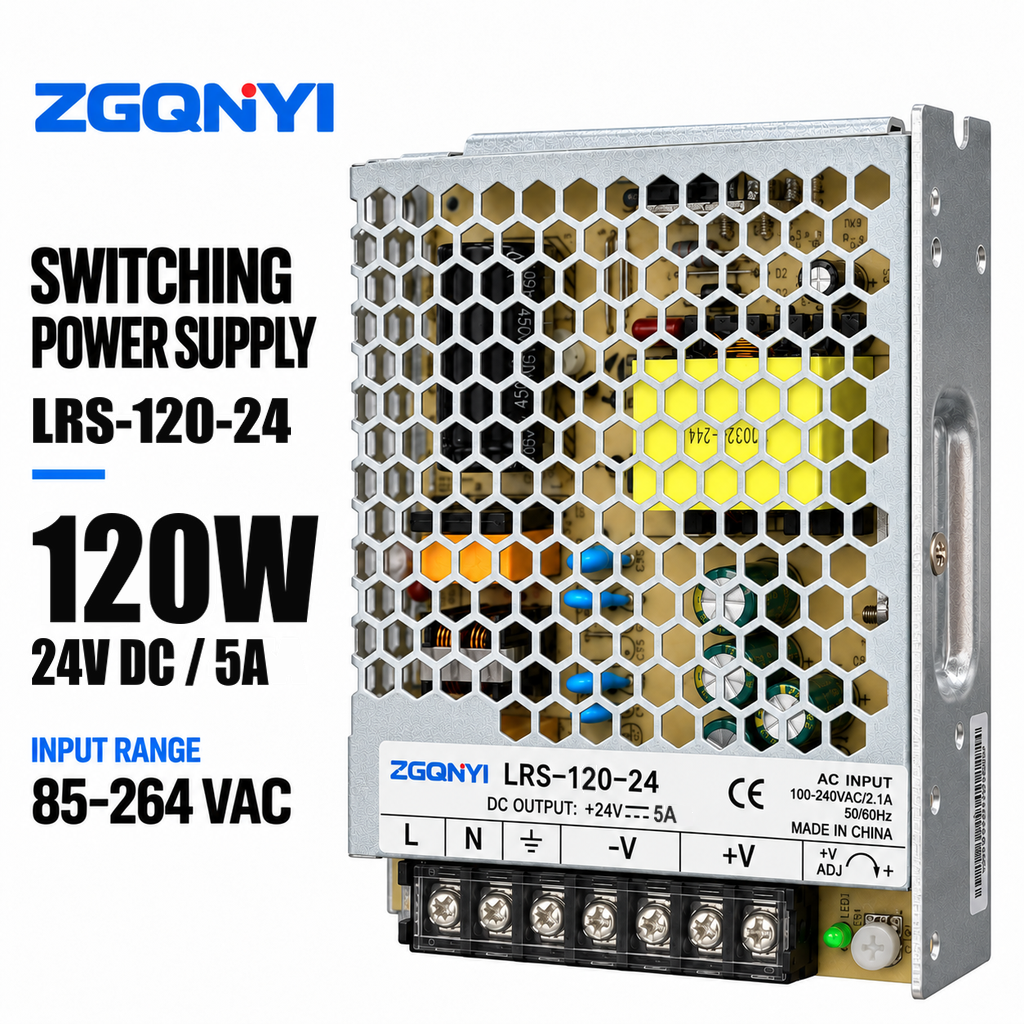
Industrial Automation ZGQNYI LRS-120-24 120W 24V Industrial Power Supply AC DC SMPS

ZGQNYI LRS-120-24 120W 24V Industrial Power Supply

Output: 24V DC @ 5.0A Single Rail
Application: PLC Units, Building Systems
Technical Specs
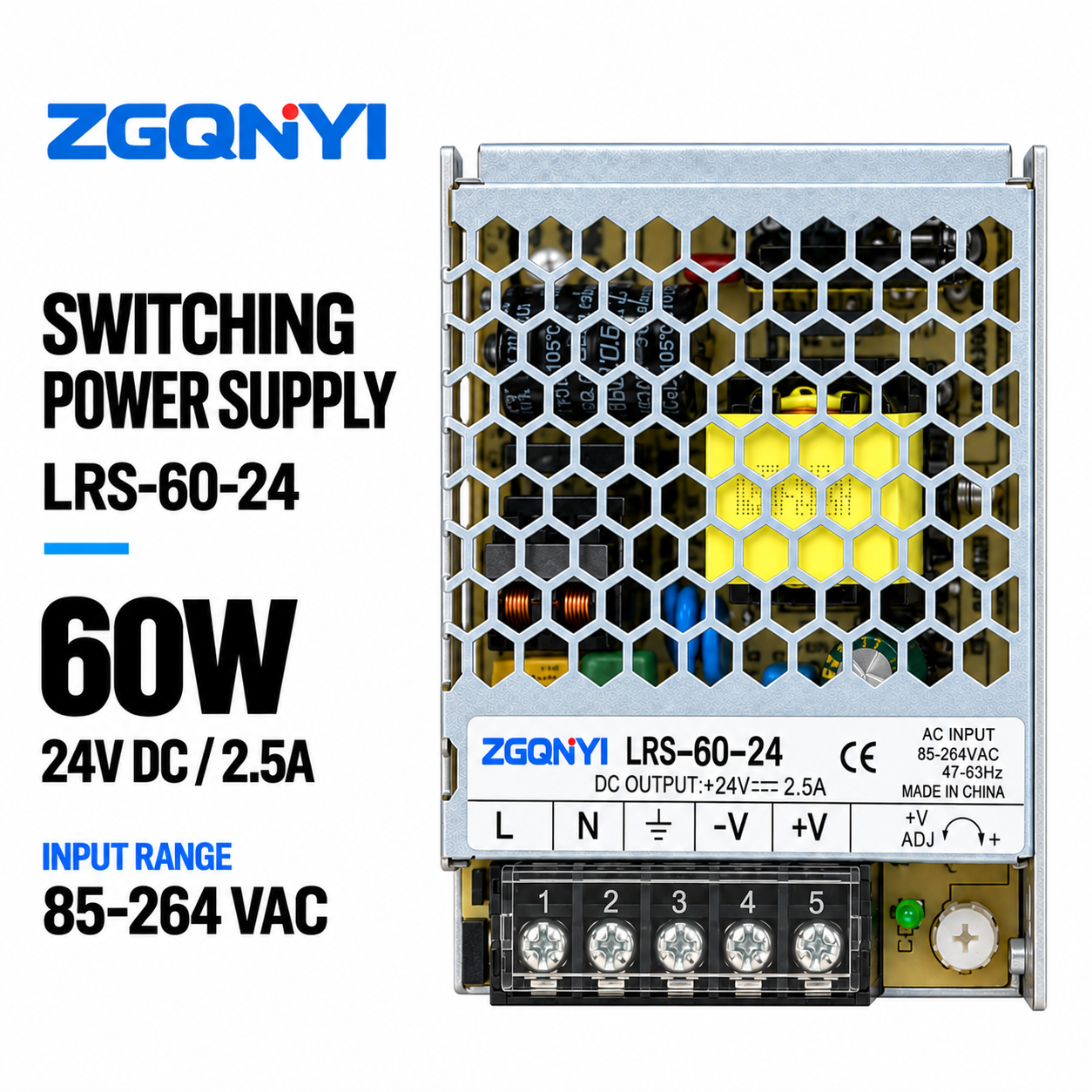
LED & Display ZGQNYI LRS-60-24 24VDC Constant Voltage LED Driver Enclosed Switching Power Supply

ZGQNYI LRS-60-24 24VDC Constant Voltage Driver

Output: 24V DC Constant Voltage Low Ripple
Application: Architectural Lighting, Signage
Technical Specs
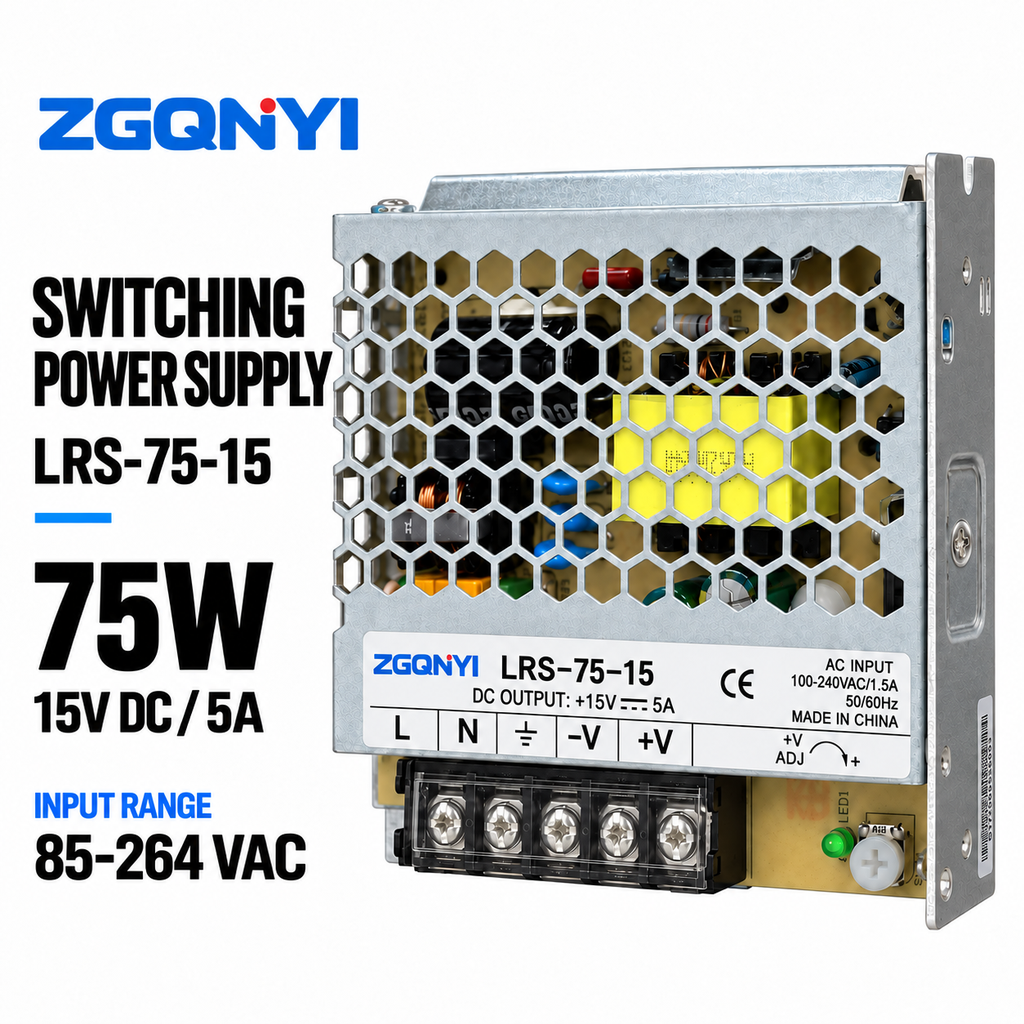
Control Panels ZGQNYI LRS-75-15 Industrial Switching PSU 15V Enclosed AC DC Power Supply

ZGQNYI LRS-75-15 Industrial Switching PSU 15V

Output: 15V DC Enclosed Chassis Rail
Application: Machine Controls, Distribution
Technical Specs
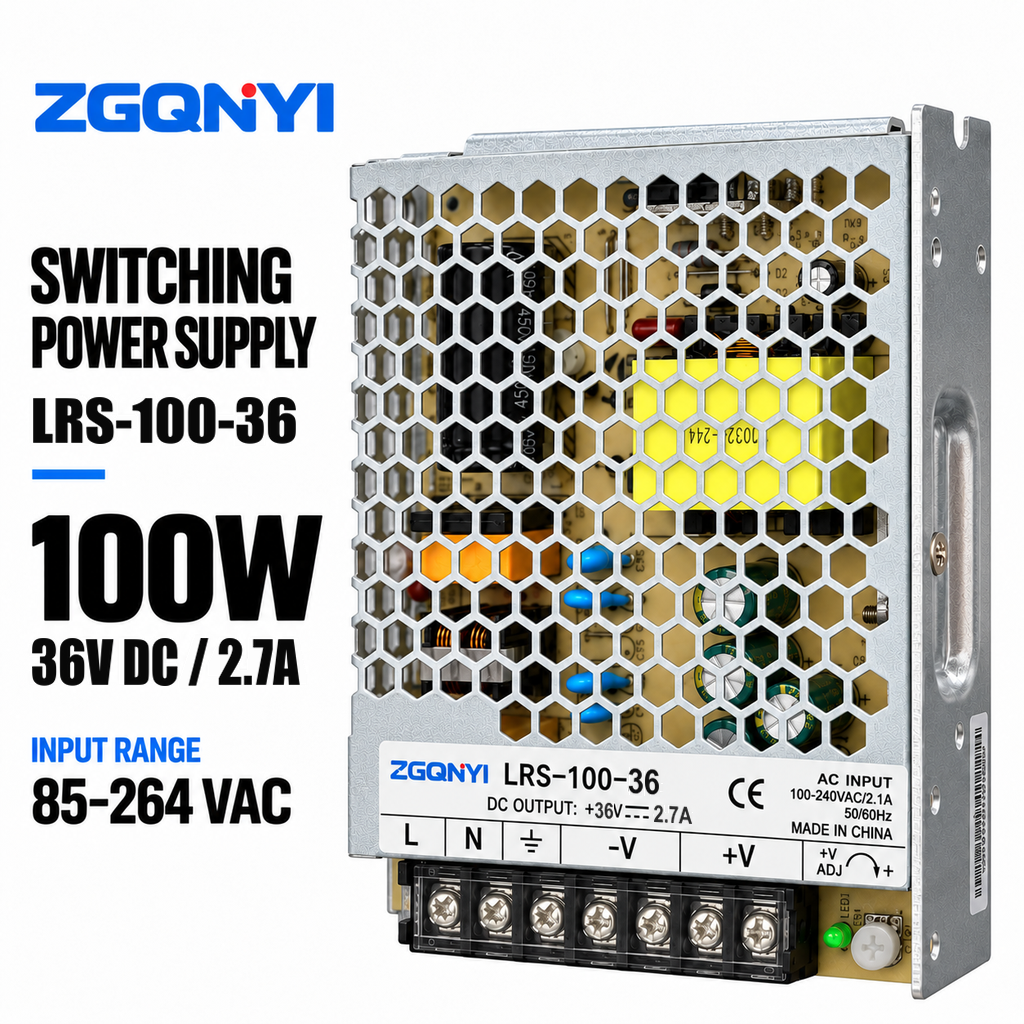
Motion Control ZGQNYI LRS-100-36 36V 100W Switching Power Supply AC DC Converter

ZGQNYI LRS-100-36 36V 100W Switching Power Supply

Output: 36V DC 2.8A Heavy-Duty Transient
Application: Motor Actuators, Motion Modules
Technical Specs
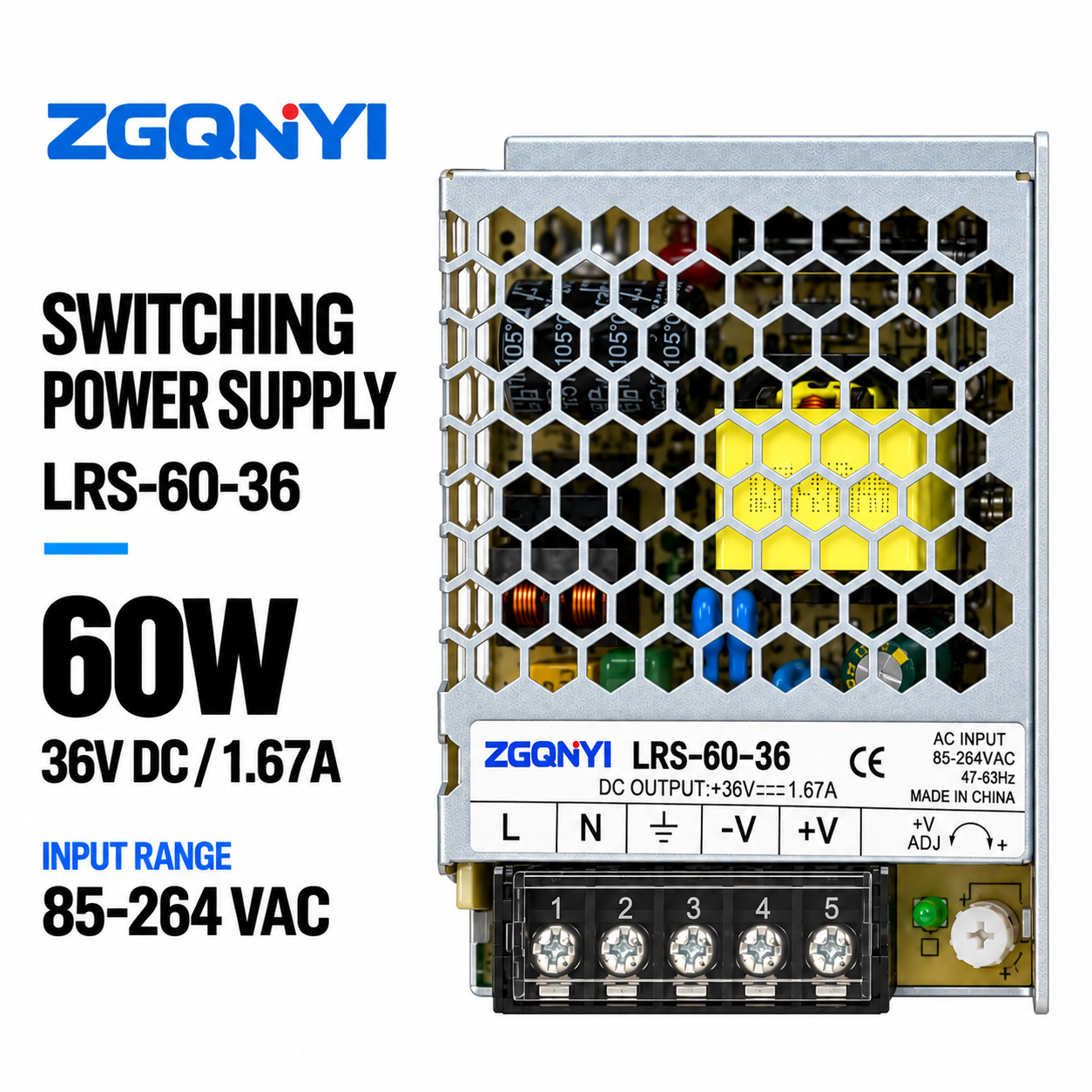
Smart Monitoring ZGQNYI LRS-60-36 Industrial Switching PSU 36V Compact Enclosed

ZGQNYI LRS-60-36 Industrial Switching PSU 36V

Output: 36V Compact Low Profile Structure
Application: Factory Security, Sensor Clusters
Technical Specs
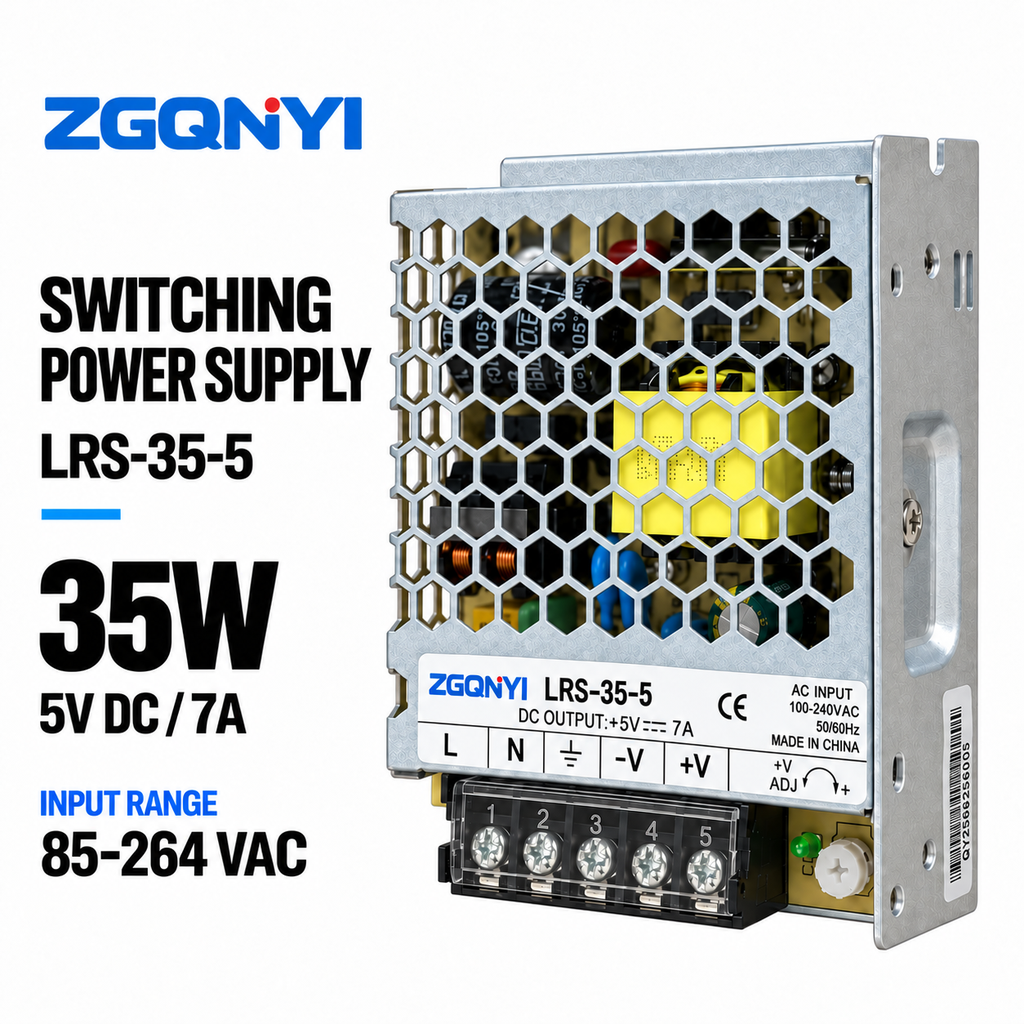
Digital Signage ZGQNYI LRS-35-5 5V DC Constant Voltage LED Driver AC DC Switching Power Supply

ZGQNYI LRS-35-5 5V DC Constant Voltage LED Supply

Output: 5V DC High Current Density
Application: Logic Boards, Microcontrollers
Technical Specs
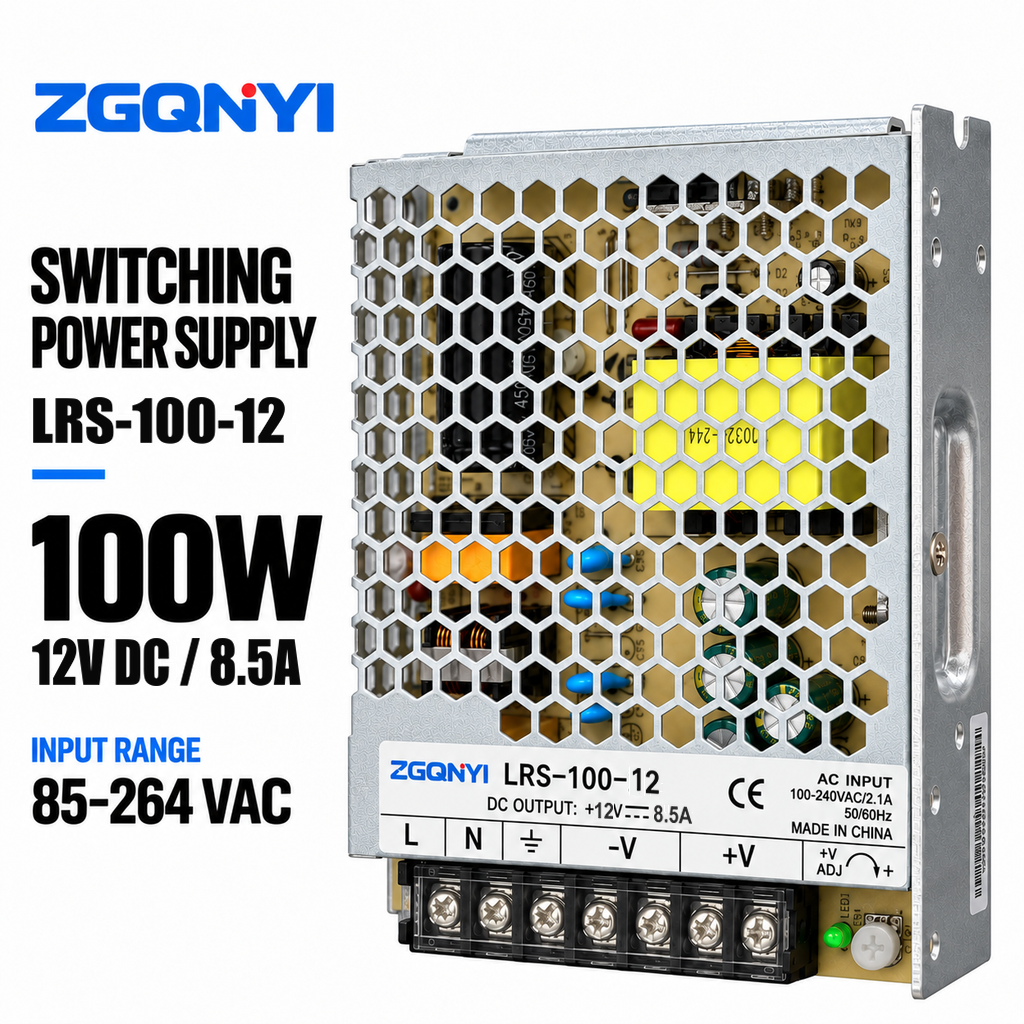
CNC & Tooling ZGQNYI LRS-100-12 100W 12V Industrial Power Supply AC to DC SMPS

ZGQNYI LRS-100-12 100W 12V Industrial Power Supply

Output: 12V DC @ 8.5A Constant Rail
Application: CNC Subsystems, Stepper Drives
Technical Specs
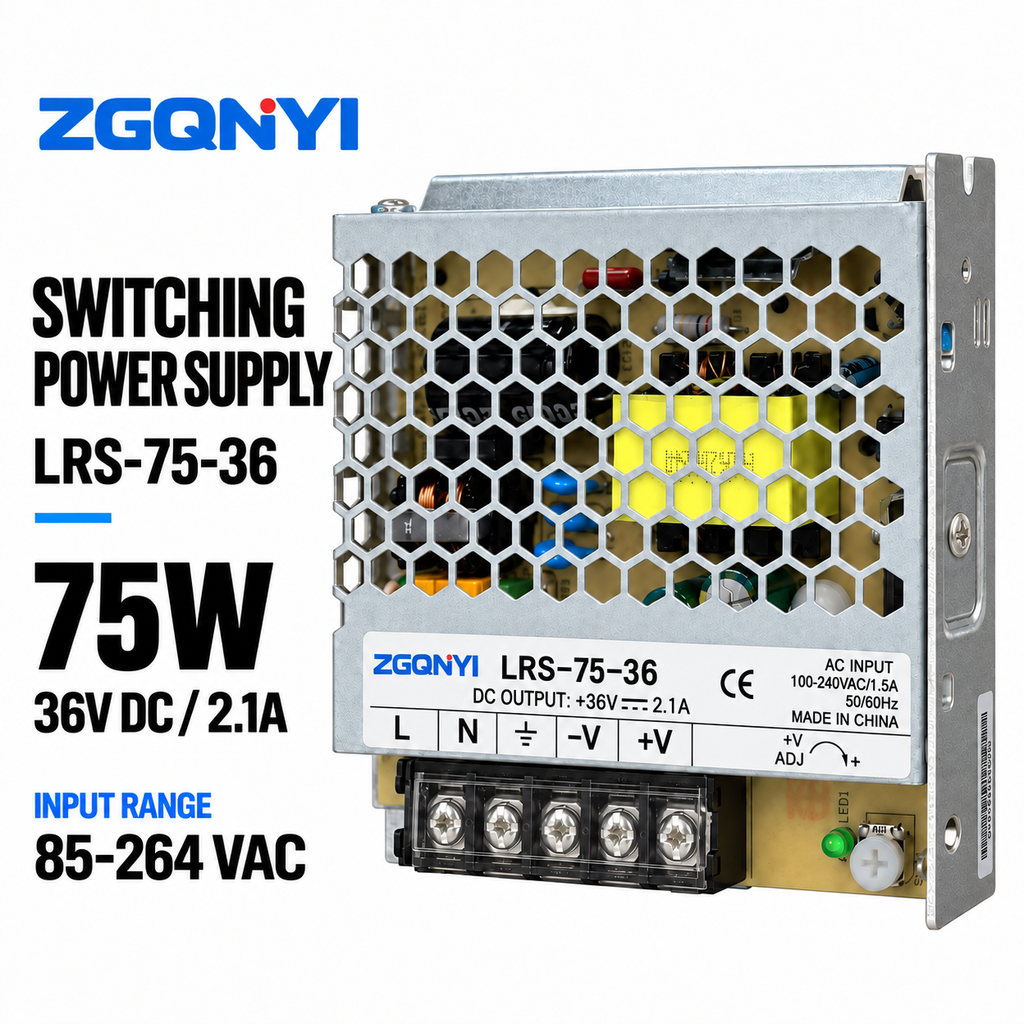
Instrumentation ZGQNYI LRS-75-36 Industrial Switching PSU 36V Enclosed AC DC Power Supply

ZGQNYI LRS-75-36 Industrial Switching PSU 36V

Output: 36V DC Clean Noise Floor Profile
Application: Measurement Bridges, Test Cells
Technical Specs
18+
Years Engineering R&D
500K+
Monthly Unit Capacity
10,000m²
Automated Production Footprint
≤1h
Direct Engineering Response

Comprehensive Industry Analysis: The Evolution of Digital Power Supplies

The modern power conversion landscape is experiencing a paradigm shift away from purely analog-controlled switch-mode power supplies (SMPS) toward digitally regulated, software-defined topologies. As industrial automation architectures evolve under Industry 4.0 mandates, power supplies are no longer treated as passive conversion boxes. Instead, they operate as intelligent telemetry nodes capable of reporting operating conditions, dynamic thermal variations, component degradation, and real-time power metrics directly to Distributed Control Systems (DCS) and edge controllers.

Digital control loops execute algorithms inside microcontrollers (MCUs) or digital signal processors (DSPs) to dynamically optimize pulse-width modulation (PWM) switching frequencies, dead-time allocations, and multi-stage active power factor correction (PFC). This granular intelligence eliminates phase delays inherent in traditional resistor-capacitor feedback networks, delivering unprecedented transient response times during catastrophic load-step conditions.

Information Gain Insight: Modern OEM engineering audits demonstrate that integrating active telemetry and digital feedback circuits reduces line harmonics (THD < 5%), achieves sustained full-load efficiencies exceeding 94%, and decreases thermal dissipation stress across primary MOSFET stages by up to 22% compared to legacy flyback circuits.

Comparative Matrix: Global Top 10 Digital Power Supply Manufacturers

Navigating global vendor sourcing requires evaluating core competencies across manufacturing bandwidth, circuit topology specializations, telemetry options, and customization capabilities. Below is an engineering comparison matrix of the leading 10 digital and industrial power supply manufacturers worldwide.

Manufacturer Primary Topology / Focus Typical Power Band Telemetry / Interfaces Core Industrial Strengths
Wenzhou Nuvros Electric Enclosed LRS, DIN Rail, High-Power CC/CV 15W – 18,000W Digital V/A Displays, RS485, Modbus High customization agility, rapid prototyping, extreme OEM value
Mean Well Broadline standard industrial catalog 5W – 10,000W PMBus, CANbus, RS485 Massive global off-the-shelf distributor availability
TDK-Lambda High-reliability medical & industrial programmable 30W – 15,000W LAN, USB, RS232/RS485, GPIB Rigorous military, test lab, and aerospace certifications
Delta Electronics Telecom rectifiers, high-efficiency data center 50W – 30,000W PMBus, Modbus, Ethernet/IP Extreme volume manufacturing scale, global tier-1 brand recognition
Siemens (SITOP) DIN Rail cabinet automation integration 60W – 1,000W PROFINET, Industrial Ethernet, IO-Link Native integration with TIA Portal automation ecosystems
Phoenix Contact (QUINT) Process industry DIN Rail power supplies 30W – 960W NFC configuration, IO-Link Selective Fuse Breaking (SFB) and dynamic reserve surge capability
Puls Power Ultra-compact high-efficiency DIN rail 50W – 960W Built-in service data port, Relay dry contacts Benchmark-setting thermal dissipation and compact footprint designs
Artesyn (Advanced Energy) Embedded AC/DC, high-density server power 100W – 24,000W PMBus, I2C, CAN Semiconductor manufacturing and mission-critical enterprise systems
Chroma ATE Programmable regenerative test power benches 600W – 500,000W GPIB, USB, RS232, Ethernet Precision EV battery simulation, regenerative grid emulation
Murata Power Solutions Board-mount DC/DC, miniature isolated modules 1W – 3,000W PMBus, I2C Ultra-dense distributed point-of-load architectures

Future Sourcing Trends in Digital Power Conversion (2025–2030)

Strategic procurement directors and system architects must align their component lifecycles with ongoing technological evolutions. The next generation of industrial power conversion is being defined by three primary catalysts:

1. Wide-Bandgap (WBG) Semiconductor Adoption: GaN & SiC Topologies

Gallium Nitride (GaN) and Silicon Carbide (SiC) switches are directly replacing traditional silicon MOSFETs. Due to their ultra-low reverse recovery charges ($Q_{rr}$) and higher breakdown field strengths, SiC and GaN devices switch at frequencies upwards of 200kHz to 1MHz without suffering crippling thermal penalties. For procurement teams, this directly translates into vastly smaller magnetic chokes, smaller filtering capacitors, and overall power density improvements exceeding 40% in standard enclosed footprints.

2. Bidirectional Energy Regeneration in Automated Testing & Storage

In heavy industrial electrolysis, plating, and battery formation facilities, standard resistive dissipators waste massive volumes of energy as heat. Modern digital procurement guidelines specify regenerative CC/CV power systems. These active inverters return dynamic braking or electrochemical discharge energy back to the three-phase AC mains grid with up to 92% recovery efficiency, dramatically lowering ongoing facility operational expenditures (OPEX).

3. Native Edge Communication Protocols: Modbus, IO-Link, and TSN

Analog 0-10V control inputs are being superseded by noise-immune, bidirectional digital buses. Even in low-wattage DIN-rail systems (60W–240W), buyers now mandate real-time reporting of instantaneous current, cumulative operating hours, capacitor ripple spikes, and ambient chassis temperature via RS485 (Modbus RTU) or IO-Link. This data stream feeds cloud-level AI predictive maintenance models to forestall factory line stoppages before component failure occurs.

Critical Procurement Protocols: Mitigating Failure Modes in SMPS

When qualifying an industrial digital power supply supplier, technical teams must perform rigorous verification beyond nominal output ratings. Below are mandatory engineering check-items:

1. Thermal Derating Integrity: Many commodity manufacturers publish peak load specs achievable only at 25°C. Systems engineered for longevity require documented thermal derating curves guaranteeing a minimum of 70% rated capacity at 60°C ambient without secondary forced-air cooling.

2. Inrush Current & Active PFC Compliance: Switchboards populated with multiple switching modules generate massive capacitive inrush spikes upon cold start, often tripping upstream circuit breakers. Procurement specifications should mandate active soft-start circuits and Active Power Factor Correction conforming strictly to IEC/EN 61000-3-2 harmonic limits for loads exceeding 75W.

3. Electrolytic Capacitor Ratings: The true operational lifespan of an SMPS is determined almost exclusively by the primary bulk electrolytic filter capacitors. Sourcing documentation must mandate tier-1 105°C-rated capacitors with proven MTBF ratings exceeding 50,000 continuous operational hours under maximum thermal stress.

Why Partner With Wenzhou Nuvros Electric?

Consolidate your procurement pipeline with an engineering-first switching power supply manufacturer built on eighteen years of specialized continuous innovation.

18 Years R&D Specialization

Decades of proprietary circuit topology development covering AC/DC, DC/DC, and programmable CC/CV power systems from 15W up to 18kW.

500,000 Units Monthly Capacity

10,000m² production facilities equipped with automated surface-mount assembly, wave soldering, and automated burn-in aging racks.

Full OEM/ODM Customization

Rapid hardware modification capabilities: custom output voltages, dedicated enclosures, RS485 communication protocols, and buyer private-labeling.

Sub-1-Hour Technical Response

Direct communication with application engineers who analyze your circuit schematics, transient surge challenges, and certification constraints.

Certified Regulatory Compliance

Comprehensive CE, RoHS, and EMC testing documentation supplied per model batch to guarantee seamless international distribution across global ports.

Versatile Global Logistics

Flexible international commercial terms supporting FOB, CIF, EXW, FCA, and complete DDP delivery pipelines with multi-currency settlement.

Procurement & Engineering FAQ

Clear, direct technical answers to critical sourcing questions asked by purchasing directors and electrical design teams.

What is the core difference between Constant Voltage (CV) and Constant Current (CC) digital modes?
A pure Constant Voltage supply maintains a strictly fixed output voltage across changing load currents until hitting an overcurrent shutdown threshold. Conversely, an adjustable CV/CC digital power supply dynamically limits output current when downstream impedance drops (such as in battery charging states, electrolysis baths, or plating tanks), dropping output voltage accordingly to prevent thermal runaway and protect delicate electrochemical cells.
How should an industrial automation team properly calculate SMPS safety margins?
Standard engineering protocol requires a continuous 20% to 30% power headroom above peak continuous steady-state load requirements. Furthermore, inductive loads (such as DC stepper motors, relay coils, or solenoids) produce instantaneous startup inrush currents 2x to 4x their rated draw; selecting a unit with dynamic peak surge handling prevents nuisance foldback tripping during operation.
Can Wenzhou Nuvros customize communications protocols and mechanical housings?
Yes. Our engineering division offers complete OEM and ODM customization. We routinely modify chassis dimensions, install TS35 DIN rail brackets, integrate digital voltage/current meters, and configure RS485 Modbus-RTU interfaces for automated telemetry integration into client-specific control architectures.
What is your Minimum Order Quantity (MOQ) and standard delivery lead time?
Standard catalog units (including LRS enclosed series and NDR DIN rail lines) have sample evaluation MOQs starting from 1 unit. Batch production lead times typically range from 7 to 15 working days depending on order volume. Custom OEM/ODM runs are quoted following an engineering specification freeze.
Why is Active Power Factor Correction (PFC) crucial for equipment exported to the European Union?
Under EN 61000-3-2 regulations, power equipment with power consumption greater than 75W must control harmonic emissions introduced into the public grid. Active PFC shapes input AC current draw into a clean sine wave in phase with line voltage, maintaining power factors above 0.95 and preventing reactive power penalty charges.

Ready to Upgrade Your Industrial Power Architecture?

Connect with our technical applications desk to request complete datasheets, compliance documentation, volume procurement tiers, and custom OEM engineering evaluations.

Contact Us