15V DC / 60W
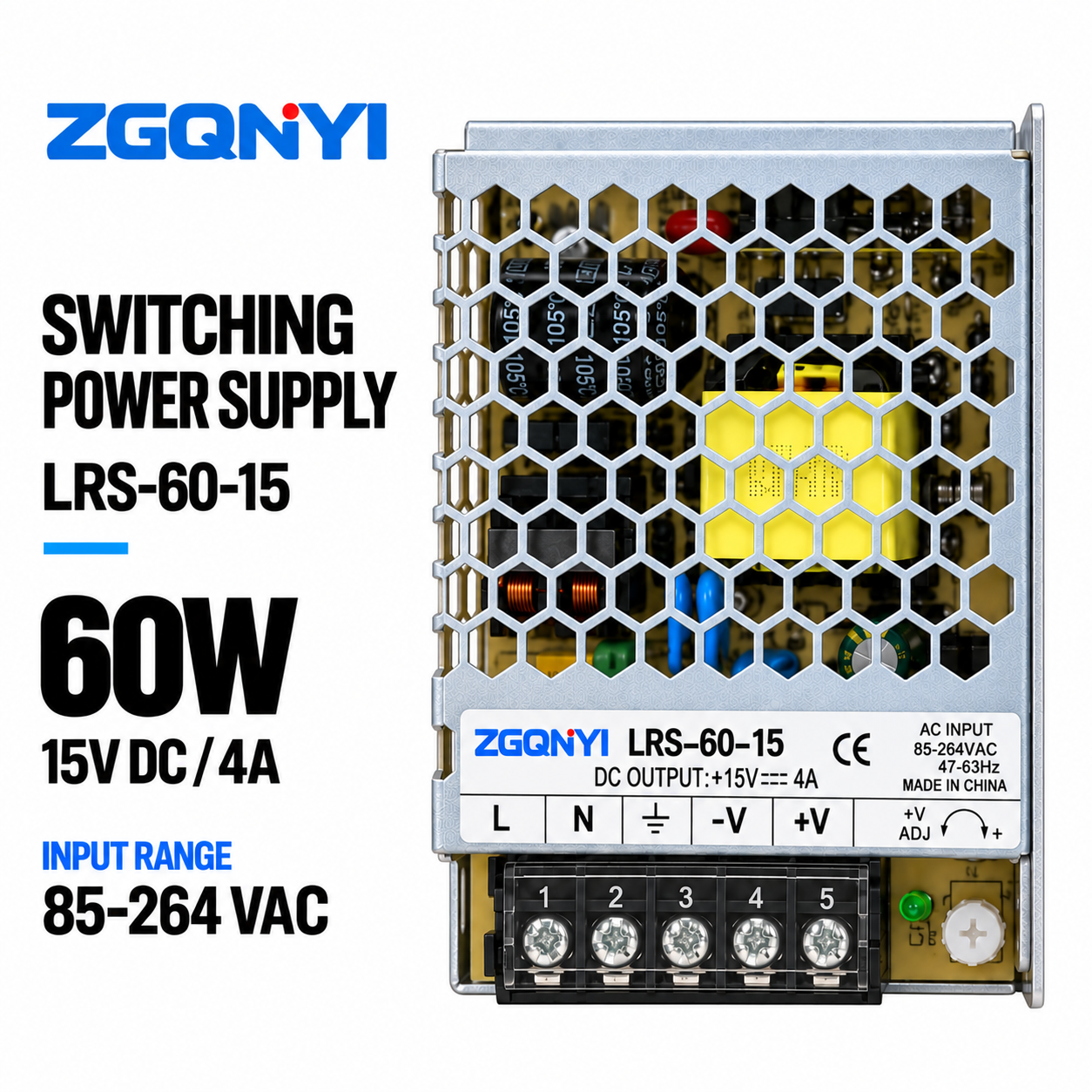
ZGQNYI LRS-60-15 Industrial Switching PSU 15VDC Compact AC DC Power Supply Single Output
15VDC Output
Ultra-Thin Profile
Sensor Arrays
Engineered for high-vibration control cabinets, IoT sensing loops, and commercial LED architectures. Every model features industrial-grade chassis heat sinking, broad input dynamics, and comprehensive transient suppression.
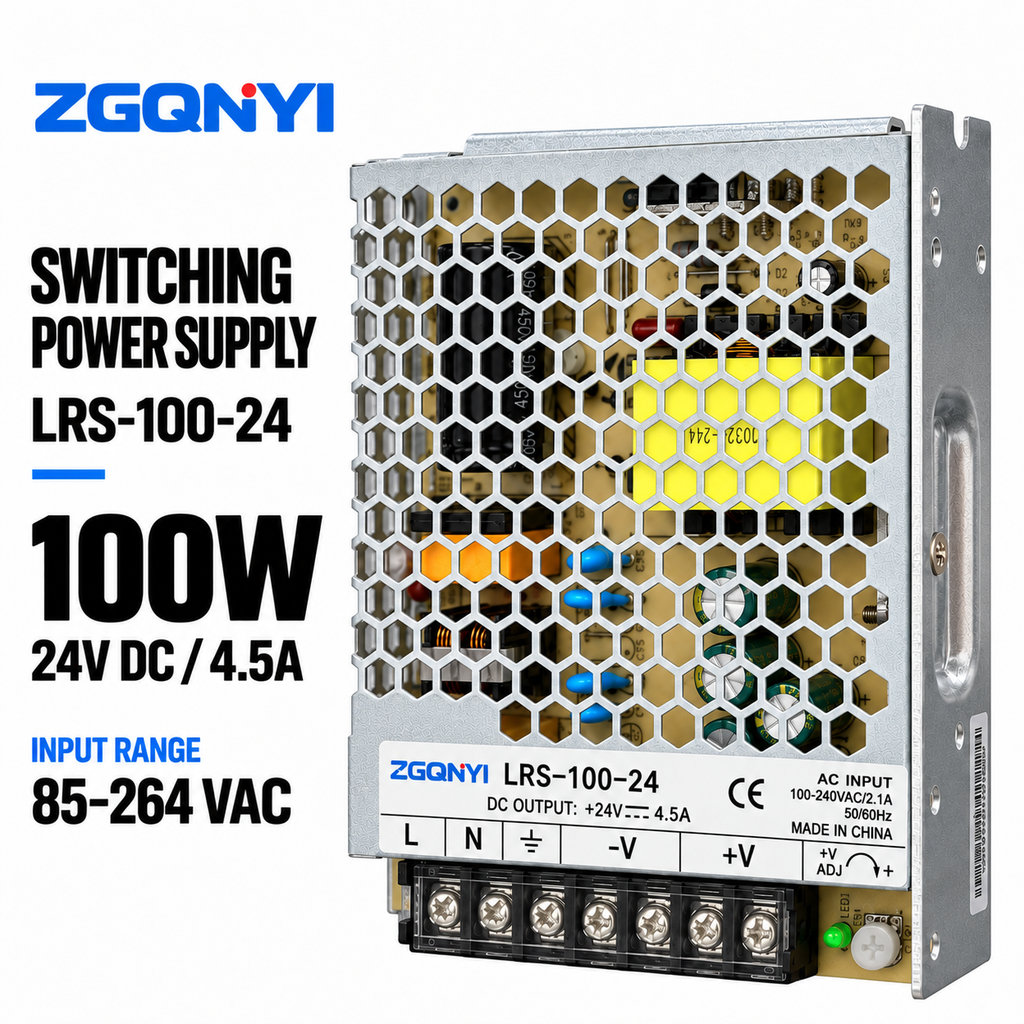
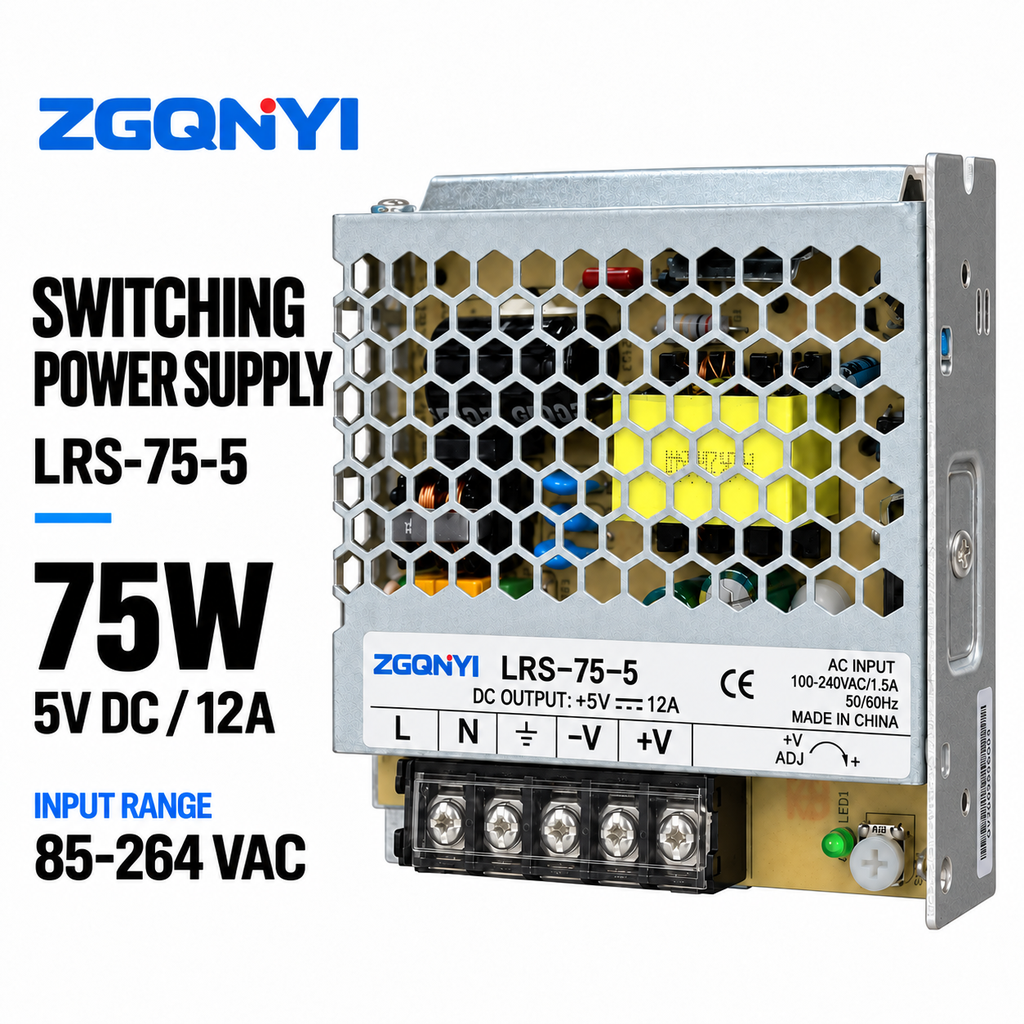
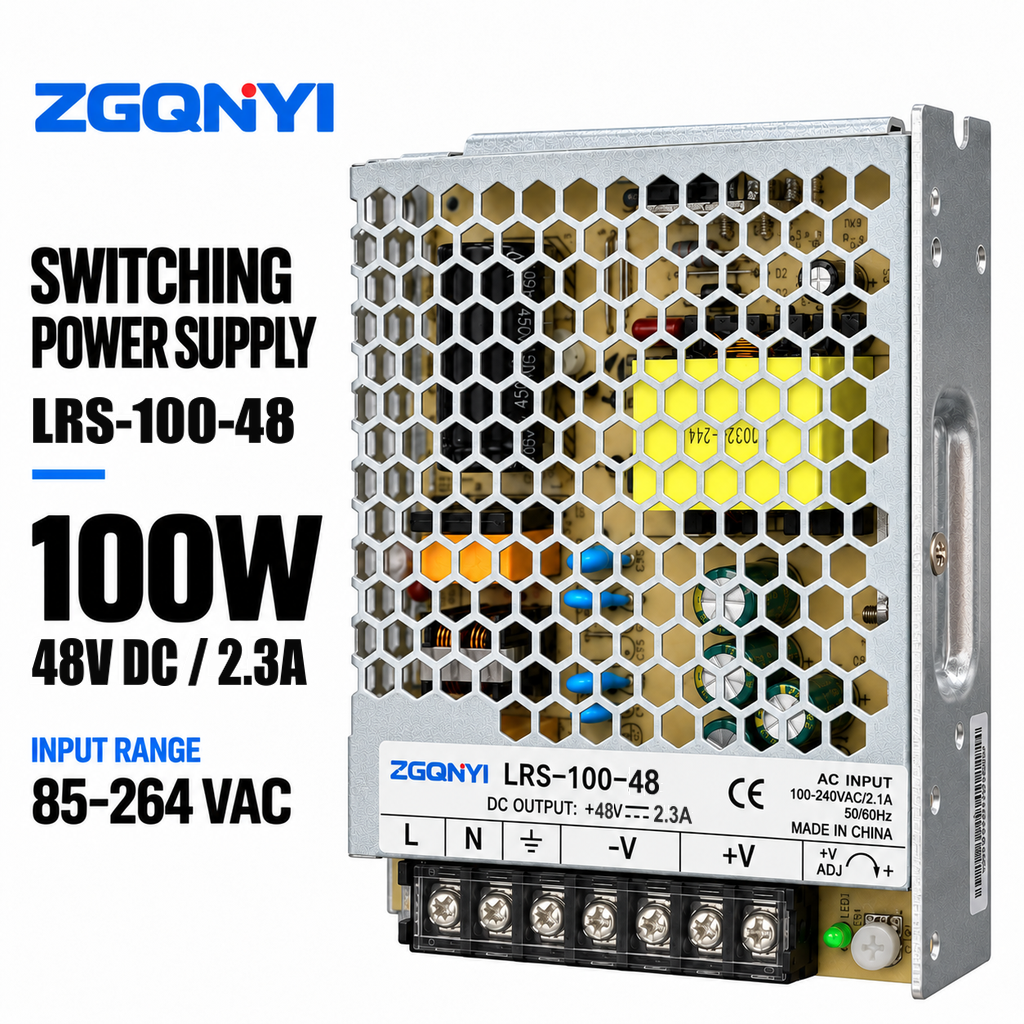
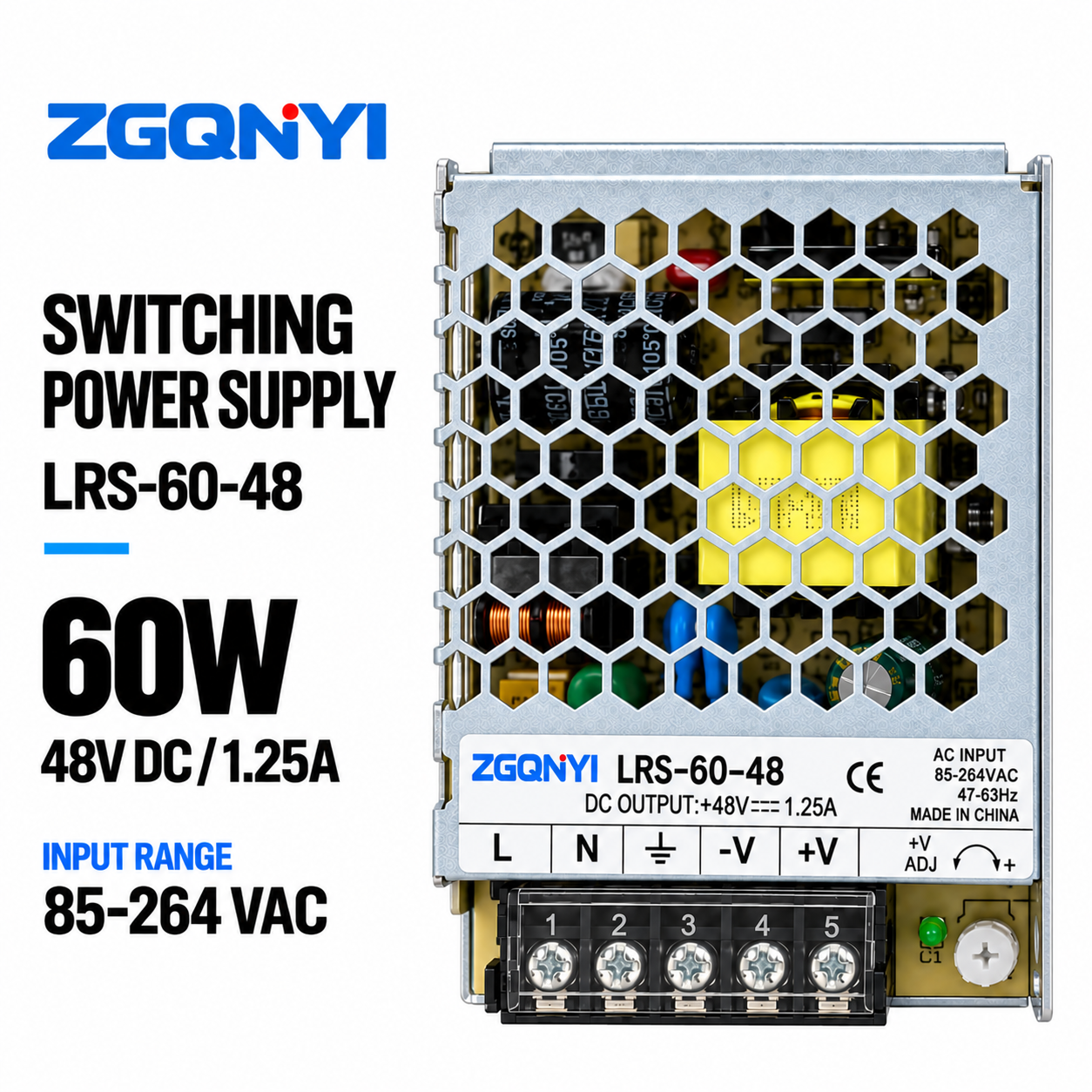
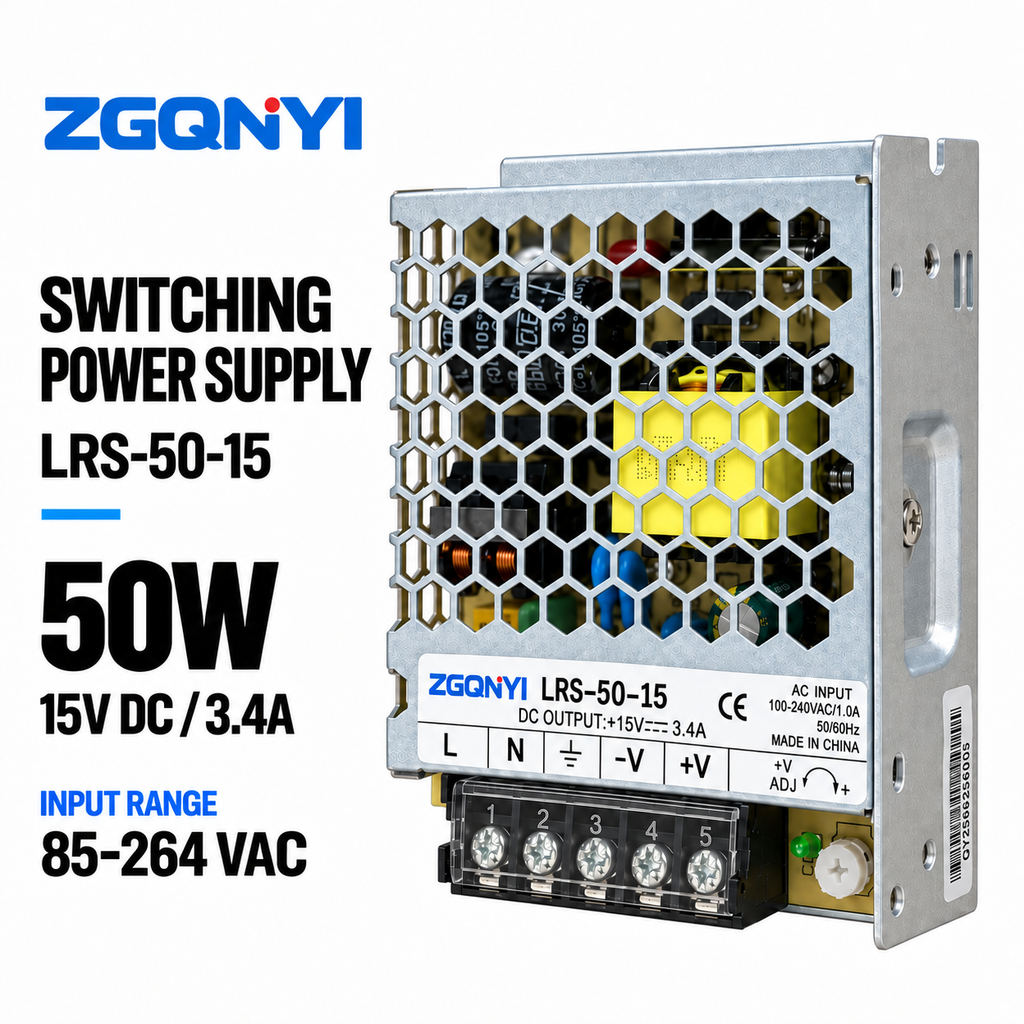
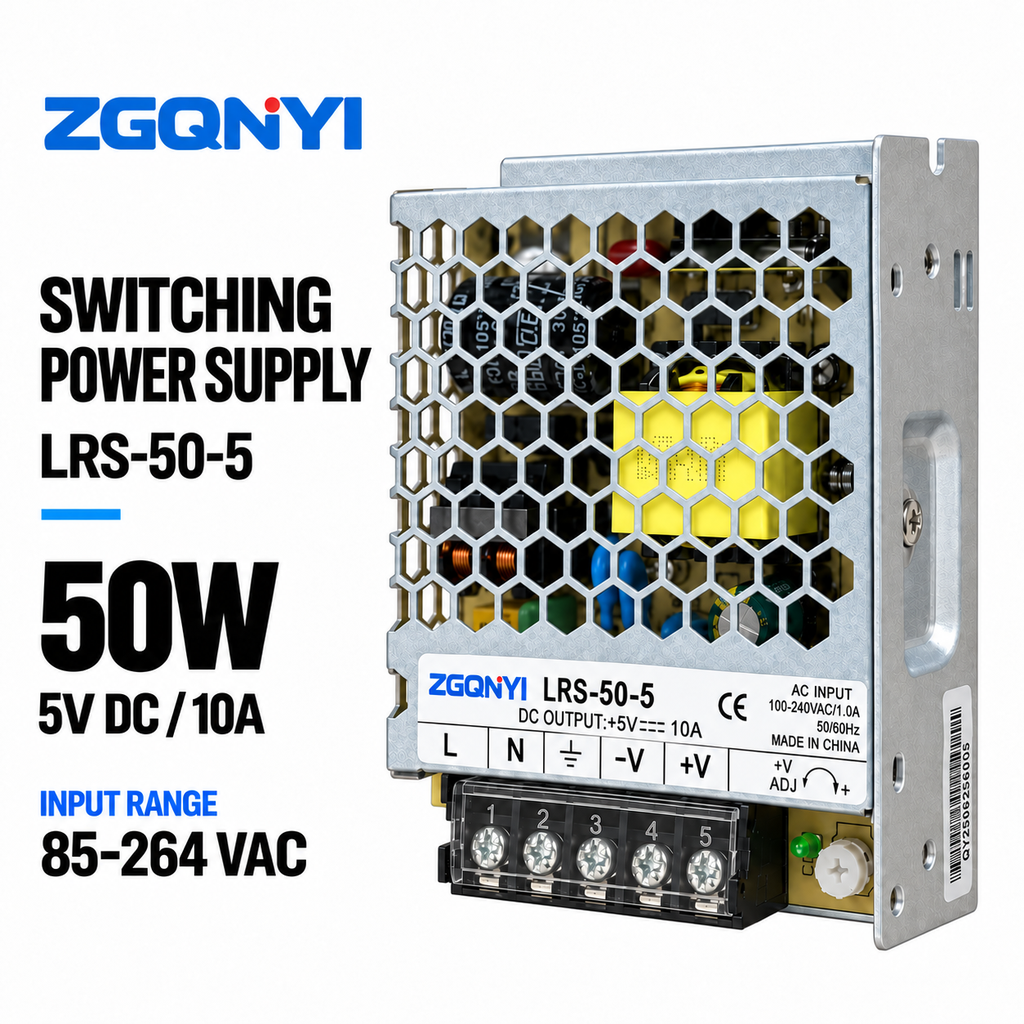
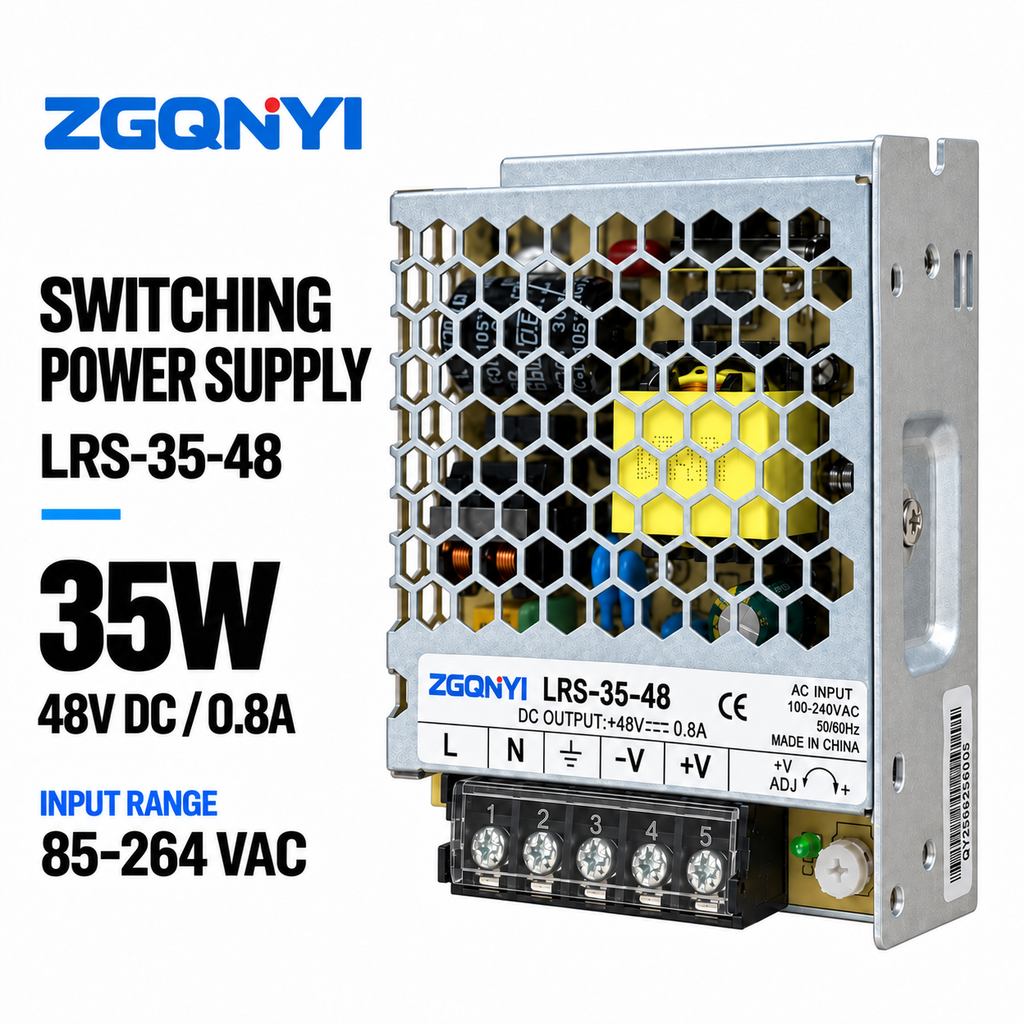
In modern industrial electronics, the enclosed metal case switching power supply represents the fundamental backbone of automation, telecommunication networks, and intelligent machine builds. Choosing a premier manufacturer requires moving beyond nominal wattage ratings into deep topology analysis.
Enclosed power supplies rely heavily on their perforated galvanized steel or extruded aluminum chassis to achieve optimum natural convection. Unlike plastic desktop adapters, metal enclosures function as secondary heat-sinks, conducting thermal energy away from switching MOSFETs and primary transformers.
This honeycomb chassis design optimizes airflow dynamics while dampening electromagnetic interference (EMI). Precision stamping ensures high torsional rigidity, safeguarding fragile ceramic capacitors and inductive windings from micro-fractures caused by continuous factory vibrations.
Industrial electrical grids suffer from harmonic pollution, voltage sags, and high-energy inductive kickbacks from contactors. Premier manufacturers engineer robust metal-oxide varistors (MOVs) and multi-stage EMI filter banks directly on the front-end AC input.
These components absorb surges up to 2kV–4kV without latch-up. Reinforced primary-to-secondary isolation barriers rated at 3000VAC guarantee plant floor operators remain insulated against lethal grid faults, fully complying with IEC/EN 62368-1 and UL 61010-1 safety norms.
The operational lifespan of a power converter is fundamentally dictated by its electrolytic smoothing capacitors. Under the Arrhenius equation, every 10°C drop in internal capacitor temperature doubles its operational lifespan.
Top exporters utilize strictly 105°C-rated, low-ESR solid and wet capacitors from verified tier-1 suppliers. This design rigor maintains ripple and noise well below 100mVp-p over 50,000 operational hours, even in ambient environments approaching 50°C before gentle thermal derating curves must be applied.
| Evaluation Parameter | Tier-1 Metal Case Exporters (Nuvros Standard) | Commodity / Low-Cost Producers | Operational Impact on End Systems |
|---|---|---|---|
| Thermal Architecture | Pre-anodized perforated aluminum + thermal pad potting | Untreated scrap iron with minimal heatsink mass | Prevents localized thermal runaway and thermal shutdown trips |
| Capacitor Grade | 105°C Japanese/Taiwanese rated; >5,000h load life | 85°C unbranded; high equivalent series resistance (ESR) | Guarantees 5–7 years continuous 24/7 service in control panels |
| Inrush Current Limiting | Active NTC thermistor + bypass relay circuitry | Basic undersized passive resistor or omitted | Stops upstream MCB circuit breaker false-tripping at power-on |
| EMI / EMC Compliance | Class B EN55032 standard, dual common-mode chokes | Minimal Class A or missing secondary line filtering | Eliminates communication bus errors on nearby RS485/Ethernet links |
| Burn-In Screening | 100% full-load dynamic temperature burn-in (4–8h) | Sample spot checks or unpowered bench inspection | Filters out infant mortality failures before ocean dispatch |
The global metal case power supply landscape is undergoing substantial transformation. Procurement executives and systems engineers are balancing tighter eco-design regulations with demands for greater volumetric power density.
The transition from silicon MOSFETs to Gallium Nitride (GaN) and Silicon Carbide (SiC) semiconductors has moved into commercial metal case power supplies. These materials offer ultra-fast switching frequencies with negligible switching losses.
For industrial buyers, this shifts enclosed SMPS efficiency levels from 88% past 94%–96% efficiency. The resulting drop in waste heat generation allows manufacturers to reduce chassis footprints by 40%, delivering 300W to 500W of power within dimensions historically reserved for 100W legacy units.
Standalone analog power units are gradually yielding to digitally supervised switchers in Industry 4.0 frameworks. High-reliability applications now favor metal case platforms offering integrated RS485, CANopen, or IO-Link telemetry.
Instead of requiring external multimeter testing, smart power units continuously report internal temperatures, cumulative operational runtime, real-time load current, and input line variations. This visibility allows cloud-based predictive maintenance routines to replace units before catastrophic line downtime occurs.
International environmental regulations, including EU ErP Lot 9 and mandatory no-load standby loss ceilings (<0.2W to <0.5W), are actively steering procurement guidelines. Exporters without active Power Factor Correction (PFC) stages face prohibitive regulatory hurdles in European and North American customs clearance.
Strategic buyers are consolidating procurement contracts with manufacturers whose power supplies maintain high power factors (>0.95) across variable load curves (20% to 100%), directly trimming corporate carbon scope 2 audit liabilities.
Operating from Beibaixiang Town, Wenzhou—China's preeminent capital for electrical and precision electronic equipment—Wenzhou Nuvros Electric Co., Ltd. combines an 18-year engineering pedigree with state-of-the-art automated manufacturing infrastructure.
Our dedicated engineering department specializes in topology development spanning AC/DC, DC/DC, and high-power CC/CV switching architectures. We solve complex ripple, EMC, and thermal derating challenges for mission-critical industrial programs.
With roughly 10,000 m² of modern industrial facility space, multiple automated SMD high-speed pick-and-place lines, wave soldering chambers, and continuous burn-in test lines, we ensure high delivery stability on recurring bulk orders.
From customized constant-voltage/constant-current profiles, multi-channel outputs, and specialized chassis coatings to private branding and conformal PCB coating for high-humidity installations, we support tailored OEM requirements starting from prototype stage.
Zero-defect commitments are backed by high-temperature aging chambers. Every single production unit undergoes automated end-of-line electrical testing, insulation breakdown probing (Hi-Pot), and dynamic load switching before leaving our plant.
Our multilingual sales engineering desk answers commercial inquiries, RFQs, and technical clarification requests within 60 minutes during standard business shifts, maintaining a 100% response rate across 15+ supported trading languages.
We provide comprehensive export handling across FOB, CFR, CIF, EXW, FCA, and DDP conventions. Our finance desk accommodates USD, EUR, and CNY via T/T, L/C, D/P, and digital escrow, guaranteeing reliable logistical handoffs.
Expert answers addressing the technical, commercial, and regulatory questions electrical engineers and procurement specialists ask during supplier evaluations.
For standard resistive loads, a 20% to 30% headroom over continuous consumption is recommended. However, when driving inductive motors, solenoids, or massive capacitive banks, inrush currents can surge to 300%–500% of nominal ratings. For these setups, choose models with high peak-load capabilities or active Constant Current (CC) limiting modes rather than immediate hiccup protection.
Under international standards such as IEC/EN 61000-3-2, electronic loads consuming more than 75W connected to public grids must incorporate power factor harmonic control. Active PFC aligns input voltage and current phase angles, raising power factor above 0.95, which cuts reactive power losses, minimizes phase distortions, and keeps upstream breakers running cool.
OEM engagements begin with a technical parameter review: input range (e.g., 85–264VAC or 180–550VAC wide input), specific DC output voltage, dynamic current steps, housing dimensions, thermal cooling limits, and connector preferences. Our engineering team returns schematics, preliminary thermals, and sample delivery windows within 3–7 business days.
In sealed NEMA 4 / IP65 enclosures lacking active fan circulation, internal ambient temperatures can rise rapidly to 60°C or higher. When this occurs, thermal derating curves require derating power output by roughly 2% to 2.5% per degree Celsius above 50°C. Specifying models with high operational thermal thresholds or baseplate conduction paths is essential to avoid unexpected shutoffs.
Our quality assurance spans Incoming Quality Control (IQC) on passive and active components, automated In-Circuit Testing (ICT) post-SMD reflow, 100% elevated-temperature dynamic full-load burn-in (4 to 8 hours), followed by final Hi-Pot insulation breakdown verification and automated automated test equipment (ATE) parameter logging before final carton packing.
For standard production catalog models, evaluation samples can be ordered starting from 1 unit. Standard wholesale volume batches typically begin at 50–100 pieces depending on casing size. Bulk production lead times average 2 to 3 weeks, with stock inventory maintained for high-demand industrial standard voltages.
Partner directly with Wenzhou Nuvros Electric Co., Ltd. for factory-direct cost efficiency, stringent tier-1 quality control, and rapid custom engineering. Our application engineers are available to review your project specifications and deliver custom quotes immediately.