High-Reliability Industrial Switched-Mode Power Supplies
Engineered for continuous 24/7 duty cycles across factory automation panels, process chemistry, LED drivers, and heavy robotics.
Engineering Rigor in Mission-Critical Power Architectures
A technical examination of Mean Time Between Failures (MTBF), thermal dissipation topologies, and EMI mitigation in high-density industrial switching designs.
Thermal De-rating & Electrolytic Longevity
The operational lifespan of an industrial power supply is predominantly determined by thermal stress placed on primary electrolytic capacitors. Following Arrhenius' Law, every 10°C decrease in internal core capacitor temperature effectively doubles component life expectancy. Our manufacturing process integrates premium solid Japanese and Taiwanese-rated capacitors (105°C rated), housed inside custom extruded aluminum cases that act as natural conduction heat sinks.
By enforcing an unforced air convection thermal profile that operates comfortably under nominal load without dedicated motorized fans, low-wattage units eliminate fan-bearing failure vectors entirely.
- Derating margin calculations across -30°C to +70°C
- Double-sided fiberglass PCB with heat spreaders
- Transient thermal resistance under 0.85°C/W
Active PFC vs. Total Harmonic Distortion
Modern industrial plants require stringent suppression of harmonic frequencies to protect programmable logic controllers (PLCs) and sensitive optical sensors. For high-output applications spanning 1kW to 18kW, passive filtering becomes inefficient. Our systems utilize active Power Factor Correction (PFC) topologies operating in continuous conduction mode (CCM), achieving power factors greater than 0.98 under full load conditions.
This design satisfies both EN 61000-3-2 and IEEE 519 standards, keeping Total Harmonic Distortion (THD) under 5%, preventing neutral conductor overheating in 3-phase plant distributions.
- Active CCM boost converter topologies
- Wide universal AC input ranges (85V–264V AC)
- Dynamic line-drop compensation circuitry
Multi-Stage Protection & Galvanic Isolation
In harsh automation yards, voltage spikes, inductive back-EMF from heavy DC stepper motors, and floating earth loops pose persistent hazards. Wenzhou Nuvros power architectures integrate 3000V AC dielectric isolation between primary and secondary circuits, backed by bidirectional Transient Voltage Suppressor (TVS) diodes and fast-acting varistors.
In addition, our programmable modules implement autonomous foldback current limiting, automatic thermal shutdown with auto-recovery, and low-latency overvoltage crowbar clamps to preserve downstream robotics.
- Primary-to-secondary dielectric proof test: 3.75kV AC
- Hiccup-mode and constant-current overload options
- Zero minimum load requirement for switching stability
Future Procurement Trends in Industrial Power Engineering
Market dynamics, regulatory policies, and technological shifts reshaping how procurement directors source SMPS systems through 2030.
Wide Bandgap: GaN & SiC
Transitioning from traditional silicon MOSFETs to Gallium Nitride (GaN) and Silicon Carbide (SiC) semiconductors allows higher switching frequencies (above 500kHz). This dramatically shrinks inductive transformer sizes, slashing unit footprints by over 40% while pushing conversion efficiencies beyond the 94% threshold.
Digital PMBus & RS-485
Procurement teams increasingly avoid unmonitored "black box" power supplies. Industrial 4.0 architectures mandate bi-directional communication over RS-485, Modbus-RTU, or PMBus interfaces, allowing control centers to monitor live V/A curves, real-time operating temps, and predictive maintenance flags.
Harsh Harsh-Environment IP67
Decentralized factory layouts are moving control gear outside centralized cabinets. High-power potted IP67 waterproof supplies eliminate the need for secondary climate-controlled enclosures in outdoor signage, mining conveyors, municipal water electrolysis, and chemical electroplating facilities.
BOM Transparency & Audits
Supply chain shocks have highlighted the danger of unverified component swaps. Enterprise buyers now prioritize Tier-1 manufacturers providing certified traceability, CE/RoHS compliance verification, and standardized burn-in batch reports directly with shipping documentation.
Wenzhou Nuvros Electric Co., Ltd.
18 Years of Continuous Engineering and High-Volume Manufacturing Excellence
Complete Production Control
Situated in Beibaixiang Town, Wenzhou—China's preeminent electrical ecosystem—we operate automated SMT surface mount assembly lines, precision wave-soldering ovens, and computer-controlled winding stations to maintain total control over unit pricing, copper yields, and production schedules.
Documented Quality & Burn-In
We do not rely on spot-checks. Every single switching power supply produced in our facility undergoes rigorous multi-point validation: automated ATE diagnostic checks, Hi-Pot isolation testing up to 3.75kV, and an uninterrupted 100% full-load elevated-temperature aging burn-in before packaging.
Tailored OEM / ODM Capabilities
From low-profile LRS modifications, tailored DIN rail mounting brackets, and customized variable voltage/current ranges (0–16V, 0–220V, up to 18kW), to private-label silk-screening and specialized terminal blocks, our engineering team transforms bespoke project parameters into finished hardware.
Industrial Power Supply System Topology Comparison
Use this technical specification matrix to match power architectures with operational system requirements.
| Architecture Family | Nominal Output Range | Typical Topology | Efficiency | Key Industrial Applications |
|---|---|---|---|---|
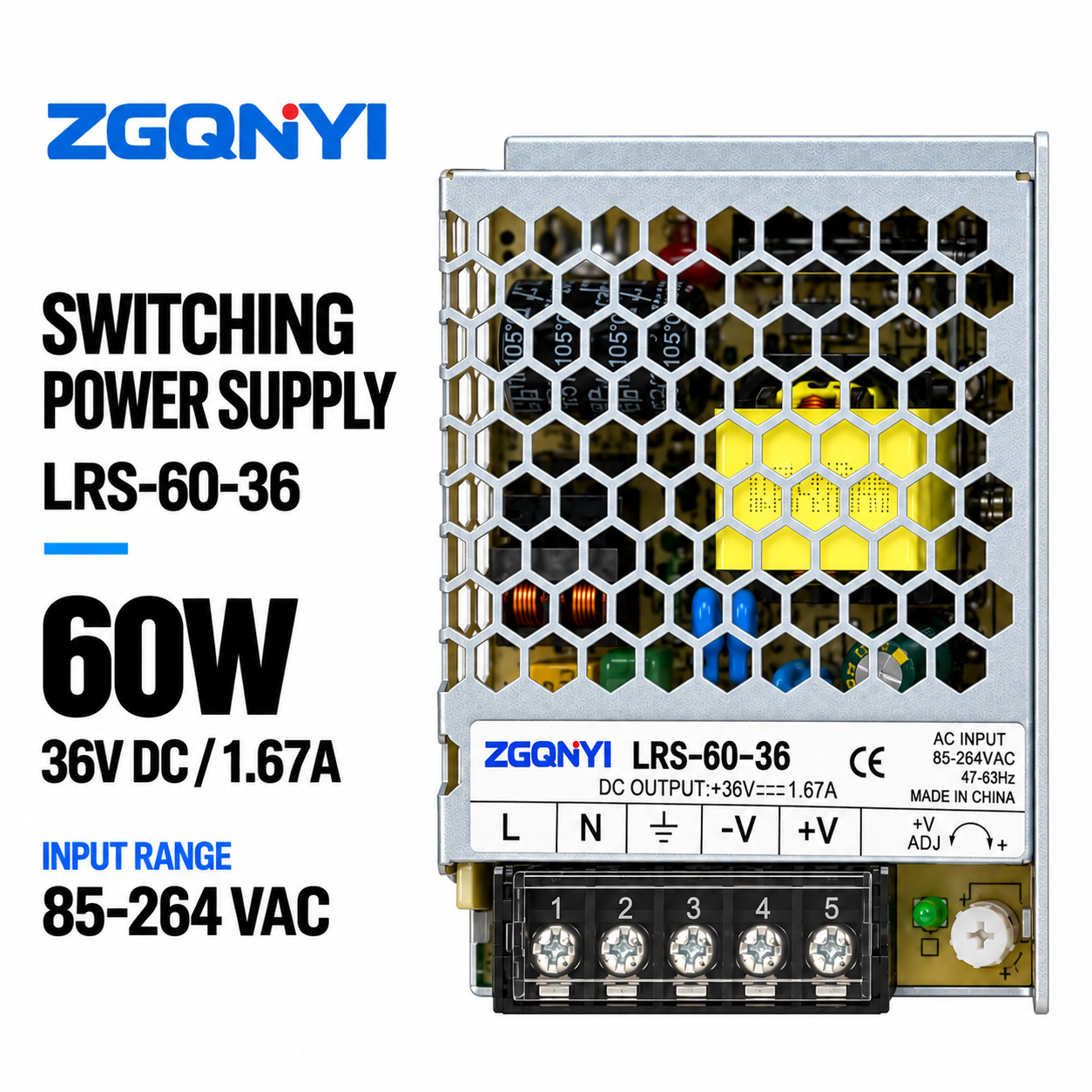
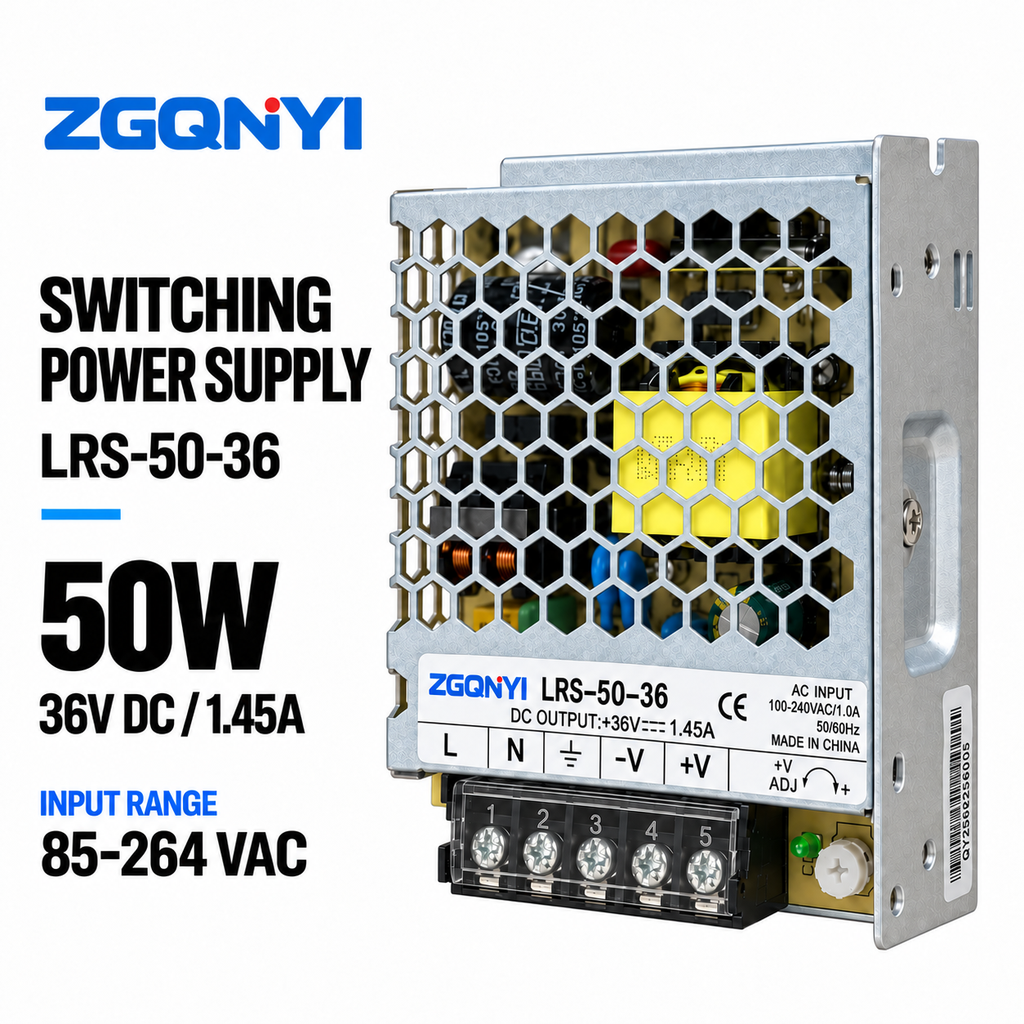
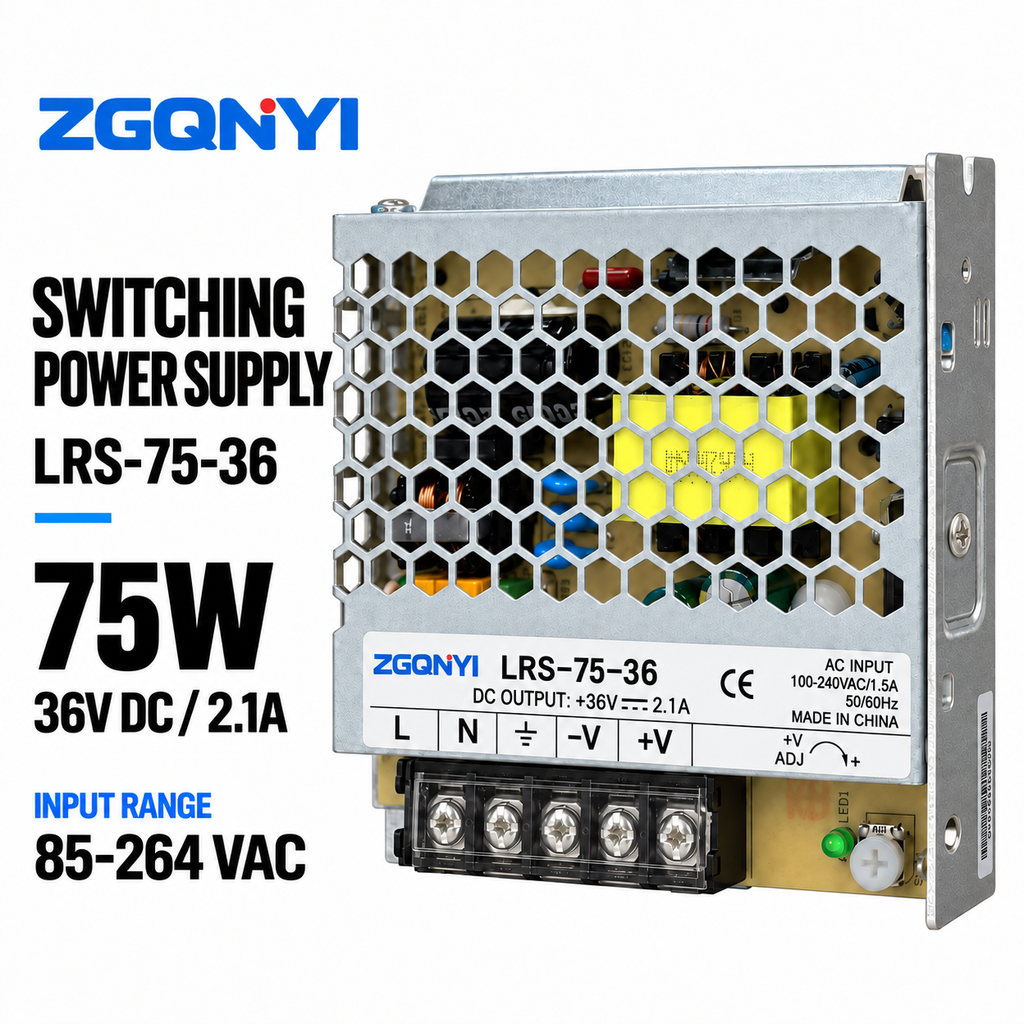
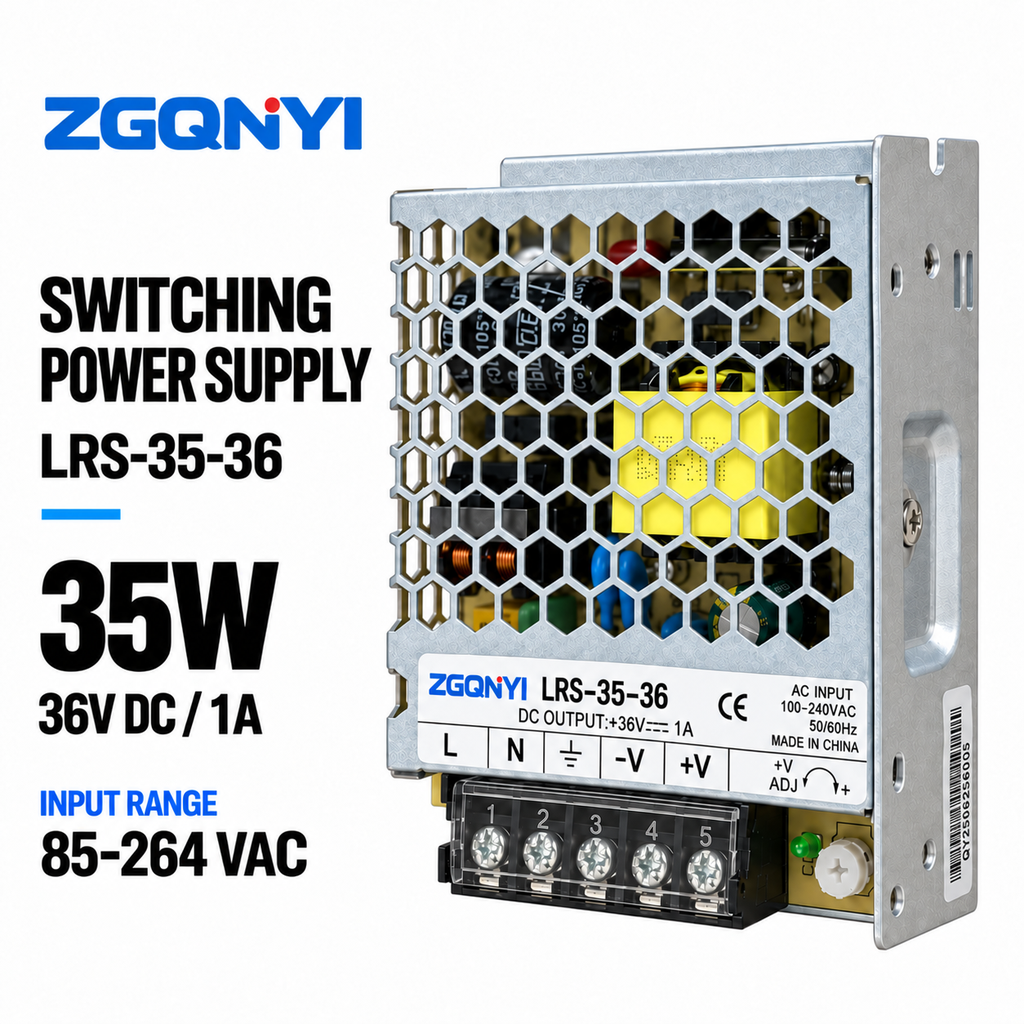
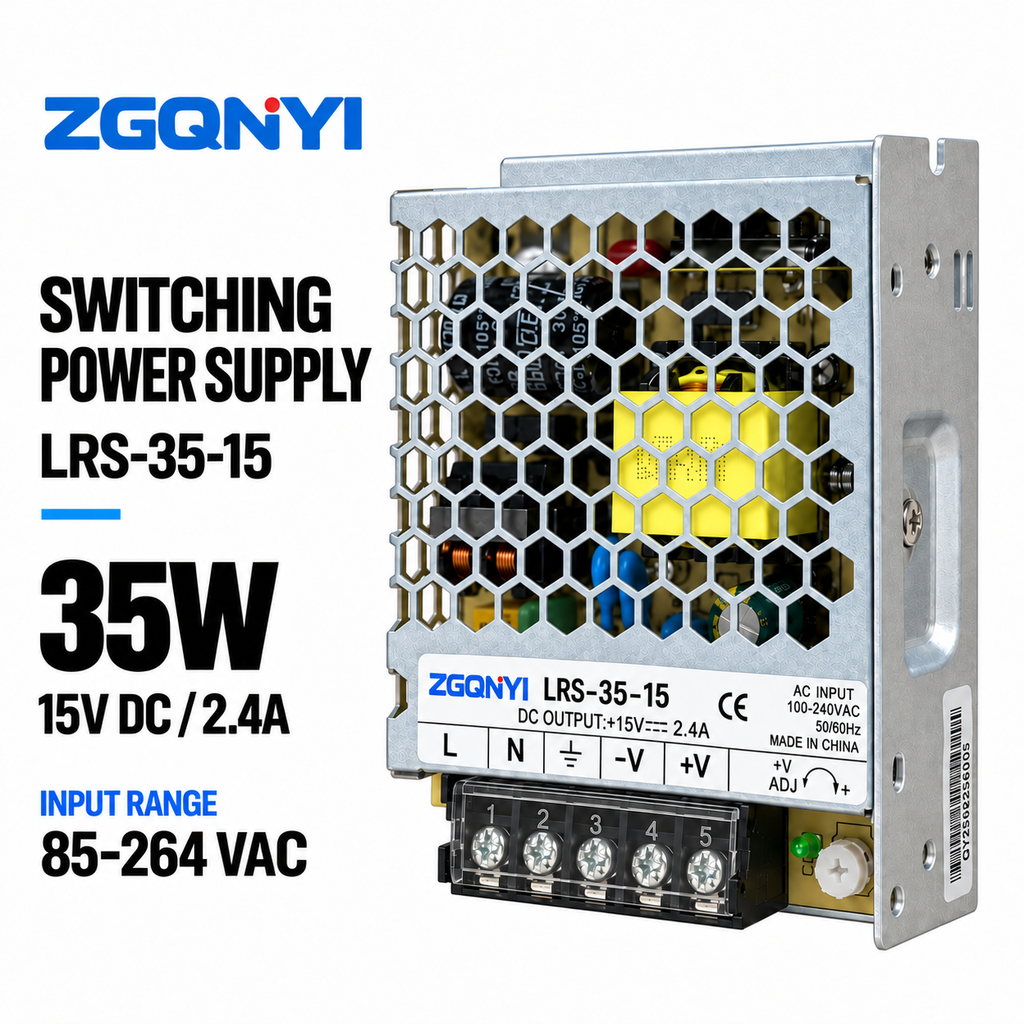
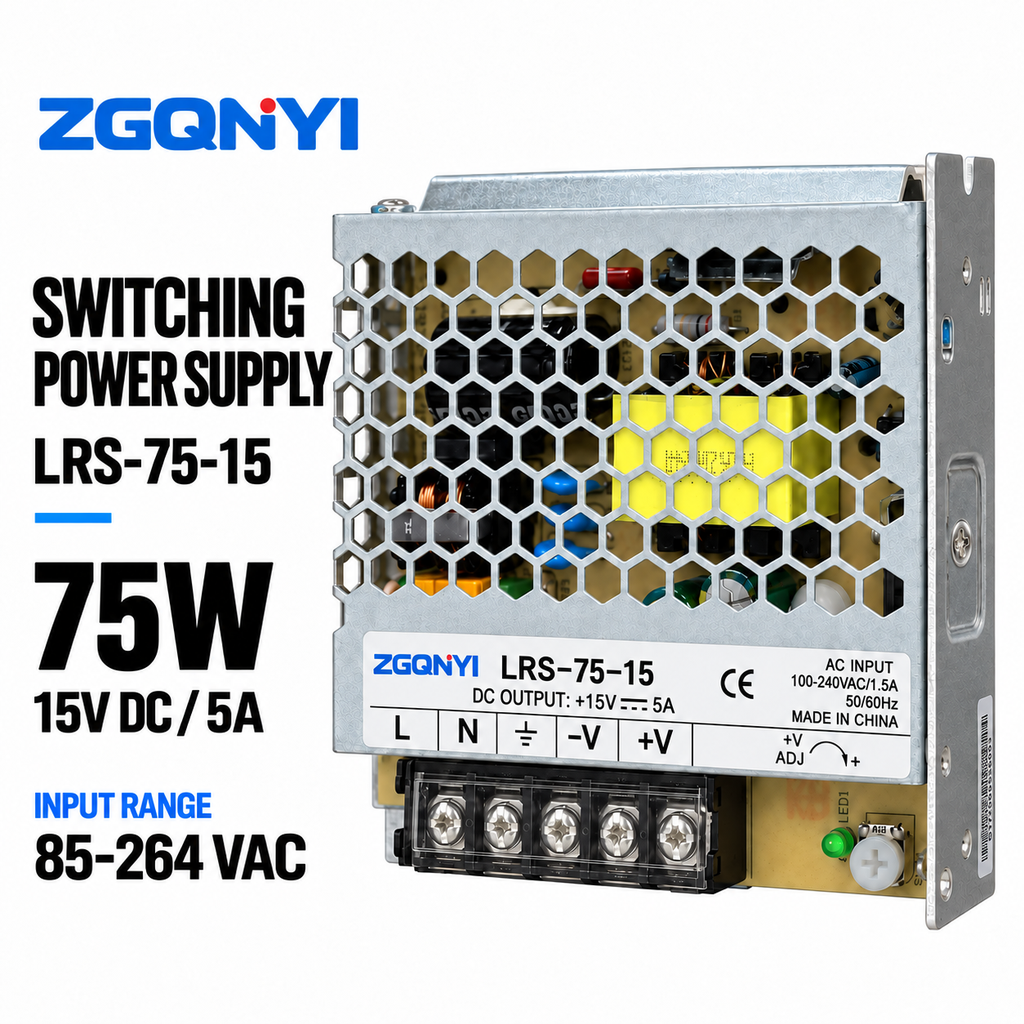
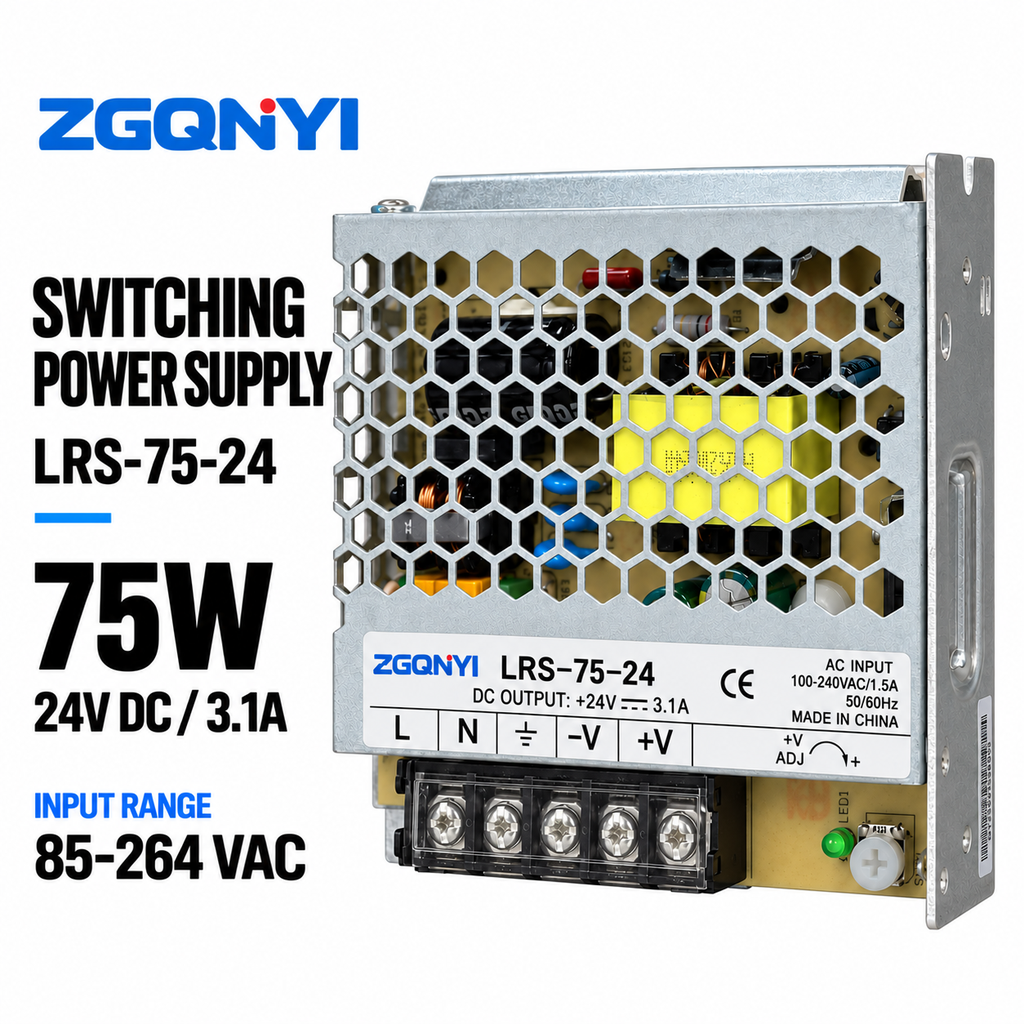
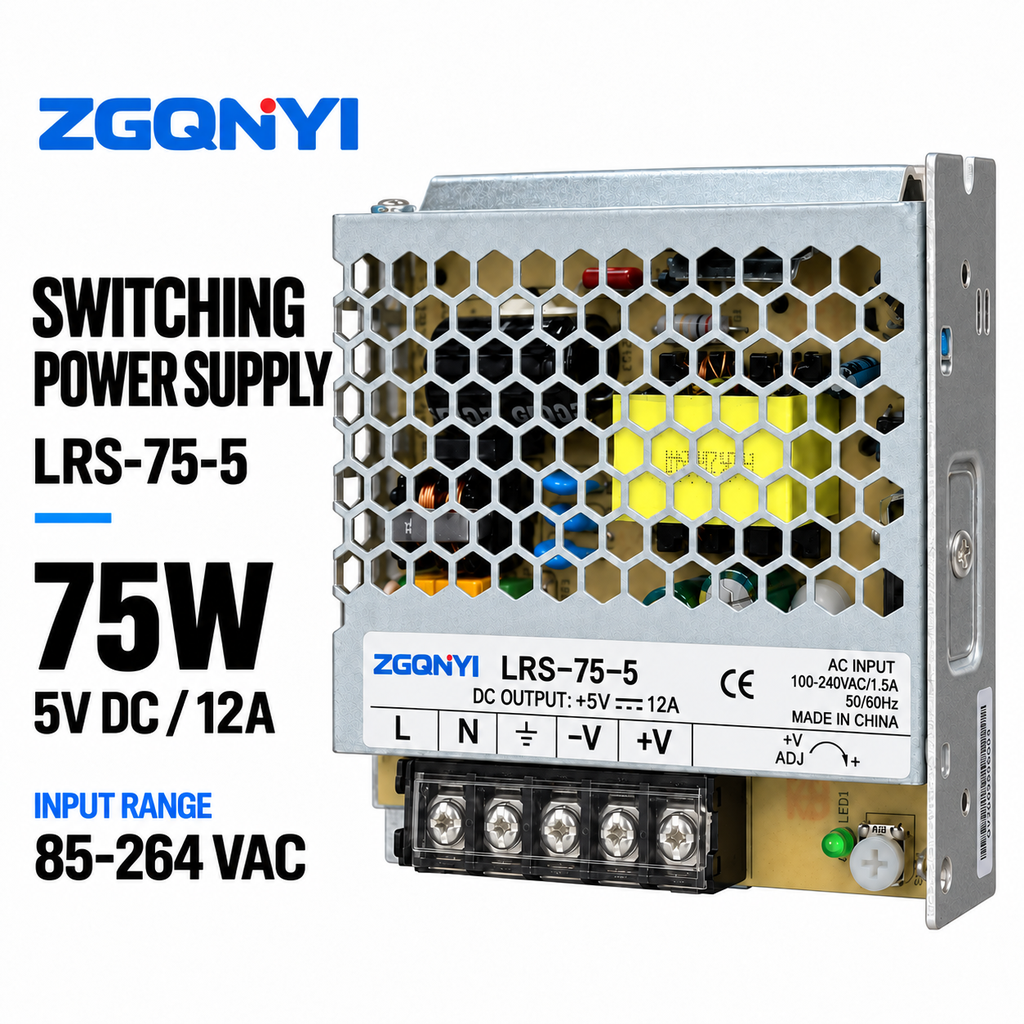
| LRS Series Enclosed | 5V, 12V, 15V, 24V, 36V, 48V (35W–500W) | Flyback / Forward Converter | 86% – 91% | Instrumentation, LED Displays, 3D Printers, OEM Panels |
| NDR / MDR DIN Rail | 12V, 24V, 48V (15W–480W) | Quasi-Resonant Flyback / LLC | 88% – 93% | TS-35 Rail Control Cabinets, PLC Controllers, Relays |
| Heavy CC/CV Adjustable | 0–16V to 0–220V (1kW–18kW) | Full-Bridge Phase-Shift + Active PFC | 90% – 95% | Electroplating Tanks, Electrolysis Cells, Battery Banks |
| Waterproof Potted Series | 12V, 24V (60W–500W) | Isolated Half-Bridge (IP67 Potted) | 90% – 93% | Exterior LED Fixtures, Tunnel Illuminators, Chemical Plants |
Frequently Asked Procurement & Engineering Questions
Authoritative answers addressing qualification, lifecycle maintenance, and international compliance.
How do I accurately calculate safety headroom for inductive or capacitive loads?
What specific CE, RoHS, and EMC documentation accompany each shipment?
Why is Constant Voltage / Constant Current (CV/CC) mode essential for electroplating and charging?
What are the minimum order quantities (MOQ) and production lead times for OEM projects?
What trade terms and international logistics arrangements do you support?
Ready to Optimize Your Industrial Power Architecture?
Connect with our Wenzhou technical engineering sales team for custom quotations, complete component datasheets, or custom OEM prototype evaluation.
Send an Inquiry