Featured Regulated Switching Power Supplies
Discover our precision-regulated AC to DC power converters engineered for mission-critical automation, telecom repeating stations, industrial instrumentation, and LED display installations.
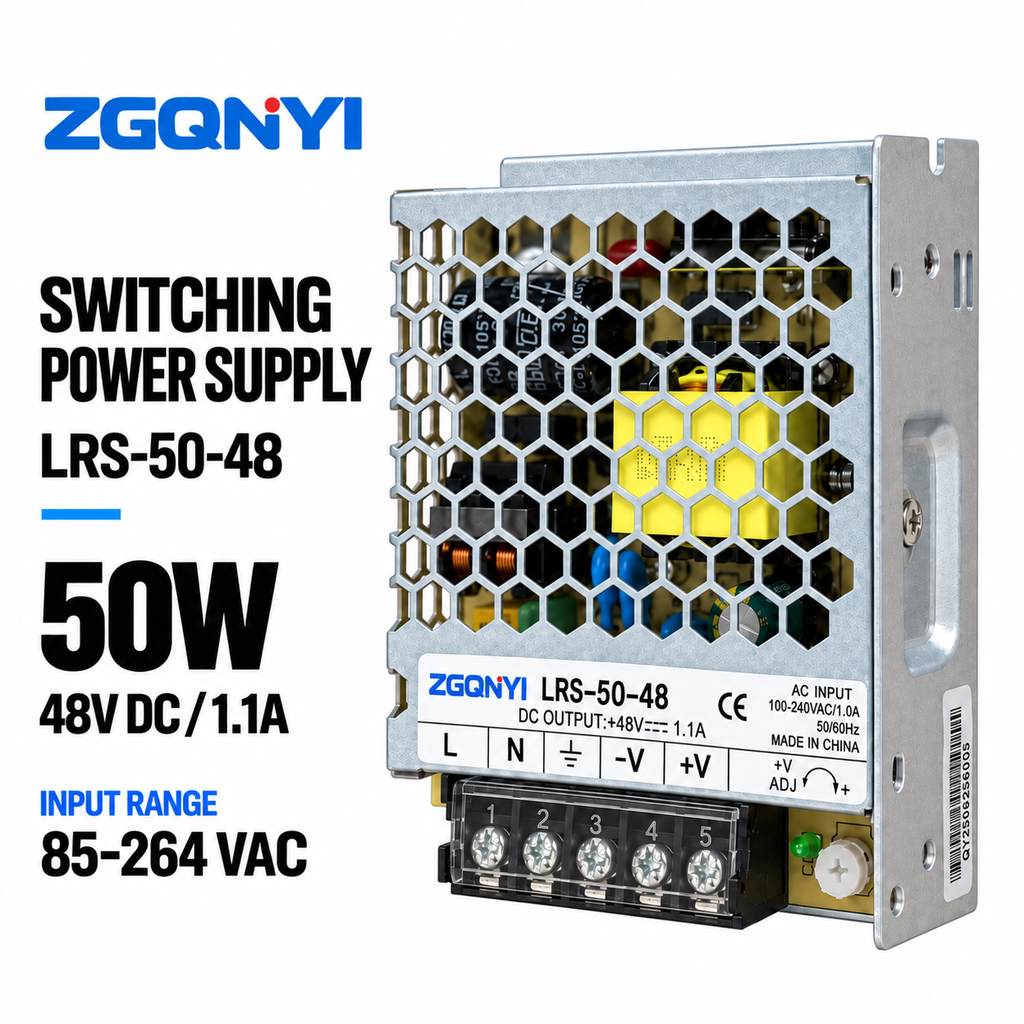
ZGQNYI LRS-50-48 48V Compact Enclosed Switching Power Supply Single Output AC to DC SMPS for Telecom Repeaters Network Systems
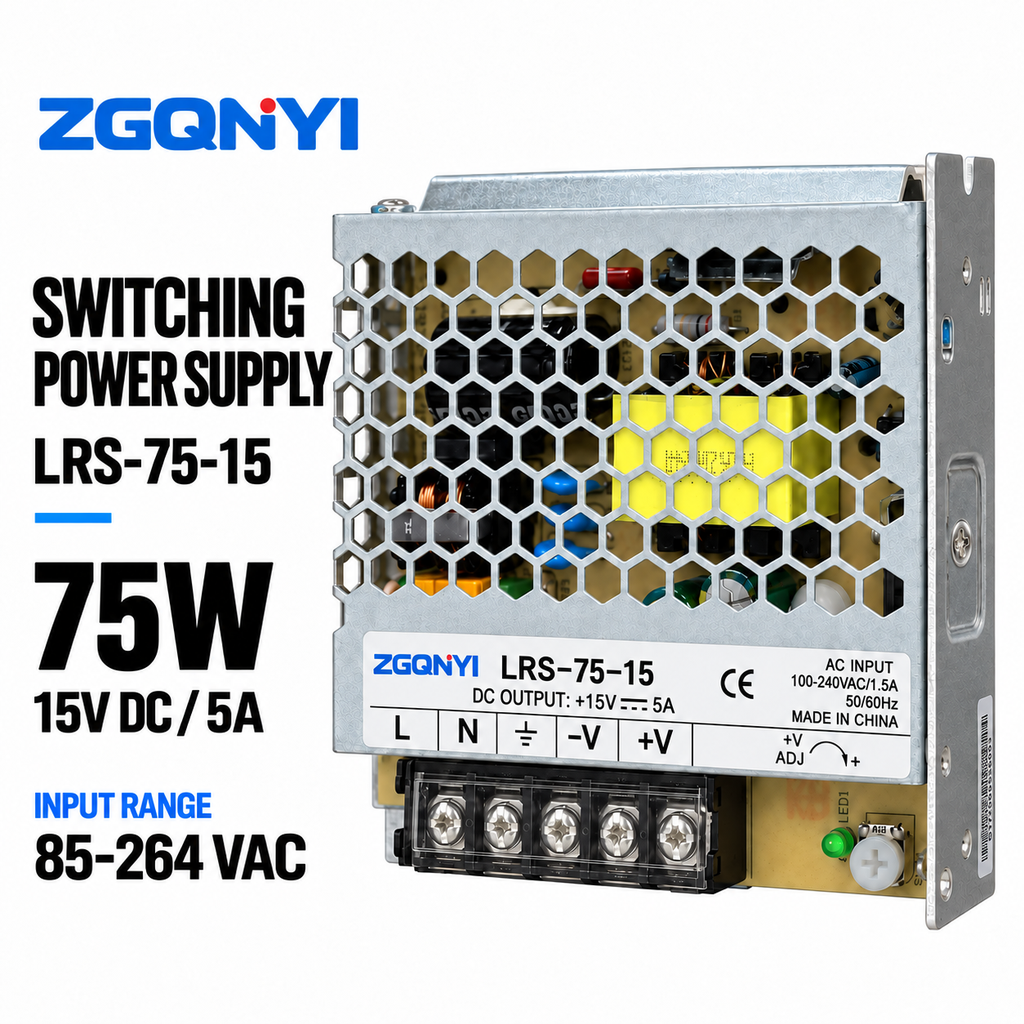
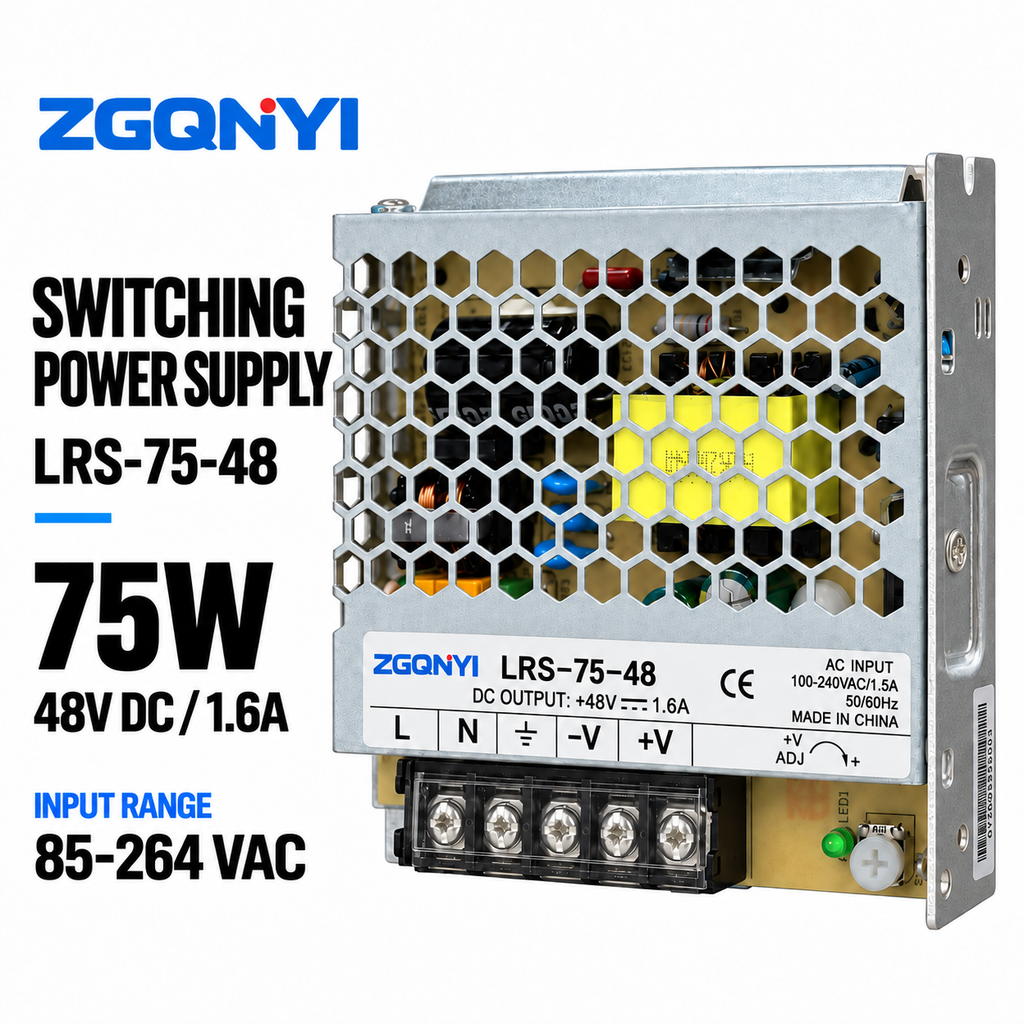
ZGQNYI Industrial 48VDC Power Supply LRS-75-48 Single Output AC to DC Converter SMPS for Network Systems Factory Control Panels
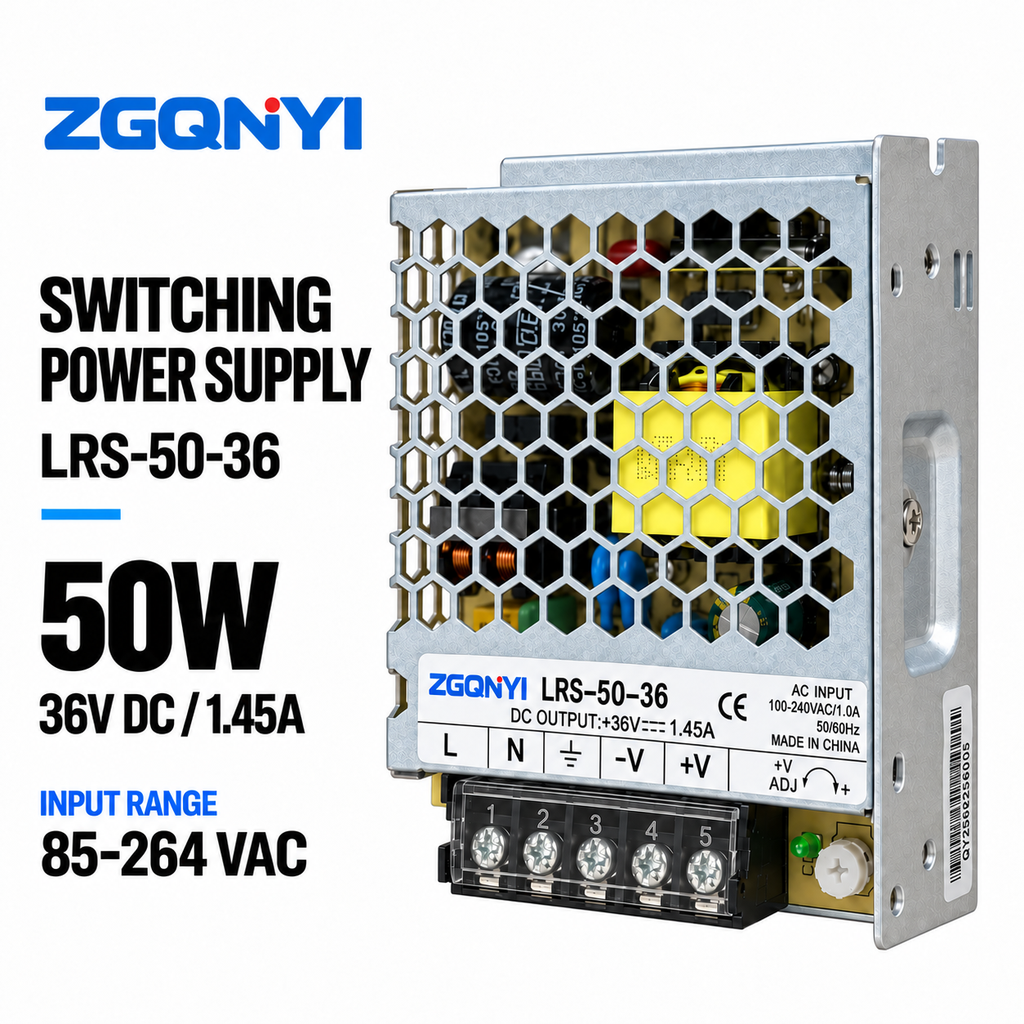
ZGQNYI LRS-50-36 Industrial Switching PSU 36V Compact Enclosed AC to DC Power Supply for Building Controls Electronic Equipment
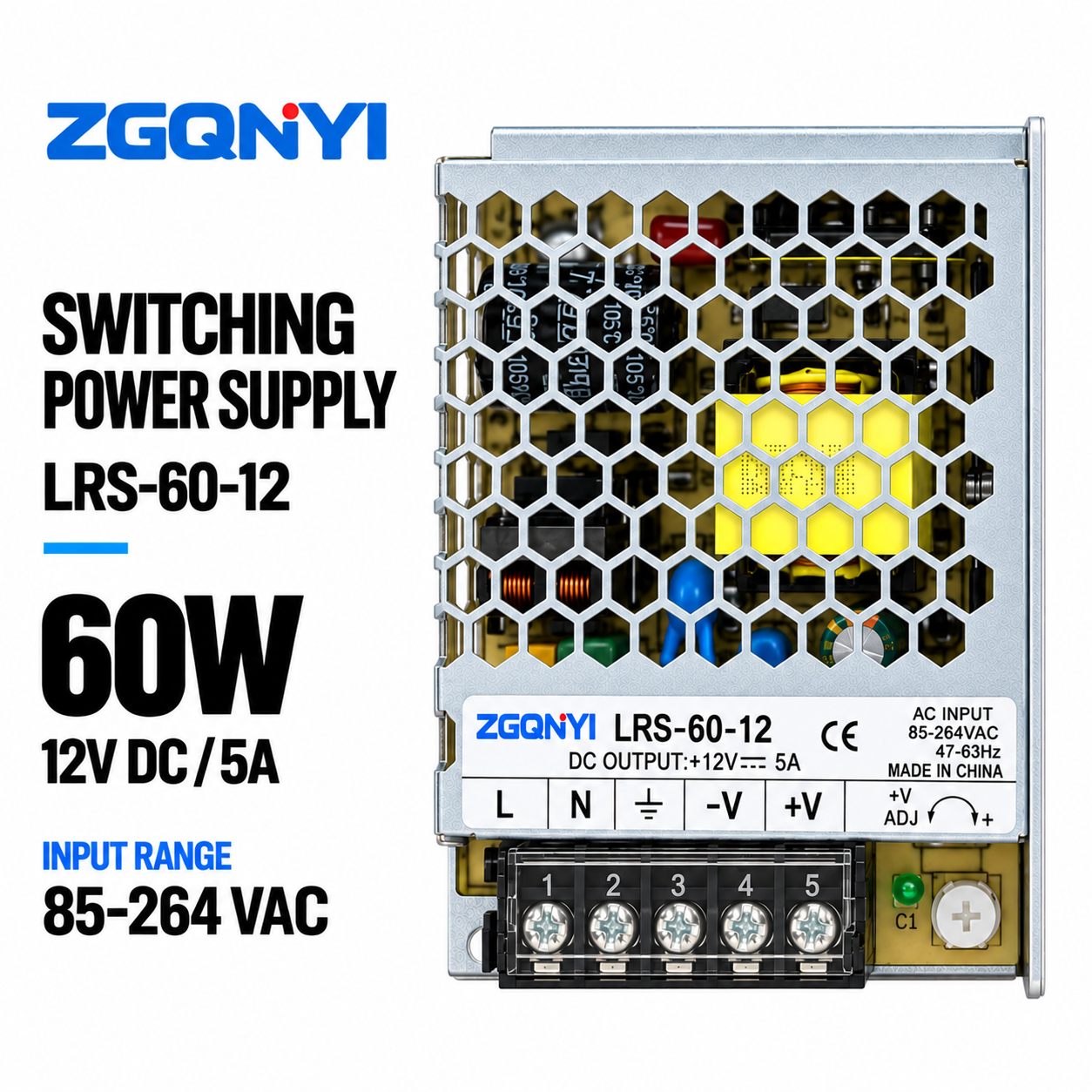
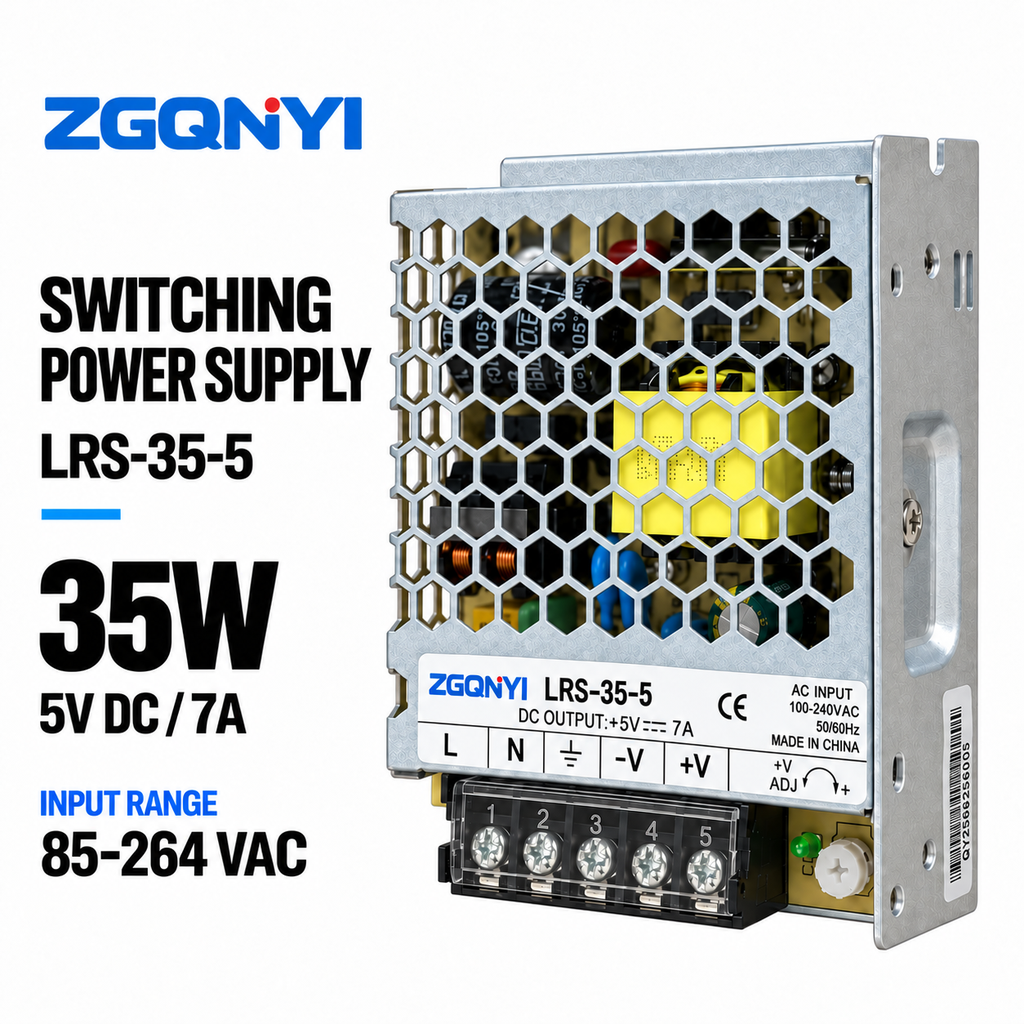
ZGQNYI LRS-35-5 5V DC Constant Voltage LED Driver AC DC Switching Power Supply DC Output for LED Display Modules Digital Signage
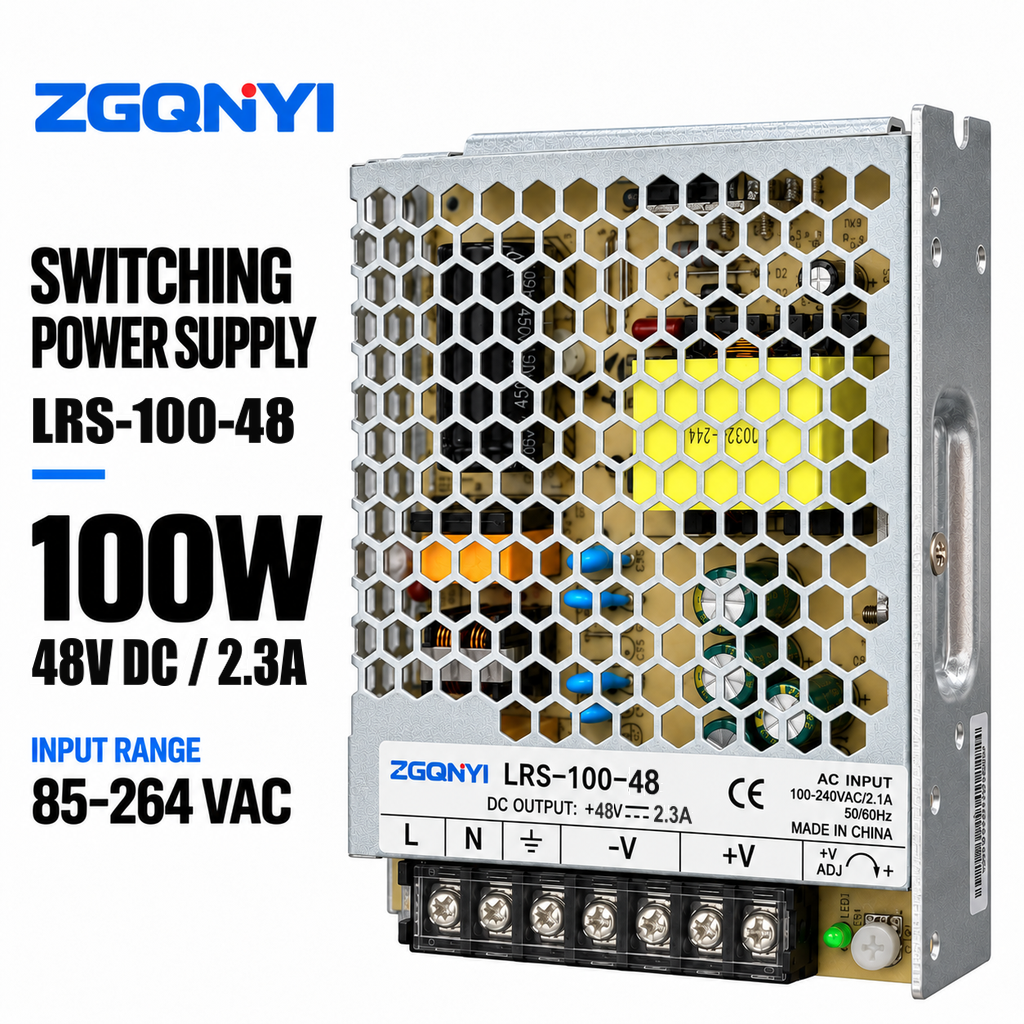
ZGQNYI LRS-100-48 48V 100W AC DC Power Supply Switching Converter Single Output PSU for LED Driver Modules Lighting Controls
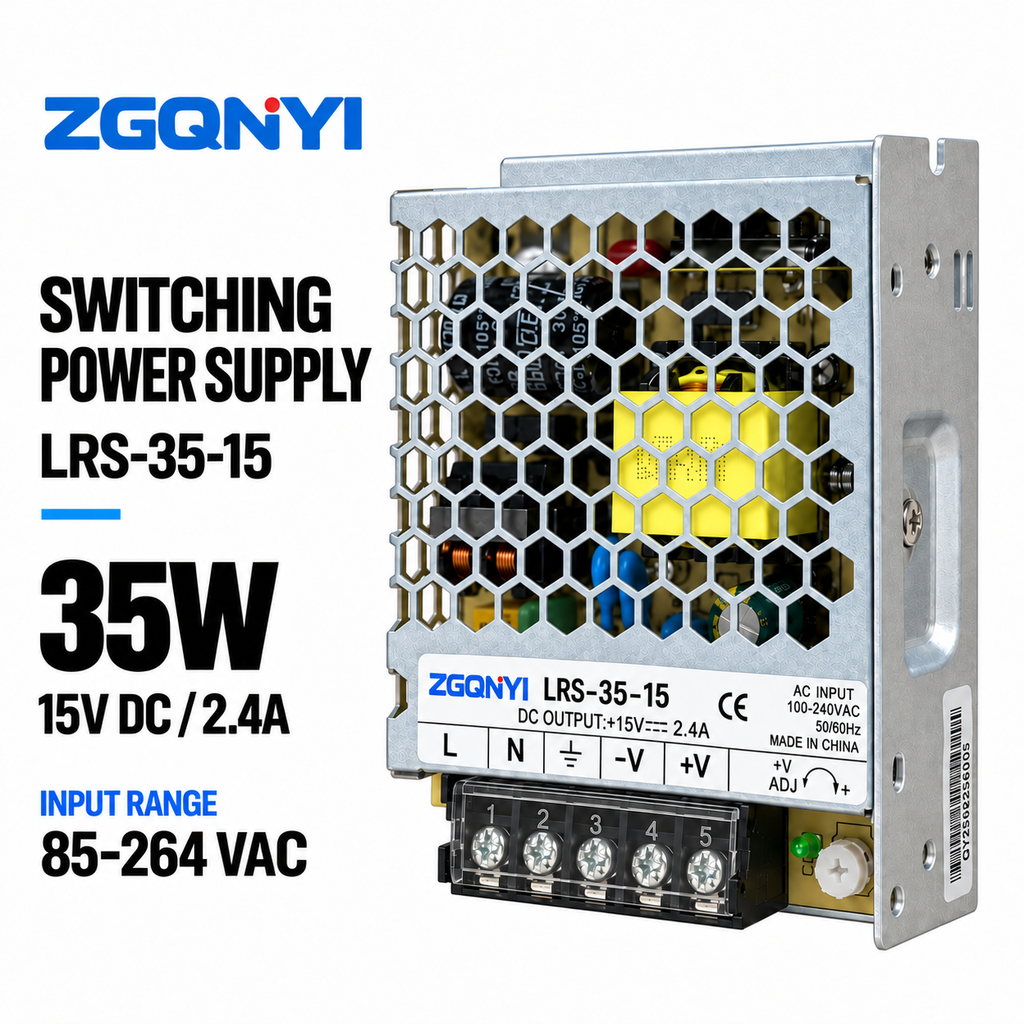
18+
Years Power Supply R&D
10,000 m²
Advanced Manufacturing Hub
500,000
Monthly Units Output
1,000+
Standard Model References
Engineering Authority: Selecting Top Trusted Regulated Power Supply Suppliers
In modern electronic systems design, a regulated direct current (DC) power supply is not merely a commodity brick; it is the electrical heartbeat of sensitive automation controllers, robotics, telecommunication transceiver stations, and process-critical medical hardware. A regulated power supply continuously converts fluctuating alternating current (AC) grid power—or erratic raw DC bus voltages—into a strictly controlled, ripple-free direct current output. Regardless of severe input line transients or sudden step-load swings from dynamic motors, an industrial-grade regulated SMPS (Switched-Mode Power Supply) stabilizes voltage to within tightly guarded fractions of a percent.
Industrial procurement specialists, engineering system architects, and electronics design teams must navigate a global supplier landscape saturated with substandard solutions. Low-tier units frequently cut corners in active power factor correction (PFC), galvanic boundary clearances, and thermal management. Partnering with a vetted, top-tier regulated power supply supplier ensures that your operational hardware avoids unexpected downtime, premature dielectric failure, and severe compliance rejections during international safety inspections.
Parametric Benchmark: Linear Regulation vs. High-Frequency SMPS
While early laboratory environments leaned heavily on linear power supplies for minimal noise, contemporary industrial architecture relies on high-frequency switching regulation. Modern SMPS units operate switching topologies well above 65kHz to 500kHz using resonant LLC converters, pulse-width modulation (PWM), and synchronous rectification. The table below delineates the essential operational parameters that systems engineers must evaluate when sourcing from an industrial power supply manufacturer:
| Evaluation Parameter | Standard Commercial SMPS | Industrial Regulated SMPS (ZGQNYI / Nuvros Class) | Mission-Critical Impact |
|---|---|---|---|
| Line Regulation (Full Vin Range) | ±1.0% to ±2.0% | < ±0.5% (Typically ±0.2%) | Prevents logic-level shifts in 3.3V/5V microcontroller systems. |
| Load Regulation (0% to 100% Load) | ±2.0% to ±3.0% | < ±1.0% with remote voltage sensing | Eliminates terminal voltage drops under dynamic motor loads. |
| Ripple & Noise (Peak-to-Peak) | 150mVp-p to 250mVp-p | ≤ 80mVp-p (50mVp-p on 5V/12V rails) | Crucial for analog-to-digital converters (ADCs) and sensors. |
| Active Power Factor Correction | Passive or None (PF ~0.60) | Active PFC > 0.95 at 230VAC full load | Mandatory for EN61000-3-2 harmonic compliance above 75W. |
| Dielectric Withstand (Isolation) | 1.5kVAC Input to Output | 3.0kVAC to 3.75kVAC reinforced insulation | Protects low-voltage operators and PLCs from high-voltage surge. |
| Mean Time Between Failures (MTBF) | < 150,000 Hours (MIL-HDBK-217F) | > 350,000 to 500,000 Hours (25°C) | Dramatically slashes Total Cost of Ownership (TCO). |
Strategic Procurement Outlook: Emerging Buying Trends for 2025–2030
The global procurement landscape for industrial electronics is undergoing a structural realignment. Supply chain shocks, stringent carbon-neutrality mandates, and the relentless miniaturization of smart factory equipment have altered how global enterprises evaluate regulated power supply manufacturers. As a procurement leader or lead design engineer, tracking these technical and commercial sourcing trajectories is vital for sustained competitiveness:
Demand for Wide-Bandgap (GaN & SiC) Topologies
Buyers are shifting from legacy silicon MOSFETs to Gallium Nitride (GaN) and Silicon Carbide (SiC) semiconductors. These wide-bandgap topologies facilitate 94%+ energy conversion efficiencies, slashing internal heat rejection and enabling ultra-thin form factors such as our LRS low-profile series.
Digitally Monitored & Programmable Rails
Modern machine builders require real-time current and voltage telemetry without mounting external DIN-rail power meters. Sourcing demands are surging for digital display models and embedded communication links (RS485 Modbus, CANopen) for predictive maintenance.
Direct Factory Sourcing & Proven Resilience
Global brands are pruning multi-tiered broker networks. Sourcing directors favor direct OEM/ODM partnerships with vertically integrated facilities that control magnetics winding, automated SMT, conformal coating, and full-load burn-in chambers under one roof.
Ultra-Wide Operating Temperature Bounds
Industrial installations are moving out of temperature-controlled server rooms into unconditioned outdoor enclosures, desert PV solar plants, and extreme cold cold-storage warehouses. Top-tier supplies must operate from -30°C to +70°C with predictable derating margins.
Constant Voltage & Current (CV/CC) Flexibility
Process industries—including industrial electroplating, water electrolysis, battery formation, and DC motor drives—increasingly require power supplies capable of automatic seamless crossover between constant-voltage regulation and constant-current limiting modes.
Turnkey Tailoring: Voltage, Form-Factor & Connectors
Standard off-the-shelf power ratings frequently misalign with bespoke enclosures. Procurement teams seek trusted suppliers offering low-risk agile customization—varying output rails (such as 36V, 48V, or high-power 110V/220V), custom terminal blocks, and custom branding.
Architectural Evolution in Regulated SMPS Design
The progression of industrial switched-mode power supplies over the past two decades has centered around two core imperatives: maximizing volumetric power density (Watts per cubic inch) and elevating electro-thermal efficiency. Early forward and half-bridge topologies were constrained by hard-switching losses, causing excessive heat dissipation inside enclosed control cabinets.
Resonant LLC Converters & Zero Voltage Switching (ZVS)
Modern high-efficiency regulated power converters utilize LLC resonant tank circuits. By matching switching frequencies to the natural resonance of primary leakage inductance and parallel magnetizing inductance, power MOSFETs trigger at the exact moment voltage crosses zero (Zero Voltage Switching). This fundamentally eliminates turn-on losses, allowing our engineering team to shrink magnetic cores, optimize winding layouts, and deploy compact, fanless enclosed chassis (such as our LRS-35, LRS-50, and LRS-75 series) that dissipate heat entirely through passive conduction and natural convection.
Active Power Factor Correction (PFC) Topologies
Without active power factor correction, standard AC/DC bridge rectifiers only draw current at the absolute peak of the incoming AC sinusoidal wave, leading to high crest factors, severe harmonic distortions, and excessive neutral-wire heating in industrial installations. Our active PFC sub-circuits utilize continuous conduction mode (CCM) boost stages. These circuits dynamically shape the incoming current waveform to align in phase with the line voltage, yielding a Power Factor >0.98. This allows facilities to operate dozens of regulated power modules on a single circuit breaker branch without risking harmonic nuisance tripping.
Comprehensive Protective Architectures
True reliability resides in how a power supply handles anomalous operating states. A trusted supplier builds multi-tiered hardware safety trip mechanisms into the secondary feedback circuitry:
- Over-Voltage Protection (OVP): High-speed optical feedback monitors the output rail. Should an internal loop failure occur, a secondary Zener clamp or crowbar circuit disables the PWM controller to shield costly downstream microprocessors from overvoltage spikes.
- Over-Current Protection (OCP): Configured with either "hiccup mode" auto-recovery for short circuits or constant-current foldback for reactive industrial loads, ensuring the converter does not self-destruct during high initial inrush states.
- Over-Temperature Protection (OTP): Thermal sensors embedded directly upon heat sinks trigger automatic shutdown before electrolytic dry-out or semiconductor junction breakdown occurs.
Why Partner With Wenzhou Nuvros Electric: Manufacturing & Quality Excellence
Headquartered in Beibaixiang Town, Wenzhou—the epicentre of China's electrical engineering and precision component manufacturing corridor—Wenzhou Nuvros Electric Co., Ltd. operates as a premier designer and manufacturer of AC/DC, DC/DC, and programmable high-power switching power supplies. Backed by 18 years of specialized power conversion R&D, we bridge the gap between competitive direct-from-factory pricing and uncompromised industrial reliability.
10,000 m² Advanced Production Base
Our expansive headquarters and specialized branch facilities house high-speed Yamaha and Panasonic SMT placement lines, automated dual-wave soldering systems, and robotic selective conformal coating units capable of turning out 500,000 verified power supply modules monthly.
100% Full-Load Burn-In & Rigorous QA
Quality is engineered, not inspected after the fact. Every single power supply leaving our production line undergoes rigorous automated optical inspection (AOI), followed by an intensive 4-hour 100% full-load thermal burn-in test inside elevated ambient heat chambers to eliminate early-life field defects.
Global Compliance & Traceable Credentials
Our standard and customized power supply portfolios are engineered to comply with strict international electromagnetic compatibility (EMC) and low-voltage electrical safety standards. Listed series hold documented CE and RoHS compliance, verified through certified third-party testing laboratories.
Dedicated Engineering Sourcing Support
Our technical sales engineers possess hands-on power electronics expertise. With an average technical response time of ≤ 1 hour during business operations and a 100% inquiry fulfillment rate, you interface directly with professionals who understand circuit derating, inrush currents, and enclosure aerodynamics.
Comprehensive Trade & Flexible Logistics
We routinely support international procurement frameworks across North America, Europe, Southeast Asia, and Latin America. We provide transparent commercial terms including FOB, CIF, CFR, EXW, FCA, and full door-to-door DDP, accepting multi-currency settlements via T/T, L/C, and PayPal.
Expansive Standard Lineup: 15W to 18kW
From ultra-compact 15W DIN-rail auxiliary power converters up to heavy industrial 18,000W adjustable CC/CV power cabinets for water treatment and electroplating, our standard portfolio of 1,000+ catalog references accelerates project timelines without requiring costly custom engineering iterations.
Frequently Asked Questions: Sourcing Regulated Power Supplies
Authoritative technical answers to common queries raised by sourcing directors, panel builders, and electrical design engineers.
How do I correctly calculate the required wattage headroom for an industrial SMPS?
As an industry rule of thumb, always select a power supply with a continuous rating 20% to 30% higher than your system's steady-state power draw. If your load includes inductive components (relays, solenoid valves, DC stepper motors) or capacitive networks, calculate their peak startup inrush current. Running an SMPS near 70–80% of its rated capacity keeps thermal stress on internal electrolytic capacitors low, extending operational lifespan exponentially according to Arrhenius' equation.
What is the fundamental difference between Line Regulation and Load Regulation?
Line regulation measures the power supply’s ability to maintain a steady DC output voltage despite fluctuations in the input AC line voltage (for example, swinging from 85VAC to 264VAC). Load regulation measures the supply’s capability to maintain steady output voltage when the load current changes (for instance, stepping from a 10% standby draw to a 100% full workload). High-grade regulated supplies keep both metrics under ±0.5% to ±1.0%.
Does your manufacturing facility support full OEM and ODM custom engineering?
Yes. We provide complete OEM/ODM manufacturing partnerships. We can tailor output voltages (e.g., non-standard 28V, 36V, 72V, or adjustable 0–220V rails), integrate custom current-limiting thresholds, apply specialized conformal PCB coatings for high-humidity or corrosive atmospheres, incorporate RS485 communication protocols, and brand housings with private buyer labels and specialized packaging.
Why is Active Power Factor Correction (PFC) crucial for equipment exporting to the EU and USA?
International regulatory directives—most notably European standard IEC/EN 61000-3-2—strictly cap the harmonic distortion introduced back into the power distribution grid for all electrical devices consuming more than 75 Watts. Active PFC suppresses third, fifth, and higher-order current harmonics, ensuring that your machinery achieves CE compliance and passes regional grid interconnection audits without penalties.
What is the Minimum Order Quantity (MOQ) and sample lead time?
For catalog products, including our standard LRS enclosed, DIN-rail (DR/NDR/MDR), and bench-top series, sample orders can be initiated from just 1 unit to facilitate rapid prototype verification and bench testing. Standard sample orders ship within 48 to 72 hours. For customized private-label production runs, MOQs are flexible and evaluated during technical review, generally ranging from 50 to 200 units depending on the complexity of mechanical tooling.
How do environmental ambient temperatures affect power supply output capacity?
Every power converter operates with an internal thermal equilibrium threshold. When ambient temperatures inside a control cabinet surpass nominal values (typically 40°C or 50°C), thermal derating must be applied. Most industrial supplies shed 2% to 2.5% of rated capacity for every degree Celsius above the derating inflection point. We supply verified thermal derating curves with all datasheets to allow engineers to design safe margins into sealed outdoor enclosures.
Request an Engineered Power Quote & Specification Review
Need a verified high-efficiency SMPS replacement, a custom CC/CV voltage profile, or a long-term supply contract for volume DIN-rail modules? Talk directly to our technical application engineers in Wenzhou today.